The Worst Filing System Known To Humans

-Punk (5) A Song of Ice and Fire (2) Affect (9) Alienating My Audience (31) Animation (28) Anime (19) Anonymous (3) Anything Salvaged (15) Art Crit (42) Avatar the Last Airbender (2) Black Lives Matter (1) Bonus Article (1) Children's Media (6) Close Reading (90) Collaboration (1) comics (30) Cyborg Feminism (3) Deconstruction (10) Devin Townsend (2) Discworld (1) Evo Psych (1) Fandom Failstates (7) Fanfiction (28) Feminism (24) Fiction Experiments (13) Food (1) Fragments (11) Games (29) Geek Culture (28) Gender Shit (2) Getting Kicked Off Of TV Tropes For This One (11) Gnostic (6) Guest Posts (5) Guest: Ian McDevitt (2) Guest: Jon Grasseschi (3) Guest: Leslie the Sleepless Film Producer (1) Guest: Sara the Hot Librarian (2) Guest: Timebaum (1) Harry Potter (8) Harry Potter and the Methods of Rationality (3) Has DC Done Something Stupid Today (5) Hauntology (6) Homestuck (18) How Very Queer (35) hyperallthethings (10) hyperanimation (1) Hypercomics (11) I Didn't Ask For Your Life Story Sheesh (24) Illustrated (37) In The Shadow Of No Towers (1) It Just Keeps Tumblring Down Tumblring Down Tumblring Down (9) It's D&D (2) Judeo-Christian (9) Lady Gaga (5) Let's Read Theory (3) Lit Crit (20) Living In The Future Problems (11) Lord of the Rings (4) Mad Max (1) Madoka Magica (1) Magic The Gathering (4) Manos (2) Marvel Cinematic Universe (17) Marx My Words (15) Medium Specificity (15) Meme Hell (1) Metal (2) Movies (33) Music (26) Music Videos (21) NFTs (10) Object Oriented Ontology (4) Occupy Wall Street (3) Pacific Rim (2) Paradise Lost (2) Parafiction (6) Patreon Announcements (15) Phenomenology (4) Poetry (6) Pokemon (3) Politics and Taxes and People Grinding Axes (13) PONIES (9) Pop Art (6) Raising My Pageranks Through Porn (4) Reload The Canons! (7) Remixes (8) Review Compilations (6) Room For You Inside (2) Science Fiction Double Feature (32) Self-Referential Bullshit (23) Semiotics (3) Sense8 (4) Sociology (12) Spooky Stuff (45) Sports (1) Star Wars (6) Steven Universe (3) Surrealism (11) The Net Is Vast (36) Time (1) To Make An Apple Pie (4) Transhumanism (9) Twilight (4) Using This Thing To Explain That Thing (120) Video Response (2) Watchmen (3) Webcomics (2) Who Killed The World? (9)

Reload the Canons!

This series of articles is an attempt to play through The Canon of videogames: your Metroids, your Marios, your Zeldas, your Pokemons, that kind of thing.

Except I'm not playing the original games. Instead, I'm playing only remakes, remixes, and weird fan projects. This is the canon of games as seen through the eyes of fans, and I'm going to treat fan games as what they are: legitimate works of art in their own right that deserve our analysis and respect.

Showing posts with label Twilight. Show all posts

Saturday, March 17, 2012

Reader's Rights: The Idea Preservation Imperative

I believe in the power of ideas. In fact, I would actually go even further than that: I believe in the preeminence of ideas. They aren't quite as important as human life and comfort (although there are some exceptions) but beyond that, creative thoughts are incredible gifts.

I've already talked about the act of finding value, especially as a creator and a critic, in even the most unlikely of places. And, what's more, I've written a couple fan fiction pieces that attempt to put into practice my prattling: one based upon Twilight, the other based upon "Manos" The Hands of Fate.
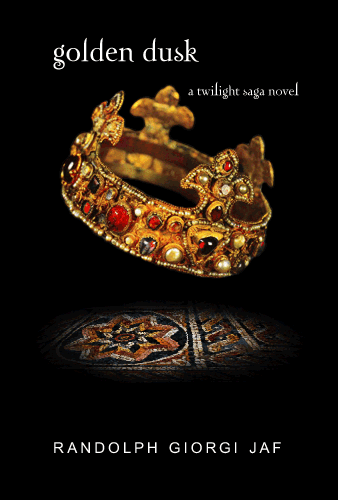
This book definitely exists. Really.
It should be obvious from this, I think, that I hold fanfiction in a particularly high regard; on the same level, in fact, that I hold more traditional forms of critical analysis. Both occupy the same space in culture when it comes to interacting with ideas. They use similar techniques of analysis, similar methods of picking things apart, often act as either homages to good works or dismantlings of bad ones. The fact that they engage the reader in different ways does not, ultimately, make them different processes. It's just that fanfiction ends up creating its own complete text at the end that someone else can analyze, whereas criticism just holds a mirror to the original. In a way, fanfiction might be considered more productive, in the end, than criticism because of the way it produces something new that can be built upon in the end.

You can write a fanfic of a fanfic, but you can't write a fanfic of a critical essay.

Probably.

Well, alright, maybe Godel Escher Bach counts as a fanfic of a critical essay. Ah.

Anyway, the point is, these types of texts are important because they uncover and preserve good ideas. But unless you've got a narrow exception like Godel Escher Bach or the notes to The Waste Land or an Umberto Eco essay, criticism doesn't do the one thing that fanfiction can, even though it's using largely the same processes.

It doesn't take that golden, glowing kernel of an idea and nurture it into something new.

And that's a power that we have an imperative to put into use when the original author of an idea can't put that idea into use.

See, sometimes, for whatever reason, a creator cannot or will not explore one of their ideas to its fullest extent. This doesn't even mean that something has fallen through the cracks, necessarily. There's nothing in Scorsese's recent film Hugo that strikes me as conspicuously omitted--it's a tight film, as my collaborator Leslie the Sleepless Film Student would say. But there are still ideas there that could be explored from another angle. The nature of the Great War could certainly be explored further, and the trauma driving the Stationmaster (it seemed clear to me that he was shellshocked, no?). This is an area where fanfiction can serve perhaps more effectively than criticism, because it allows the viewer to not just analyze the character's psychology but to add to it and imagine, in more detail, just what his history and experiences are made of.

So, this is an area where fanfiction can fill in some gaps. It's not exactly what I would call an example of the sort of moral imperative I'm talking about, though.

Something like writing a "Manos" The Hands of Fate fanfiction is.

What makes the difference is that what good ideas there are in "Manos" are in danger of being lost. The film itself is already in rather poor condition, and I doubt anyone has watched it recently without the hilarious commentary of the Mystery Science Theater 3000 crew. If there are any creepy moments at all in "Manos"--and I assert that there most certainly are--they are in danger of vanishing, and what we might learn from the film could be lost.

This is where the Reader's Right of Fanfiction kicks in. We've got an idea on the verge of vanishing into the cultural haze, a certainty that the creators of the film (if any are still alive) will never revisit the film's ideas, and a platform--The Internet--where fans can share and explore their takes on the film. In that situation, readers have an ethical right to take everything in the film and run with it, copyright be damned.

The Idea is preeminent above all else.

But, alright, "Manos," though I love it so, isn't the kind of sparkling gem that's going to convince a lot of people, I suspect. So, let me use an example that has a few more fans, and is a bit closer to my heart, though it's still not exactly what you might call an elite masterpiece of artistry.

I'm talking about the storyline for the game Magic: The Gathering.

For the uninitiated, it might surprise you to know that Magic has a pretty intricate backstory--one I've been following for quite a while now. The idea is that there are countless worlds, each unique and magical, that make up the Multiverse known as Dominia. These worlds are closed off from one another... unless you are a Planeswalker, a being capable of stepping through the void between worlds, a being capable of exploring the Multiverse in all its wonder.

The interactions of these Planeswalkers, the normal beings that inhabit the planes, supernatural entities, and the core mechanics of the Five Colors of Magic knit together to create a  complex, fascinating fabric of a narrative. And certainly, many of the individual threads are broken in one way or another, what with plot holes, dumb storylines, bad writing or editing, and so on, but generally the storyline is a compelling thing for one reason. To borrow the words of my good friend Jon of Everyday Abnormal:
"I've followed from the beginning. Somewhere, somehow (probably from Richard Garfield sitting in on one too many Planescape sessions), WotC stumbled onto an amazing, unique fantasy world... one that was all fantasy worlds. It was a setting that offered up nearly limitless storytelling possibilities. There were ups and downs, but there were amazing concepts and wonderful stories told within it."
Yep, that about sums it up. It was a world that was all worlds. The potential there is astounding.

Or, it was.

Until the novel line got cancelled a few months ago.

Whoops.

The game will go on, of course, like my heart (ahem), but there doesn't seem to be much hope of us getting the kind of detailed narratives that held the storyline together in the past. I could be wrong, of course, but as of now, the actual long form stories--and even short stories, according to the Creative Director--are things of the past.

Now, are you starting to see why I think this idea of the reader's rights and duties to preserve an idea is so strikingly important?

A little over a year and a half ago, I helped to kickstart a fan project known as the Expanded Multiverse. The idea was to take the spaces in Magic's narrative that couldn't be feasibly filled by the creative team, and fill them in ourselves. The lofty goal was to create a secondary fan-generated canon that was cohesive, well written, and in-line with the established world and stories. A few days ago, when we first got the news that the novels were effectively as over as The Internet (although we didn't hear the news from Prince this time...) I concluded that the Expanded Multiverse was done for as well.

And then, as I got to thinking, and as I read some of the other responses from people on the forums, I realized that the exact opposite is the case: the Expanded Multiverse is more important than ever. The cards aren't going away, the settings aren't going away, the game will continue to explore at least an outline of a plot each time new cards are released... so, we effectively have all the tools we need to build a storyline ourselves.

Now, of course, it's important to recognize what this does NOT mean. It doesn't mean a reader is entitled to mooching off a creator's money. JK Rowling has apparently said that fanfiction is acceptable to her as long as no one charges for it, and that seems to me an ethical model. After all, what I'm advocating here is the primacy of ideas, and limiting access to those ideas by slapping a price tag on seems rather counterproductive, even without considering that you are kinda ripping off someone else's stuff. That ethic, of course, carries over to my own work: I take the Creative Commons license on this site very seriously.

So, I would never suggest that those of us involved with the Expanded Multiverse should get paid (unless Wizards of the Coast decided to throw some money our way, which, hey, I'm not going to say no to, necessarily). But we are still doing an important thing: we're ensuring that the bright kernel of an idea, all the bright fragments of thought that make the storyline so powerful, don't go to waste simply because the company can't economically justify printing books that only a handful of people read.

It's also not a condemnation of creators. As I mentioned with Hugo, there's nothing in this ethic that implies a failure on a creator's part, simply a lack of a particular path chosen. Sometimes that is certainly the result of lack of skill, but the imperative to explore otherwise lost details is not an insult in and of itself. (And I really wish authors would quit taking it that way.) If anything, it's a gesture of respect to someone that created an idea worth exploring.

So, this is, perhaps, a manifesto of sorts for one of the core reader's rights. There are others that I've got bouncing around my head, but this should suffice for now. I need to stop talking and let you get to work.

After all, there are so many ideas out there waiting to be explored; get out there and explore them!

If you like what you've read here, share it on Facebook, Google+, Twitter, Reddit, Equestria Daily, Xanga, MySpace, or whathaveyou, and leave me some kind words in the comments below.

Tuesday, December 20, 2011

Some Fascinating Highlights from Golden Dusk

The cover of the new Twilight spinoff novel
Selling the rights to Twilight was the single best thing that Stephanie Meyer could have done with her text. Then Quartz Publishing took their best possible option and hired a Byzantine historian that is apparently on more drugs than Grant Morrison to write a distant prequel to the series.


I know these were The Best Things because of a Best Thing I did recently. Ladies and Gentlemen, don't ask me how I did it, but I got an advance review copy, I got permission to finally spoil the cover image that everyone's been waiting to see, and I got a chance to pick over the subtext of the tale before anyone else.


And why, besides the fame and glory heaped upon me from on high, is this The Best Thing? Well, simply put, Golden Dusk is an incredibly fascinating and compelling book.

It is a work that many fans of the original series will probably hate, because it is a deep level deconstruction of what makes the original books tick, and an exploration of the implications of a world where vampires are glowing, luminous beings of temptation, werewolves are obsessives hiding in plain sight, and large institutions seem to have been utterly subverted by dark, ageless forces. It is everything the original books could have been but weren't. And instead of waiting till the last book to really expose its readers to the fucked up side of its author's psyche, these jump right in with author Randolph Georgi Jaf's translation of a certain medieval manuscript that I've mentioned on here before.1 So, its basically unromantic deconstructive nature is probably going to alienate a lot of fans, and its association with the original Twilight series and its cracked out concepts will probably inspire a lot of potential fans to steer clear.

Here's why you should check it out anyway:

Exhibit A: The Byzantine Vampire

Jaf takes the mythos in a fairly straightforward (if revolutionary) direction: the vampires are parasites cloaking themselves in the garb of Angels and Gods. There's something wonderfully perverse about this reversal of expectations, and the main antagonist/love interest (he is never named so I'm going to refer to him as The Byzantine Vampire in this article) seems to be a fascinatingly schizophrenic being, at once in love with his beauty and filled with hatred for the curse which forever separates him from humanity. This is, perhaps, one of the problems with the book--his "curse" hardly seems like much of a curse, after all. Too beautiful? Oh honey please. But his effect upon the plot is ultimately that of beautiful psychosis. The novel is explicitly designed to say, essentially, that we as readers are unable to escape the allure of such a being, but that this reaction is ultimately ruinous, and we are fools for believing anything good can come of it. So, first of all, come for the fascinating expansion of Meyer's core vampire concept.

Exhibit B: The Bella Stand In

...is a mess as a human being. She is tormented by her curse in a much more credible way than The Byzantine Vampire is, due to her religious convictions. She is obsessed with reclaiming her virtue and confuses her obsession with TBV with passionate love.2 Even within that, she is aware on some level that what she ultimately seeks is revenge, and there are a number of beautiful moments when she quite literally sharpens her blades while monologuing about undying love. I think she is still ultimately a very strong character in that she is willing to go to any lengths to reclaim her virtue--through either love or revenge. So, come for the deconstructive version of Bella that actually, you know, has a character.

And speaking of characters:

Exhibit C: The Vibrant Side Characters

C.1: Bartholomae and Cassie, the 40 year old werewolf and his 15 year old imprinted charge, locked permanently in a sort of warped, chaste-but-barely, Mutually Assured Destruction style codependency. It's a wonderful take down of the Jacob/Renesemsesmeeee... thing.

C.2: The Sybil of Cumae, a shriveled being that, as far as I can see, serves no thematic purpose, but should make fans of The Waste Land (or The Satyricon) squee with delight. I mean, come on, she's a prophetess that continues aging--unlike the Vampires--but is also immortal and slowly going insane. Yikes.

C.3: The Head of John the Baptist shows up at one point. I'm not even kidding. I won't spoil what's going on with him, but I will say that he isn't as quiet as you might expect from a decapitated head...


Everything here is either a logical extension and deconstruction of the original works, or a radical redefinition of traditional mythic figures on par with the radical redefinition of Vampires and Werewolves in the original series. In essence, everything that was bad about the originals has been horrifically deconstructed and everything that was compelling has been extended not simply by expanding the mythos of the originals but by utilizing the same strategy of totally screwing with the canon.


So, as far as I can see, that will mean that the books will be roundly hated by monster purists everywhere, and by Twilight purists everywhere, and ignored by pretty much everyone else but us dirty scholar types. Yuck. Scholarship.


But this ultimately really is a book that's worth checking out. Yes, its plotting is, at times, rather uneven. Yes, its language is dense on a level more akin to Borges or Lovecraft at his worse than to Meyer. And yes, sometimes Jaf goes chasing after totally bizarre ideas that have little or no bearing on the main plot. But for all that, it's a fascinating example of how a world can be expanded and reimagined by another author, and how the sharing of properties, even within the confines of what is ultimately a business deal, can and does produce fascinating art. It would be wonderful if more authors took Meyer's example to heart and opened their playgrounds up for others. I have to commend her for doing so; it really seems that she learned from the whole Midnight Sun kerfuffle that ultimately other people want to get involved in the world, and the writing and expansion of the world, and that's not something we should try to stifle.

Anyway, I'll get down off of my high horse, and you go preorder a copy in time for Christmas. Trust me, it's worth it.

Yes, I spent an hour and a half photoshopping a cover for a fake Twilight spinoff novel. Screw you, I'm awesome. As always, feel free to leave comments, complaints, or, best of all, your own interpretations, or e-mail me at keeperofmanynames@gmail.com . And, if you like what you've read here, share it on Facebook, Google+, Twitter, Xanga, Netscape, or whatever else you crazy kids are using to surf the blogoblag these days.

1 And can I just say--I'm thrilled that I predicted the hell out of that little development! And thrilled that Jaf has, apparently, done his homework on this one. It's definitely raised Jaf to, for me, on par with someone like Eco, Clarke, or Kostova

2 Ever heard a devout ex-virgin rationalize with a variation of the line, "If I marry him, it's ok?" Take that up to 11 and you have our main character.

Monday, November 7, 2011

Anything Salvaged

I have a question for you. Two, actually. First, I want you to tell me what the absolute worst work of art you've ever been subjected to is. There. You have it in mind? Picturing it vividly?

Alright, now tell me what you liked best about it.

No, listen, this exercise isn't going to work if your answers are, respectively, "This Beer" and "The more I drink the less I feel." Stop being so sullen; I told you to get the wine.

Look, we're going to come back to this later, and you had better have an answer or Abraxas The Hideous Armrest Rat is going to gnaw your thumb off.

It's a tricky question, though. After all, it's natural to look at something utterly terrible and just dismiss it completely. Hell, part of the point of criticism is to pick apart flaws in order that mistakes can be avoided the next time around by other artists. Heaven knows the world can do without another Twilight Saga, and we sure don't need another Thomas Kinkade running around. (I would include a picture here, but I'm pretty sure it would give us all diabetes. In lieu of that, here's a picture of Lord Humungous).

Pictured: The Ayatollah of Rock-And-Rollah
And yet... and yet...

There's often some fragment of worth even in the most degenerated artwork. There's almost always something you can learn. And not just learning in the form of, "Now I know to never do anything like that." No, if we look closely we can often discover a kernal of an idea, or a fragment of a scene, or a simple color choice or image choice or tertiary character that we can point to and say, hey, this might actually be onto something. The attitude is, essentially, that you try to find the good in the bad, no matter how difficult it is.

This isn't just fluffy feel good kumbayaa shenaninganery, though.1 The thing is, in our rush to dismantle the problems with various works, we often misplace our critiques and end up losing sight of what actually sinks the piece.

Consider Twilight, for example. I once got into a debate with a meme-programmed chucklehead over the merits of Twilight. I argued in favor of it. Listen, before you shank me with that bottle you've just broken, listen to the context. See, this strapping young lad was railing to me about what a dumb series it was, but he stayed oddly vague about the details. So, I asked him, have you ever read the books?

Ha ha ha, heavens no. Why should he? The Blogoblag had already told him that it sucked!

And why?

Because it had sparkly vampires.

And sparkly vampires, The Blagotubes posited, could never be taken seriously.

I begged to differ.

See, the problem here is one that FILM CRITIC HULK talks about. It's about the tangible details of the thing. Everyone who reads the books know that they suck. But what they see is Bella Swan being a moron, Edward Cullen being a creepy pedo stalker, and, of course, the sparkly vampires. The character flaws are, to be sure, important, and the sparkle thing isn't ever really satisfactorally explored in the first book at least, but the problem with this is that they're taking the external details--what everyone can see and access--and blaming them for the deep structural flaws of pacing, word choice, story structure, the interaction of main and side characters, horrific anti-feminist messages, and so on. All that stuff is hidden. So, the default is to just blame it all on sparkly vampires.

Which is rather unfortunate, because it hides the fact that sparkly vampires is really the single original concept in the entire book. It is literally the only interesting things. So it perhaps is worth reexamining their actual worth to see if we can find a way of playing around with the concept. I mean, it's not like sunlight has always had the same effect on vampires. Its only effect upon the famous scion of the Dragon was that it made him fractionally less overpowered, locking him in one of his multiple shapeshifting forms until nightfall. So perhaps it's not crazy to rework vampires as beings that avoid the sunlight not because it damages them, but because it immediately outs them as disturbingly inhuman, no matter how beautiful.

This isn't the only example of this sort of thing, of course. I've found that even in blatantly, eye-gougingly terrible films tend to have one or two images that stand out to me as legitimately interesting. Remember my review of the nonexistent "Manos" remake? Well, that bit in there about the little girl walking in with a massive hellhound is, in fact, straight out of the original terrible film, and it sure gave me the willies when I first saw it.

Really, I do believe that we can find something useful in just about anything. Hell, even Thomas Kinkade has... he uh... has a... sense of... whimsy? [koff]

Even Abraxas, despite his loathsome appearence and foul cravings, has in him a glimmer of usefulness in that he obeys my commands.2

This, I think, is the point of criticism:3 to uncover not just what we can avoid, but what we can learn, even from the most apparently worthless pieces of trash. By reexploring even material that others have discarded, we can enrich our own experience of art.

It is, at the very least, some compensation for the time wasted on this crap.

Now.

I hope you aren't too attached to that thumb... aha. Ahahaha.

As always, feel free to leave comments, complaints, or, best of all, your own interpretations, or e-mail me at keeperofmanynames@gmail.com . And, if you like what you've read here, share it on Facebook, Google+, Twitter, Xanga, Netscape, or whatever else you crazy kids are using to surf the blogoblag these days.

1. Might I just point out here that google apparently recognizes "shenaniganery" as a word. I can only view this as a triumph.

2. Technically one command: "Tear it."

3. To threaten people with rats.

Thursday, October 13, 2011

The Sparkle of the Icons of the Lord

I haven't talked about this much on here, but one of my minor interests is Byzantine art. Hence, for example, the Hagia Sophia example in my article on iconic color schemes. So, periodically, because I am a colossal nerd, I look through various books of art and manuscripts and architecture and so on. When looking through a book recently, I came across manuscript transcript, accompanied by images of the original text (which I need to scan in--I'll do that at the end of the month, probably). It's remarkable because it claims to be an actual account from Byzantium, an account written by a commoner, no less. And the content is pretty bizarre--more in line with modern urban fantasy than a medieval manuscript. The book I pulled the transcript from, though, claims that the manuscript was a hoax created by Anglo-Saxon missionaries as part of their cultural break away from the Byzantines in the East. Still, there are some elements to the tale that might be eerily familiar to modern readers.

Here is the transcription:

I once was a poor girl from a poor family, and we made our home in Constantinopolis, and my father and mother worked hard for the Glory of the Lord and for our food. I worked with them and prayed to God that misfortune should not take the blessing of my three siblings or my parents away from us, that we might continue to serve our Lord on this earth. I went to the basilica and saw the golden images of the Theotokos1 and Christ, I saw them built again in defiance of the image breakers2, and I saw the glory of God erected in light upon the walls, as though in a crystal. I was filled with the grace of God.

And then the Emperor was called back to the side of the Lord and the streets were filled with riotous fury as the successors rallied their sides. And in the chaos I lost my family, my mother, my father, my sisters, my brother. I walked through the burning streets of the city of God. For a day and a night I walked through the city of God, until it was morning once more. And there, in the road, I beheld a man, enshrouded all in hood and cloak of black.

He spoke to me: "Fear Not", and drew back his hood. And in the light of dawn his skin shone like an icon, and I knew that he was a Messenger of God.3 He gestured for me to follow, and I followed him back to a hermit's dwelling far outside the city of god. There, he named me chosen of God and led me in prayer. Our flesh became one flesh, our bone one bone. At the height of our ecstacy he pierced my throat with his teeth. He told me that my blood was holy blood, that my blood smelled of myrrh. He drank my blood as sacrament, as the blood of Christ, and took my body as the body of Christ. I was lost and fearful and believed in his splendor. I believed him and committed this sacrilege, and my body underwent awful transfiguration, and I was damned.

In the morning of the next day, he arose, sated, having given me his blood after drinking of mine, and he laughed at my nakedness and cast me out into the world, and I saw that my flesh was like unto the Angel's flesh, and like unto the icons of the Lord. And I wept and I hid from the sun out of fear.

And now a long century has passed and I behold the Emperor in his gold robes, and I see that his face is pale and his teeth are long, and I tremble, for here, in the City of God, rebellious Angels prey on the weak.

And I am so very thirsty.

As always, feel free to leave comments, complaints, or, best of all, your own interpretations, or e-mail me at keeperofmanynames@gmail.com . And, if you like what you've read here, share it on Facebook, Google+, Twitter, Xanga, Netscape, or whatever else you crazy kids are using to surf the blogoblag these days. Oh, and I'm looking for guest entries this month, so if you have something interesting to say about things that generally fit the theme, send them my way.

1The Mother of God, literally--the Virgin Mary, mother of Jesus Christ. Byzantine icon art is noted for its scintillating reflective properties, a sparkling quality attained by the overlaying of glass onto gold.

2Iconoclasts, who believed the worship of icons to be akin to Idolatry.

3A rather literal term for "Angel". Note that biblically angels tend to announce their presence with the same phrase here: Fear Not.
Support on Patreon
Store
Reader's Guide
Tag Index
Homestuck Articles
Solarpunk Articles
Mastodon/Fediverse
Tumblr
Bluesky
RSS Feed