The Worst Filing System Known To Humans

-Punk (5) A Song of Ice and Fire (2) Affect (9) Alienating My Audience (31) Animation (28) Anime (19) Anonymous (3) Anything Salvaged (15) Art Crit (42) Avatar the Last Airbender (2) Black Lives Matter (1) Bonus Article (1) Children's Media (6) Close Reading (90) Collaboration (1) comics (30) Cyborg Feminism (3) Deconstruction (10) Devin Townsend (2) Discworld (1) Evo Psych (1) Fandom Failstates (7) Fanfiction (28) Feminism (24) Fiction Experiments (13) Food (1) Fragments (11) Games (29) Geek Culture (28) Gender Shit (2) Getting Kicked Off Of TV Tropes For This One (11) Gnostic (6) Guest Posts (5) Guest: Ian McDevitt (2) Guest: Jon Grasseschi (3) Guest: Leslie the Sleepless Film Producer (1) Guest: Sara the Hot Librarian (2) Guest: Timebaum (1) Harry Potter (8) Harry Potter and the Methods of Rationality (3) Has DC Done Something Stupid Today (5) Hauntology (6) Homestuck (18) How Very Queer (35) hyperallthethings (10) hyperanimation (1) Hypercomics (11) I Didn't Ask For Your Life Story Sheesh (24) Illustrated (37) In The Shadow Of No Towers (1) It Just Keeps Tumblring Down Tumblring Down Tumblring Down (9) It's D&D (2) Judeo-Christian (9) Lady Gaga (5) Let's Read Theory (3) Lit Crit (20) Living In The Future Problems (11) Lord of the Rings (4) Mad Max (1) Madoka Magica (1) Magic The Gathering (4) Manos (2) Marvel Cinematic Universe (17) Marx My Words (15) Medium Specificity (15) Meme Hell (1) Metal (2) Movies (33) Music (26) Music Videos (21) NFTs (10) Object Oriented Ontology (4) Occupy Wall Street (3) Pacific Rim (2) Paradise Lost (2) Parafiction (6) Patreon Announcements (15) Phenomenology (4) Poetry (6) Pokemon (3) Politics and Taxes and People Grinding Axes (13) PONIES (9) Pop Art (6) Raising My Pageranks Through Porn (4) Reload The Canons! (7) Remixes (8) Review Compilations (6) Room For You Inside (2) Science Fiction Double Feature (32) Self-Referential Bullshit (23) Semiotics (3) Sense8 (4) Sociology (12) Spooky Stuff (45) Sports (1) Star Wars (6) Steven Universe (3) Surrealism (11) The Net Is Vast (36) Time (1) To Make An Apple Pie (4) Transhumanism (9) Twilight (4) Using This Thing To Explain That Thing (120) Video Response (2) Watchmen (3) Webcomics (2) Who Killed The World? (9)

Reload the Canons!

This series of articles is an attempt to play through The Canon of videogames: your Metroids, your Marios, your Zeldas, your Pokemons, that kind of thing.

Except I'm not playing the original games. Instead, I'm playing only remakes, remixes, and weird fan projects. This is the canon of games as seen through the eyes of fans, and I'm going to treat fan games as what they are: legitimate works of art in their own right that deserve our analysis and respect.

Showing posts with label Anything Salvaged. Show all posts

Sunday, December 31, 2017

Sam Keeper's Top 20 Of 2017

Every year, increasing in frequency as we approach New Years Eve, you can find me grumbling to myself that I'm going to write this specific article. The amount of grumbling varies based on how many articles sort of like it I've seen within a few days of each other, and how annoyed they made me.

Oh yeah folks I really don't love the "top x of y medium" genre. What the heck even is a genre? Who elected these stooges deciding what wins and what doesn't? What's the criteria here, huh? 

This year it's not too bad. Sure there's the usual stupidity of, say, top 10 comic lists that snidely proclaim that there's not been any good comics this year. Just for example. Which, for the record, let me pull anyone thinking this aside and gently suggest that you fire up a Computing Device and surf onto the information superhighway, since webcomics are actually culturally relevant in a way that print comics are, bluntly, not. But as exasperating as that kind of weird medium parochialism stuff is, it's counterbalanced by things like Colin Spacetwinks un self consciously wandering through a "top 10 games" list that included ports of weird fishing rpgs and digital versions of vintage pinball tables. (Publisher Giant Bomb also let Nier Automata developer Yoko Taro do something similar, so, good for GB for taking this exactly as seriously as I do.)

It's a little odd, then, that this is the year I finally decided to write a flippant parody listicle, since I'm not actually all that irked. Maybe I've just been waiting for the right mental moment where I could translate that feeling of irritation into something more productive, though. Anyway, my alternative is to finish writing a screed about how disillusioned I am with open source as praxis and that just seems exhausting to me right now. Somehow after a year of relentless catastrophe, constant retraumatization, and a bunch of shitty superhero shows, I actually feel, bizarrely, like sincerely celebrating some of the bright spots in the wretched slog of 2017.

Screw doing this in any kind of reasonable way though. This isn't top 20 comics or movies or concept albums about self annihilation and transformation into some sort of vengeful ghost of knowledge haunting the present.

This is just my top 20, of 2017.


Tuesday, August 9, 2016

Something That Could Never Ever Possibly Destroy Us: Ghostbusters And Its Ghosts

Writing about the new Ghostbusters film is tricky because the kind of stuff I like doing--digging into thematics and interesting structural decisions and so on--is hard to get to when a film is so totally surrounded by a river of malevolent cultural ectoplasm. And you can't really do pure structural critique anymore anyway--that hasn't really been in vogue since the early 20th century, so acting like you can just strip something of its context is disingenuous at best.

Luckily Ghostbusters does a good enough job of anticipating and reacting to its social context that you can get at the structural stuff and the cultural stuff all at once.

It's impossible to ignore the fact that this film has faced a major backlash merely for existence. The simple audacity of it daring-to-be is outrageous to people who might best be describe as "shitheads." Now I've written plenty before about geeks being conservative culturally and politically, hostile to outsiders, and rabid in their determination to ban any new thought whatsoever in the field of ostensibly "speculative" fiction. There's no point in me really retreading it here because while things are certainly badone this is essentially just the world we live in. It's Tuesday, the nerds are raging again.

In an astonishing series of events Leslie Jones was harassed off of Twitter, in the most egregious case of nerds raging. Thankfully, this led finally to the banning from Twitter of Milo Yiannopoulos, a man who is doing his best to bring back the early 20th century "gay-for-fascists" aesthetic, and an utterly repulsive racist piece of shit in the same class as Vox Day and Mencius Moldbug.
But I still feel compelled to cover the film simply because of the way it stands in relation to its predecessor and how we can understand that from a metatextual perspective. It hasn't escaped the notice of viewers that this is a film very conscious of the fact that it's coming on the heels of a "classic" film, rebooting or remaking or retreading or rehashing the film with a gender swapped cast. That is after all what all the nerd rage is about. And the film's creators are quite aware of the context that surrounds them. Sometimes this self-awareness is abrasive... but other times it is quite compelling, compelling enough to spend some time picking apart.

Now, it's probably worth noting that I'm not necessarily making this argument in order to win over long term Ghostbusters fans, because I don't really... care so much about The Ghostbusters Legacy or whatever, and I'm not that interested in consecrating the wider franchise. Someone else can do that. And while I'm always a little skeptical of the "unpleasable fanbase" thing (often a tool of huge corporations like, yes, Sony, who can deride all criticism as simply a vocal minority of over-committed fans), when an actress is getting hatemobbed off social media I feel like we have to accept that we've gone way outside the realm of the reasonable and we're not gonna pull people back.

Instead I want to talk to people who already enjoyed the film enough that they'll be interested in some deeper analysis of what the film is trying to do... and ultimately I want to try giving an imperfect film what a shocking number of people refuse to give it:

A fair chance to receive meaningful analysis.


Sunday, March 30, 2014

Creating As The World Falls Down

As a kid, the part of Jim Henson's famous fantasy film Labyrinth that always freaked me out wasn't a part full of strange monsters or weird settings. It was a sequence towards the end of the film when the protagonist, Sarah, has escaped from a strange illusory costume ball (literally--she's stuck in an actual crystal ball) into a vast junkyard in which, strangely, her bedroom sits, with all her toys. In her room, which sits separate from the rest of her house, she is handed toy after toy by a strangely unsettling junk-covered creature.

The sequence is unnerving in part simply for the intrusion of elements of the Labyrinth environment into the mundane setting of Sarah's room, and perhaps that alone is enough to explain my consistent feeling of discomfort during the scene. Special shoutout in particular to the moment where she opens the door, expecting to see the hallway, and instead comes face to face with the blasted wasteland and the bustling figure of the junk woman.

But beyond that simple disorienting intrusion of the labyrinth into a recognizable home environment, there's also, I think, the recognition that at no other point does Sarah come closer to failing in her quest, and the implications of that are fascinating to me.

Sunday, March 16, 2014

Fixing Up Frozen

Let's talk about the most important song in Disney's hit cartoon Frozen.

Yes, indeed, let's talk about "Fixer Upper."


Alright, alright, claiming that this is the most important song in the whole movie is a little ridiculous, considering that this is a film that includes "Let It Go," which I'm pretty sure even strange frog people living beneath the seas of New England think is basically the best thing ever, but I wanted to start things out dramatically to effectively counterbalance the opinion I've seen expressed about this song before: that it's the least important song in the film, and should probably have been cut entirely.

In sharp contrast, I think the song has an important function within the narrative that makes its inclusion logical, even if the action and tone both take a hit as a result. In the process of picking this scene apart, I want to untangle, to some extent, what makes a particular narrative beat successful and how that success can come at a cost to other elements of a film. Every film is a bit of a fixer-upper, and the way we deal with the problems of this, and all other, art forms decides to a large extent how much we get out of our experiences.


Friday, August 3, 2012

The Stars Are Wrong: Why Cthulhu Needs To Go Away


I was into Lovecraft before he got popular.

Ugh, sorry, that's a really bitchy way to start an article. And, you know, it wasn't really that no one knew about Lovecraft. His stories have been around since the early 20th century, for goodness sake, and he's a major source of inspiration for all sorts of important--nay, even scriptural--fantasy properties such as Dungeons and Dragons and horror properties such as Evil Dead or Reanimator. So, it's not really true, strictly speaking.

And yet...

I was into Lovecraft's works before the current craze for all things Cthulhu. I was into Cthulhu Madness back when it meant the mind-wrenching touch of the impossibly cosmic and humanly inconceivable... not an internet passion for plushies and the compulsory namedropping of Leng and R'lyeh into every horror fantasy tale.  Nearly a decade ago, when I first discovered his work, there wasn't really a huge, overt celebration of the man's icons. I simply happened to read a very old article on a book that miraculously--or diabolically?--happened to turn up at a local library.

It was called The Dream Quest of Unknown Kadath.

And boy, was that a strange book.

Everything, from the overwrought page-long sentences, to the ritualistically intoned lists of impossible, inconceivable places, to the strange inhabitants of the dream world intruded upon by Randolph Carter, to that description, that maddeningly vague yet tantalizingly detailed description, of the void where Azathoth knaws hungrily amidst chaos and the stomping and piping of the mindless Outer Gods whose soul and messenger is Nyarlathotep, the Crawling Chaos--all of it ripped open the simple material confines of my world and exposed me to the gaping maw that was Lovecraft's horribly empty yet terrifyingly occupied heavenly dome.

And although his prose was often a slog the ideas within were enough to keep me intrigued for the next few years... until the Cthulsplosion, when suddenly Lovecraft's skulking creatures that were better suited to dancing and piping beneath alien stars were thrust into the bright light of the Internet, and the vast, neon party that is Media Capitalism. The stars were right for the dead dreaming god to emerge from the sea, and suddenly all I wanted to do was ram a big honking yacht into the squidfaced fuck.

Ugh.

So, while I recognize how obnoxious the first sentence of this article was, I think it's worth laying exactly where I'm coming from on the line here: I kind of resent how suddenly the dark knowledge that I had to work to track down, and the weird writing style I had to get used to, is suddenly just being Wikipedia'd to the general public, with the result, as far as I can tell, that a lot of people know all sorts of things about Lovecraft but haven't bothered to read any of his books.

And you know, it's nothing really about Lovecraft in particular that makes the popularity so loathsome. His works are still great, don't get me wrong--I still get chills when I think of some of the more disturbing images and suggestions, especially in his lesser known works largely outside the main Cthulhu mythos. Lovecraft absolutely deserves attention (I mean, if the attention actually consisted of people bothering to read his books). But the thing is, Lovecraft's horror is not an inexhaustible resource when the creators tapping into it are using it without being conscious of the underlying power of the work. In short, if you just throw a bunch of freaky fish guys into your story, it's not going to make your work "Lovecraftian," no matter how much they shout "Ia! Ia! Cthulhu f'tagn!" And fish rape is just... ugh, way to miss the point completely, guys.

Actually, that's a good place to start. No, not with fish rape (uuugh) but with the problem of appearance vs core power--in other words, the problem of tangible details again. See, what makes Lovecraft so fundamentally compelling is the cosmic scope of his horror. There's a kind of earthy gutsyness to a lot of modern interpretations of Lovecraft that simply don't jive with what make his work so fascinating. And while I'm always in favor of reinterpretation, here it strikes me as fundamentally missing the point.

Like, consider The Whisperer in Darkness, where human beings have their brains scooped out and put in cases to allow their transport by the strange Mi-Go back across the aether to their home planets far distant. There's a definite horror from the thought of being separated from the physical so completely, able to interact with the world only through the meanest of mechanical apparatuses, and there is a deep loathing that comes from the image of the fungal, alien Mi-Go wearing their de-brained human minions as suits while attempting to convert further followers.

And yet, the deepest horror in the story comes from the idea that these powerful, technologically advanced beings come to earth with their utterly alien moralities and have the power to essentially use us like playthings and curiosities.

Or consider the great sleeping god himself, mighty Cthulhu, rising from the deep! The horror there is not that he's a giant thing with a squid for a head, it's the fact that humanity is on some unknown, unknowable deadline, given a brief reprieve before we are wiped clean from the earth in the rise of forces that suffer us to live only while they dream beneath the sea.

The emphasis here, and I think it's a subtle but important one, is not upon the physical trauma endured but the philosophical and existential trauma, if that makes sense.

Basically, it's less, "Oh god, we're all going to be eaten!" and more, "Oh god, we are fundamentally powerless in the face of a vast, inconceivable, and psychotically hostile universe! The very underpinnings of reality are madness!"

And that fundamentally existential terror is lost when we focus on fish rape.

...Alright, fine, you want an explanation for the fish rape thing?

Well, don't say I didn't trigger warn you. (Er, oh, uh, trigger warning.)

So, nearly an entire issue of Alan Moore's recent comic Neonomicon depicts the repeated brutal rape of the female protagonist by one of the fish/human hybrids that feature in Lovecraft's Shadow Over Innsmouth. Which, alright, I can see some argument, perhaps, for the reinterpretation of Lovecraft in light of modern sensibilities, except... the protagonist then just sort of turns around after several days of that same treatment and escapes with the fish thing as her at least temporary ally. Because, fuck, why not, right?

Ugh.

It almost seems unfair to hold it up as emblematic of the problems I'm seeing, as the major flaw that I take issue with, as is probably evident from my summary, is the shitty characterization. I mean, remember when Alan Moore was one of the most respected writers in comics?

But I really do think it sums up my problem with the modern treatment from one perspective, at least, which is to reduce Lovecraft's horror to that level of "The fish monsters are going to eat and/or rape us!" And once you're at that level, why make them Lovecraftian monsters at all, when you can swipe at the even lower hanging fruit and just make them zombies, like everyone else and their grandmother is doing nowadays? There's just nothing interesting to say there that can't just as easily be said with any other randomly selected property, which makes the Lovecraftian horror window dressing.

Basically, even if you're consciously reinterpreting the material, if you're discarding core elements of the premise to do so, you've undermined your own purpose.

And, when it comes down to it, any kind of reduction of Lovecraft down to a few simple themes really does a disservice to the breadth and power of his works. Although Lovecraft is constantly captivated by the motif of incomprehensible forces on the edge of our awareness, that ultimately are outside our control, a motif is not a theme on its own, it's only a suggestion. You can't have a theme of "Justice," for example--that's too broad and simplified. But if you expand that into a theme of the struggle between the craving for justice and the need for certainty that paralyzes a man into inaction... well, you get Hamlet, don't you?

And that's true of Lovecraft's work as well:

The Dream Quest of Unknown Kadath pits an obsession so indomitable that it demands bargains with the darkest of forces in order to go toe to toe with entities that would destroy other mortals.

Pickman's Model (a personal favorite of mine) examines the seductive and perverse power that hides within the simple act of painting.

And even The Call of Cthulhu explores its theme of madness from beyond space and time in terms of its caustic influence upon civilizations, and suggests, horrifyingly, that perhaps the only true celestial power in the universe is the dead god at the bottom of the sea.

There's a lot of variance in those themes, and there's quite a bit of variance in the scale of the stories, as well. Notice how they can talk about everything from the kind of End of Humanity stories that have become so common in recent years, to stories of a struggle within a single town (The Shadow Over Innsmouth, The Haunter of the Dark), a single family (The Colour Out Of Space, The Rats in the Walls), or even the struggle or corruption of a single individual (Pickman's Model, The Music of Erich Zahn, The Dream Quest of Unknown Kadath).

And you know, a lot of those more localized stories are Lovecraft's best, hands down! I've already mentioned that Pickman's Model is a favorite of mine, and it's not just because the titular character is an artist. No, it's also the closeness, the simplicity, the attentive detail used to convey a sense of the familiar contrasted with the alien, the debased.

It reminds me, actually, of the recent Internet phenomenon known simply as Slenderman. He's a character that draws his fundamental power from the intrusion of the horribly alien into the mundane. And in works such as Marble Hornets we are captivated primarily because the horror could be lurking anywhere. You start jumping at shadows when you watch those videos, because there's just no telling when something awful will materialize in the background. And some of Lovecraft's best material uses those sorts of closed sets to put the reader on edge as the world falls apart and disintegrates into incomprehensible hostility. That's something I think the big world-spanning conflicts, the visions of Cthulhu destroying Manhattan or whatever, lack.

Oh, and while we're on the subject of Cthulhu destroying cities...

A giant dude with a squid for a head actually isn't that scary. In fact, it's downright cuddly, apparently, as the proliferation of Cthulhu plushies and the like suggests. It's not that surprising that people should think so, though--after all, Lovecraft is scary. But the problem is, people look at Cthulhu and think Lovecraft is scary because Cthulhu is scary.

And it's actually the other way around.

Lovecraft makes Innsmouth, Cthulhu, Dagon, &c. scary because Lovecraft is terrified of the Sea, and he conveys that terror and revulsion constantly in his stories. But they only work because Lovecraft is capable of convincing us that the sea itself, the benthic deep from whence Cthulhu rises, is truly something to fear. Without that conviction that the deep level metaphors are, themselves, entities of horror, the whole project falls flat.

So, here's my final recommendation.

Stop designing Lovecraftian monsters.

Design monsters that fit what YOU think is fundamentally scary.

I mean, that fish monster you're sticking in your film/comic/poem/whatever? It's meaningless to your audience, because they've seen a thousand fish monsters before, they've seen a thousand squid monsters before, they know how this stuff works, and worst of all they know that your monster doesn't convey anything meaningful about the story you're trying to tell.

Contrast that with something like Neon Genesis Evangelion, which emphasizes the idea that the Angels that the main characters are fighting are utterly alien in nature:


Yeah, they make them what we aren't--partly geometric, partly abstract.

But, the Angels, for all that they are alien, can be disturbingly close to humanity, which leads to some deeply disturbing, nightmare-inducing scenes later on in the series. But even Ramiel, the angel shown here, already gives a preview of that disturbing humanity when he screams like he's auditioning for an industrial metal band. And that scream in the clip above isn't the worst of it--if you think that's bad, you should hear the sound it makes when it actually gets hurt.

That's a very, very human sounding scream.

Brr.

See, the monster design is integrated into the story's themes, and what is ostensibly a giant fighting robot anime becomes a horror show simply due to the way those designs resonate with the audience.

And the worst part is, it's lazy, and it shows that you have disgustingly small reference pools if you just crib from Lovecraft's notes rather than exploring the staggering number of other potential sources of inspiration out there.

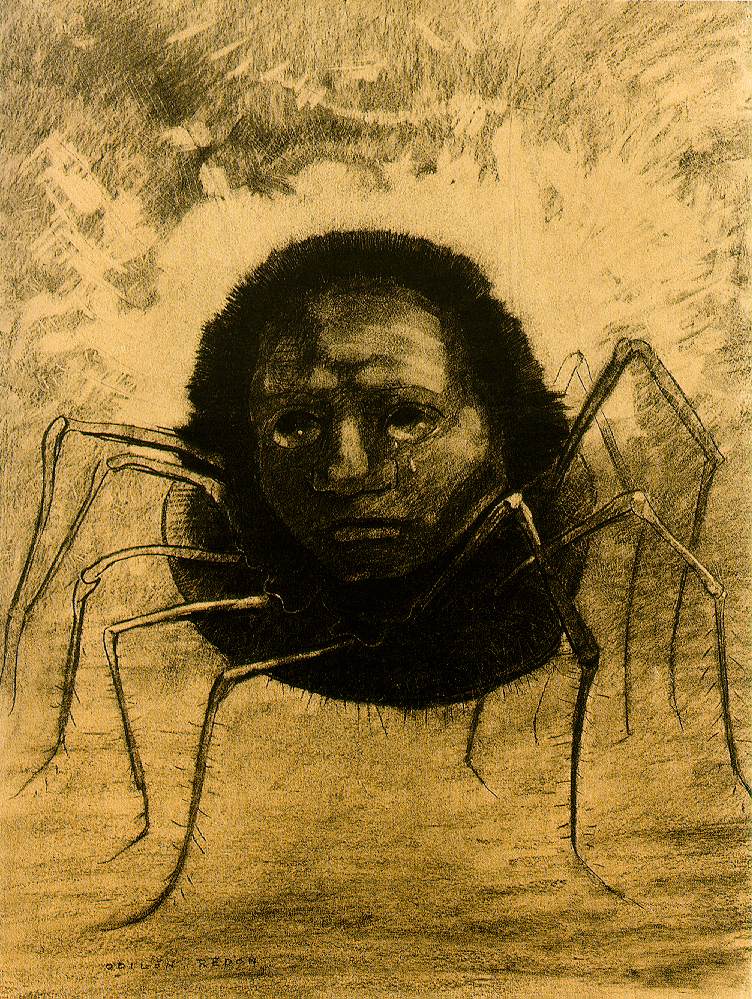
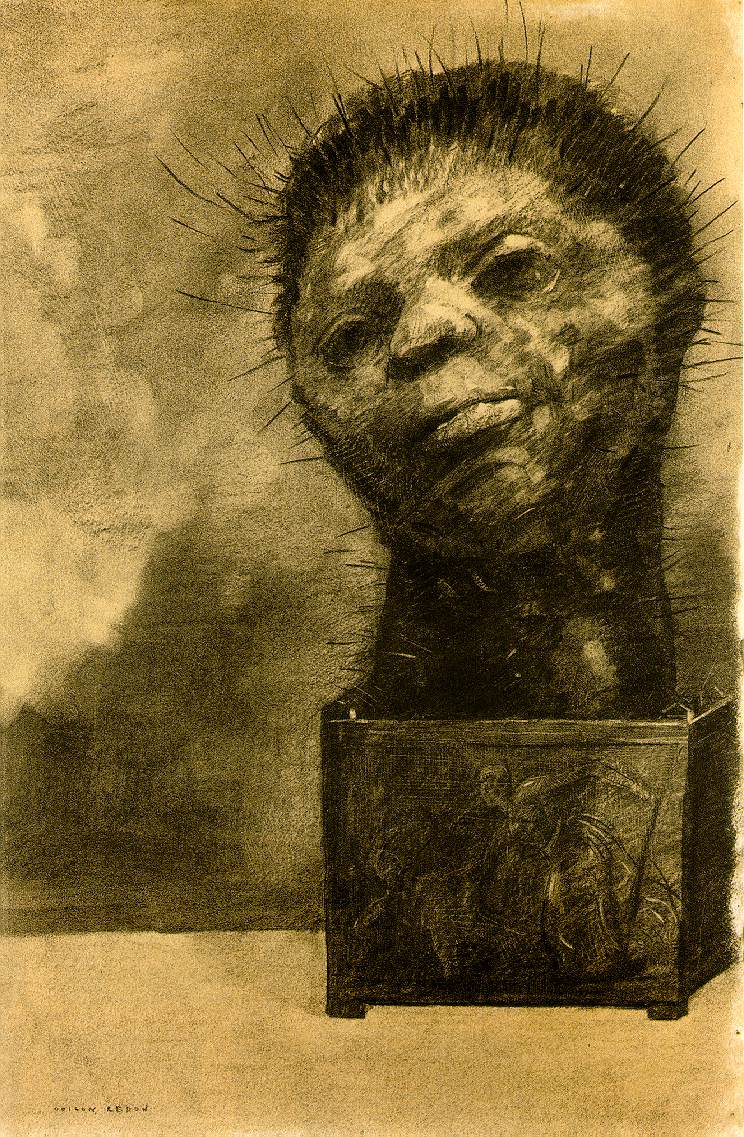
Like, look at this stuff:
My sister thinks this one is cute, actually...
My head is a cactus. Your argument is invalid.
This is the work of the late 19th century painter and printmaker Odilon Redon, and BOY is it weird--weird like Unknown Kadath was to me when I first discovered it way back in Middle School. This is honestly just the tip of the frozen crazyberg, the man's work is remarkably disturbing. And I've never seen these kind of designs used, save arguably in Carpenter's The Thing. (Look at the crying spider. Now think of the head sprouting legs and scuttling across the floor. Apparently those two guys were shipwrecked by the same crazyberg.)

And there's a whole lot more where that came from, too. Like, how about Fuseli's famous painting Nightmare:

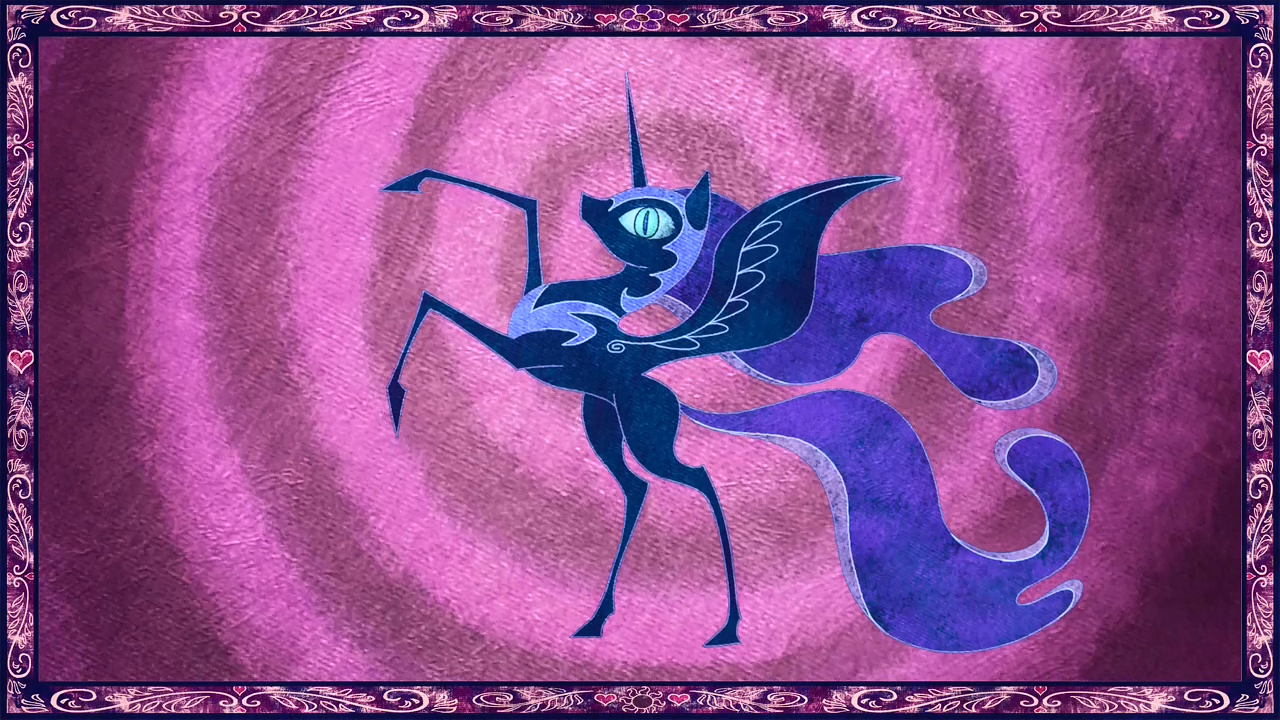
AAAAAaaaaoh, hey Luna.

Er, wait, no, that's wrong...

Oh, here we go:


There's a reason that picture has been parodied from here to next Tuesday: it's frightening. It's a disturbing painting. And when confronted with terror, we giggle at the ghosties--we try to find ways to bring it back down to something manageable.

Which brings us back to Cthulhu one last time, I think. That's the state we're at with our tentacled friend--we've parodied him into something manageable. To some extent, I accept that more than I do the unironic use of the Mythos, because parody that shows that we're still afraid enough of the dead god to need to counteract our fears, whereas the mindless inclusion of Lovecraft into everything just shows a disrespect for the source material, and a cynical desire to cash in on a fad.

But we've reached the point now where enough is enough. I hate to think that for some kids their first exposure to the Lovecraftian mythos is just through the countless rehashings. That would be a shame; after all, Lovecraft's world is a dark and terrifying one, and there's something to be said for the discovery of that world in obscurity.

That's what I fear we've lost most of all--that sense of suddenly discovering the awful truth beneath the sea, the awful truth of a dark and hostile universe. It's the hushed conversations with friends as you describe in excited, faintly fearful tones the story you just read about the being that is dead but dreams all the same, the being that will return when the stars are finally right.

So, for now, let's start exploring other avenues. Let's explore where Evangelion, or Fuseli, or Redon--or the countless other myths and stories and paintings that now lay untouched by culture--can take us. Let's taste a different kind of terror for a while (preferably one that tastes a bit less like fish).

And soon, after a time, we will forget again. R'lyeh will sink beneath the waves once more and we will become complacent and content with the knowledge that we are masters of our world.

And on that day, the stars shall align.

On that day, he shall return.

For that is not dead which can eternal lie...

And with strange aeons even death may die.

Ia! Ia!

You can follow me on Google+ at gplus.to/SamKeeper or on Twitter @SamFateKeeper. As always, you can e-mail me at KeeperofManyNames@gmail.com. If you liked this piece please share it on Facebook, Google+, Twitter, Reddit, Equestria Daily, Xanga, MySpace, or whathaveyou, and leave some thoughts in the comments below.


EDIT: It has been pointed out to me that I repeatedly misspelled "Kadath." I sure feel like a chump now. I did, however, correctly spell "R'lyeh" from memory, so I can at least take some solace in that. It has also been pointed out to me that I am insufferable and pretentious. That one's going to take a bit longer to fix, but we're working on it, folks, we're working on it.

Saturday, July 28, 2012

Poetry is Dead

What if I drop one breath?

What does it mean for a medium to be dead? I mean really dead, totally stopped in place with nowhere to go, no way forward?

What does it mean to have nothing new to explore technically?

I think about this quite a bit, actually, because of my weird background with media. Although new media is very important to me, my training comes from art history and lit crit, so I'm what you would call a child of the Old School. And one of the things I've noticed is that all sorts of media have died off over the years, just sort of spun their wheels and finally stopped.

And it's not necessarily big things. Like, there's no Death of Music (despite what both Don McLean and Devin Townsend say), and I doubt there will be in my lifetime. There's just too much territory to explore. But you can kill off a single instrument. When was the last time you heard a crumhorn, for example? It's a medium of expression just as surely as the paintbrush is, but it's fallen by the wayside. And there's other little odd things that live in the space between media and genres, things like...

Well, how about Radio Dramas?

When was the last time you heard a radio drama?

I can remember the last time I heard one. It was sometime back in, oh, 1997 maybe, somewhere around there. It was a radio dramatization of Star Wars: A New Hope. And that broadcast captivated me, it went far beyond the movie ever could, for it became my personal Star Wars, the Star Wars that played out visually inside my own head.

But you don't hear too many radio dramas these days, do you? It's another dead medium. It reached the end of what it could do, new things drew the attention of the masses, and people moved on, leaving a media ghost town.

Oh, and then, of course, there's poetry.

Poetry is dead.

But wait, let me back up a bit and explain just what I mean by a medium having nothing new to explore technically. This isn't a new concept for me, actually. It's something I call the Medium Singularity. I've already talked about it in relationship to painting, but let us roll through the main points again.

A Medium Singularity is the point where we expand a medium as far as it can go, where we reach the end, essentially, of Progress. It signifies the point where our ability to predict future possibilities goes completely out the window, where there's no technique that hasn't been taken to its furthest possible point. It borrows the concept from Transhumanism, actually--the Singularity signifies the moment of push, the great thrust beyond the limits of the merely human, where all bets are off and something totally new emerges.

Another possible term for it is Art At The End Of History. What does that mean exactly? Well, I think this quote just about sums it up:

"We're the generation of 'they have already done that. They have already been there."

Youch. Heavy stuff there. That's a quote from a Belgian paper, actually, translated by a friend of mine. (He couldn't locate the original source, unfortunately--another interesting example of information lost within an information flood.) The statement encapsulates, for me, the sensation of being post-historical. It's the sensation of realizing that Progress, at least in little corner of the artistic world, is over. Our happy story of a history that moves ever forward hits a wall and we're left stranded, with all the achievements of the masters of the past gathered up behind us.

And that can be insanely frustrating for artists! I don't deny that it can be the hardest part of playing in these fields today. Hell, it's a cornerstone of modernist philosophy, where instead of making new material you just endlessly disembowel the great works of the past in search of some elusive meaning among the cast out guts of consonants and vowels. From J Alfred Prufrock all the way down to Howl, there's dross left for us after the last masters plucked out their gold, and standing on the shoulders of giants, as the song goes, leaves us cold.

Poetry is the latest victim of the End of History. Think about it, when's the last time you bought a book of poetry? When's the last time you saw someone stand and recite aloud, or heard the sound on the radio?

And you know, people have been releasing new poetry. But they're the vinyl freaks of the lit world, the people who still buy their albums pressed onto those big beautiful discs, the dying crowd with their dying tech, playing out their songs till their needle jumps and another one bites the dust.

Poetry killed itself, hung itself in the attic on a tetragrammaton string that read PoMo. Some of its acolytes killed it with sound, broke it to pure noise like speaking in tongues, like gifts from the mad god of the 20th Century. Some made it a grocery list, gathered their affairs in order like Pink arranging guitar splinters in a hotel room, then passed away into the West taking the magic of the Elves with them. And some, knowing the time was at hand, hearing the tune of the jazz band, took their books and ran, their pages fanned out in a flickering street lamp in the wasteland.

Poetry hit a wall. It beat up language for its lunch money, and the funny thing was, when it was through it found nothing more to do with the change it had effected. The beat was rejected: each meter was reduced to a kind of tired pattern of use, and the modernists refused its tired truths.

And what could they do? All the clear visions of the Chinese masters were used up faster than you could conceive, they had received all the alliterating letters from the Nordic breed, and the call and answer patterns from across the Mediterranean Sea. Even long and short vowel beats, those pounding feet, had been retreaded from the Greeks by Edgar Allen Poe.

So where was there to go
but down?

But let's rein it in, I'm losing breath.

It came to the point that every technique you can imagine was played out, and, like the modernist painters, the modernist poets pushed every possibility as far as they could: repetition, the abandonment of meter and rhyme, the collapse of grammar and punctuation, the abandonment of meaning in favor of pure sound... every way you could mutilate a poem, the modernists did it. Sometimes their work was staggeringly beautiful. Sometimes it was dead. But I think that explosion of panicked experimentation can be seen as the death throes--it was the final moments of poetry's life, the rush claim the last innovatable territory.

But if you've been paying attention, you know that death isn't the end.

It's just the beginning stage of the metamorphosis.

See, just because you can't do something new technically with a medium doesn't mean you're out of things to say with that medium. In fact, I would argue that it becomes far easier to say what you want after a medium is dead, because you've got all of the tools imaginable, and you can pick and choose the tool for the message you want to convey. You're cut free from the stupid demand of the critics to be avant-garde--which isn't to say the avant-garde is bad, but the constant push in the art world for the next shock is absolutely a hard limitation that you don't have when your medium is dead. How on earth can you respond to a demand for the fury of artistic progress with anything but laughter when your medium's already been buried?

And after that laughter you can really get them worried, 'cause once the tools are all laid out before you, all the ones that are played out can start to be questioned. And this may cause some tension, but I just have to wonder:

Is poetry dead, or has it found a way to live under a new name? A name that to old poets is profane, but that has gushing through its veins the methods of Homer and the rushing presentation of a great Orator's proclamations? I speak of "SLAM," a poetry that positions its hand upon the shoulder of the oral tradition, that is bolder than the gentle bleating lamb beats that the ivory tower demands.

Tell me, when is the last time you heard a man raise a crowd's voice and hands with rhymed out lines out of his very soul? When a whole gathering of people stood at attention to hear their lives and feelings captured in a poem's mention?

But don't listen to all my nonsense, listen to Saul present this:


You can see how I might get irate when I hear someone pontificate about the youth today and how they don't appreciate art. Let me do my part as a lit crit theorist and say the nearest I've ever come to Dead Poet Society is when I'm listening to a playlist of hip hop. Hear this! The Modernists let the beat drop! And this genre caught the ball and slammed it, sample loops and all, through the hoop.

You could call it a SLAM dunk.

And you don't have to punk out
your lines, or rap to these jams,
This just shows with no doubt
that poetry died and came back
like Adonis. And I'll be honest,
I can't tell you what all this means
because once you've crossed the singularity
you're in the land of the Absolutely Free--no limits.
So give it a shot, don't let poetry
rot in a grave of its own making.

Because we're making art
at the end of history.
And poetry's only as dead
As we let it be.

Give my regards to Brooklyn.


This article really took on a life of its own--I wasn't going to write it this way, but the rhymes just started coming, and the rest, as it were, is history. No idea if it actually worked or not. You can follow me on Google+ at gplus.to/SamKeeper or on Twitter @SamFateKeeper. As always, you can e-mail me at KeeperofManyNames@gmail.com. If you liked this piece please share it on Facebook, Google+, Twitter, Reddit, Equestria Daily, Xanga, MySpace, or whathaveyou, and leave some thoughts in the comments below.

Monday, July 23, 2012

Shadow of the Bat: Finding the Good in The Dark Knight Rises

I have to confess that I feel doubly hampered in this article. First, because I suspect at least some of what I say is going to be said by other writers in the coming week, and probably it will be far more articulately said, to boot. And second, I'm going to do something a bit presumptuous.

I'm going to try to plot out some of the things The Dark Knight Rises should have done to be a good movie.

I honestly can't tell if I'm apprehensive because I'm being presumptuous on two counts, or because I'm about to incur the wrath of a thousand howling Christopher Nolan devotees.

And really, I shouldn't be so bold with my claims, either. I'm not necessarily going to dramatically reveal the brilliant Sam Keeper Confirmed Method of Making The Dark Knight Rises Awesome. Really, I just think there are some major thematic flaws in the film that damage an otherwise well shot, well designed, generally compelling work. I am not really, in other words, saying that it is a Bad Movie.

So, let me cast off the rope and make this argumentative leap with no net.

Let this put the fear in me good.

EDIT: It occurred to me an hour after posting this that hey, maybe people want to avoid spoilers. As talking about theme and structure without mentioning spoilers is a little, uh, impossible, this article does contain spoilers. So, those people wanting to avoid spoilers will also be wanting to avoid this article.


So, theme is important. I've talked about it before, as have plenty of other critics dating all the way back, in particular, to the New Critics, the Formalists of the early 20th Century, who declared to be a Great Work one needed to have a Great Central Theme that encompassed the whole text. Now, obviously, that's an absurd demand, and it is presumes a lot about the universality of certain themes (i.e. if it's a Great Central Theme according to the old, white, bourgeois men who created Formalism, it must be just as relevant to everyone else, right?). There can, of course, be more than one theme in a work--some of our most beloved works have a high thematic density--and not every scene needs to apply directly to the theme.

But for goodness sake, your themes have to at least avoid directly contradicting one another.

And just about every idea that The Dark Knight Rises puts forth is contradicted elsewhere in the film. It's not in a way that even juxtaposes the idea for dramatic and intellectual tension, like the previous film did, where two opposing ideals are set against one another and the viewer has to decide which combatant ultimately won. No, here there is just a cacophony of soundbites that don't add up to anything.

Don't believe me?

Well, try doing the Formalist thang, as the kids say--try picking out what you think the central question the film addresses, and how it answers that question. Is it perhaps raising questions about whether or not Gotham's elite are really worthy of rule, and critiquing the authoritarian powers of the Dent Act? Uh, maybe, except it seems to be dropped after a few scenes, only to be picked up later... by Bane, who isn't exactly the most neutral of critics. The film seems to come to dramatically different conclusions about this depending on the scene, and much of the time forgets that this is a theme at all, when it isn't shoving the theme in our face with endless expository dialogue. Or is it continuing the theme of chaos and fear, and coming to terms with our own traumas, as was played with in the first two films? Maybe? I don't know, that certainly seems to be Bruce Wayne's character arc, but the previous two films used the villains to great effect--they embodied the themes presented--where here Talia al Ghul (??) is just sort of tossed in as Bane's love interest (??!?) who has been trying to achieve a decade-long revenge (?!?!?!) against Bruce Wayne for murdering her father. ...What? And Bane is just... Bane. God. I don't even have an explanation here. His character suddenly does a total one hundred and eighty degree flip when Talia shows up, and then flips right back, just in time for him to get blown the fuck up by Catwoman in one of the most anticlimactic villain deaths on record. Neither of them have enough character development to really serve as a foil to Batman or a manifestation of the movie's recurring fear/trauma theme. I guess this might be what they were going for with Thalia, but her face-heel turn comes so late in the game, and has such microscopic buildup that it really doesn't play that way.

Basically, any theme that you throw out can be easily discredited with other information from the film itself.

It's one giant contradictory mess.

And that's not even addressing the convoluted twisty-turny plot, although you will note that I could not avoid at least touching on the narrative while discussing the thematic problems.

The thing is, though, I don't particularly like picking apart everything wrong with a piece. I really like examining and exposing what works. And there's a whole slew of places where The Dark Knight Rises almost develops a sound, powerful theme. So, rather than hammer on about everything that doesn't quite fit together in the film, I want to talk about the ghost of the film--the film's dark double. I've done this before, of course, albeit covertly with my reviews of "Manos" The Hands of Fate and Golden Dusk. Here, I want to more directly take some of the scenes and motifs in the movie and explore how they could have been transformed into something greater.

Take Bane, for example. Now, there's a rather interesting moment in the film where Bane declares that his detonator is somewhere among the People--it is out in the hands of some ordinary citizen. Now, when I heard that speech, I sat up and started paying attention, because it reminded me of another line:

"When the chips are down, these civilized people... they'll eat each other."

Remember that? That's the Joker speaking there, summing up one of the many things he wishes to demonstrate to Batman and the city of Gotham as a whole. And for a moment, it seemed like this idea, which the Joker explored with his boat detonator trick, might get an even more detailed treatment.

Of course, it wasn't. This idea was pretty much ignored for the rest of the film, besides occasional references here and there at pivotal moments. It ended up being another thing that was sort of thrown in, seemingly as an afterthought.

But we can start to imagine just what might have happened with that declaration. It goes back, I think, to fear and the idea of the ability or inability to master personal demons and traumas--one of the major themes that the film almost articulates but ultimately fumbles. It's particularly intriguing because it works with that theme on multiple levels. First, there is the fear of the average citizen, the paranoia, the realization that anyone around you could be the person with their finger on the button. How do you react to such a fear? Then, there is the individual that has the trigger--Talia al Ghul. Can she pull herself up from her traumas as Bruce Wayne did and become something more? Or is her power and civilization simply a mask for the monster inside her? Can she, in short, be redeemed?

The movie, of course, comes firmly down on the side of "Oh, man, I dunno." We never really see the reaction to Bane's declaration, or any sort of exploration of what that means. And Talia's turn to the dark side comes so late in the game that there is simply no time to explore what her decision to push the button means for her character, beyond more horrible expository dialogue. (Show, Don't Tell is a terrible, terrible phrase, because it mixes sensory idioms. That said, the concept it represents, however poorly, is an important one: a work is far more interesting when we learn a character's personality through their actions and words rather than through their own--or someone else's--explicit explanation of what they are feeling and why. Compare Talia and Bane's late game backstory reveal with the Joker's mannerisms, body language, and tendency to let hidden sides of himself slip occasionally.)

But, even though this material isn't explored, we can see how it might have been. Does that make sense? We're reaching toward a shadowy echo of the film that might have been.

And that's not the only interesting theme drop. There is, too, the intriguing moment when we discover that Bane's importation into the city has been effected by one of Bruce Wayne's business rivals. This is an intriguing point for the movie to make, as it suggests again the fundamentally corrupt nature of the supposedly innocent upper classes.

It is also one of the points of the story where The Dark Knight Rises lurches toward something resembling real political allegory. After all, the suggestion here is of a demagogue, supported by insurrection and revolution, who is secretly backed by the vast hidden interests that keep the oppressed... well, oppressed. This is, quite frankly, a near spot on allegory of the American Tea Party, a proto-fascist organization that is funded by major corporate interests.

This is another example, of course, of a theme that never quite gets off the ground, but it's an interesting cautionary tale for those great corporate entities who have achieved such overwhelming power in the political arena: be careful of the monsters you create, for they may turn upon you.

Contrast Daggett, the creep who brings Bane into the city in the first place, with Bruce Wayne and his relationship with both Blake and Catwoman. Wayne's relationships are based on mutual respect and understanding--although it is, due to its grounding in reality, a rocky and imperfect understanding--that crosses class lines. Daggett seeks only to exploit Bane and his henchmen, and pays the ultimate price.

And while we're talking about Blake, our young Robin, let's examine some of his thematic purpose.

One of the absolute best moments in the film, one of the moments where I found myself totally engaged, was when Blake/Robin found himself in a fight with two workmen who, it turned out, had been pouring dynamite-laced concrete all across the city. (This is another thing to add to the list of Intriguing Ideas Never Explored Fully--after all, you would have to have a pretty big construction company under your thumb to enable that kind of infiltration, no? Again we see the looming spectre of corporate-sponsored terrorism.) Robin shoots both of his assailants and then, realizing that he's about to lose his one lead, desperately questions the dying cement truck driver.

Realizing that he has failed, he glances down at his gun and, with a look of disgust, tosses it aside.

Wow.

And there, ladies and gentlemen, you have one key aspect of the Batman mythos encapsulated in a single scene. It's a wonderful moment that marks a profound transformation of one character's understanding of combat, and his relationship to the legendary power of a man who rules not by fire power but by fear power.

This is, of course, totally tossed out the window when Bane gets an artillery blast to the chest courtesy of Catwoman.

[Sigh.]

What so baffles me about these scenes is the fact that the film is clearly reaching for something, some deeper mythologizing purpose, but it is such an incoherent muddy wreck that it just ends up working at cross-purposes with itself. What in The Dark Knight would have been a profound character moment here is a strange vignette that is never remarked upon again.

But once more, we can see here the ghost of something greater. Consider Robin's character from this standpoint. He has been taught three major lessons in the film:

First, he discovers the corrupt nature of the system and how seemingly beneficial structures can become the unrelenting architecture of the status quo.

Second, he discovers the capricious power of firearms, their dark side, their promise of an easy way out.

And finally, he discovers the corrosive nature of authoritarian command structures, and how they draw strength from fear.

Where does that last one come up? Why, the attempt to get across the bridge, and the prat on the other side who wouldn't listen to reason. That man, driven by fear of the nuclear blast, chose to fall back on his orders rather than to choose the path of courage. In that sense, two of Robin's lessons are about the danger of having a high power distance index. For those unfamiliar, the idea is that some groups of people--organizations, nations, and so on--have particular ways of reacting to power. Falling high on the index (and someone please let me know if I'm remembering this backwards) means that your civilization tends to show high deference to authority. And that can be a catastrophic problem in certain situations--like when you're the copilot trying to alert the pilot of a plane to immediate danger, or when you're faced with the decision of whether or not to let those school kids cross the bridge.

And that's a great message, and once certainly present elsewhere in the film. It's stymied once again by the attitude elsewhere in the film that people need authoritarian forces keeping them in check, but as a myth arc for Robin it's absolutely great. Robin--and, by extension, Batman--is a necessary force of disruption, a challenge to existing power structures.

If we want to take this even further, imagine if this Robin was black. Or latino. Or a woman. Or queer. I mean, we've already got Batwoman as a very overt example of an individual marginalized by authority taking power for herself.

Hell, just the fact that Robin is from the lower class makes a huge impact on his character. He can take over as Batman--in fact, he SHOULD take over as Batman--because having Gotham's protector be the son of the 1% simply isn't cutting it--there's just too much of a disconnect between Bruce Wayne's ideals and the reality of life in the pit of class inequality.

I think the fundamental problem with this--with ALL of this--is that there is too much going on. The thematic density, and the sheer number of plot threads, is too damn high (just like, apparently, the rent in Gotham City. Ahaha). I've only touched on three themes, and we've already practically got three different films ready to go! And that's not even getting into things like Jim Gordon's personal transformation, the motif of the cracking ice, the reappearance of the Scarecrow as the judge of the Terror Court, and on and on and on. There's so much going on in this film that its confusion and incoherence isn't a surprise, IT'S A BLOODY INEVITABILITY.

And what's more, it's a bizarre mistake from the perspective of Nolan's wider film career, where he shows a keen interest in particular themes that are explored in detail in single films. Sometimes he'll play with more than one idea in a film, but never, ever, at least in the films that I've seen, has he packed so much into one movie.

From that perspective, I honestly can't understand how this film even happened.

You know, though, I'm reminded of a friend of mine, who tends to react to movies in... well, sort of an unorthodox way. She once told me that she prefers the prequel Star Wars trilogy to the original trilogy. How is that possible? Well, she has this weird ability to jump right through the actual film to its shadow double lurking in the background. She embraces the possibility of the ghost film and even manages to rewrite her memories so the shadow takes the place of the original. The doppleganger, the mask, the secret superhero identity supplants the original, taking it over. By the time her brain is done parsing a film, there's no Bruce Wayne left.

There's only the Bat Man.

That's not possible for most of us, of course, except in minor ways. However, I think there's some worth in looking beyond the flaws in the film itself, the weak, cold, somewhat unlikeable Bruce Wayne, to find that shadow. If nothing else, it can be a useful exercise that allows us to pick apart not what did go wrong but what could have gone right.

Just because something ultimately fails doesn't mean we should give up. There is a value for the viewer, for the scholar, for the creator, even in failure.

After all... Why do we fall down?

You can follow me on Google+ at gplus.to/SamKeeper or on Twitter @SamFateKeeper. As always, you can e-mail me at KeeperofManyNames@gmail.com. If you liked this piece please share it on Facebook, Google+, Twitter, Reddit, Equestria Daily, Xanga, MySpace, or whathaveyou, and leave some thoughts in the comments below.

Sunday, June 24, 2012

The Dork Is Rising

Our Valued Customers, capturing the voice of our time.

@the_moviebob: What we have now isn't "meritocracy;" because the people in charge aren't there for their actual merits
@the_moviebob: Things should be run by whoever is best equipped to run them. Maybe that's closer to Technocracy, but it makes sense.
‏@GreyTheTick: It's perfectly possible to be both smart and insane.
@the_moviebob: at this point, I'd take that option. I am TIRED of being ruled by lesser minds rendered "superior" by incidence of birth.

--Moviebob, conversation on Twitter
Movies right now need more kid detectives. Give smart kids someone to root for.
--Moviebob, on a different day.

Ho ho ho Nerd Rage! Isn't it hilarious? Those silly nerds, always getting so worked up over everything.

You know, it's true. There's lots of nerd rage to go around these days, it seems. We collectively seem to always be angry, but we're not exactly managing to control that side of ourselves quite as well as we perhaps should. We are, it seems, no Bruce Banner.

And boy, that rage sure does manifest itself in some rather destructive and awful ways, doesn't it? Like, how about the psychotically vehement attacks on women in geek communities of late? That's sure not the healthiest manifestation of rage I've ever seen. Or the continuous racism and homophobia within the culture? Or even the often insanely hostile battles within fandoms? I mean, take this analysis of the Sonic the Hedgehog fandom, for example. It sounds absurd--I mean, the character is a super fast hedgehog--but apparently that fandom is a giant roiling cosmic Lovecraftian space of madness and entropy. And you know what? It's not the only fandom to approach that level of awfulness:

"Fandoms by nature are usually pretty horrible. Get enough people together who like something and you’ll quickly find their personal opinions clashing violently. Have something that has been around long enough or had enough changes in it’s lifetime and you’ll find yourself with a fanbase divided and constantly at war with it’s self. Lord knows merely posting about any Final Fantasy is fuel for an instant flamewar."

Plenty of people have written about the toxicity withing the culture that gives rise to such expressions of fury. But, you know, I don't think we can just look at geek culture in isolation. it exists, after all, within a larger social system, so why not explore it within that system? Weirdly, this is already being done to some extent, but largely from a standpoint of feminist and race theory, looking at the white straight male nerd as a powerholder. To some extent, I think that sort of analysis is reasonable.

But in another sense, it misses a major point:

Nerds are an oppressed group in American society.

Now, let me be absolutely clear: none of what I'm going to say justifies the awful treatment that a vocal segment of our community has shown even people we should consider part of our own number. I do think it might help to explain it, however.

Consider the two quotes that I started this post with. They're both from Bob Chipman, Moviebob, one of the really great video game and movie analysts on the web right now, and a regular champion of progressive thought in geek culture. But man, that first exchange sounds more than a little frustrated. Blow-up-a-building frustrated. Check out that last line: "I am TIRED of being ruled by lesser minds rendered "superior" by incidence of birth." (emphasis mine) That "lesser minds" bit is particularly interesting, because it suggests where the frustration is coming from.

It's coming from the same place that the second quote is coming from: the feeling that "smart kids" have no one to root for, and no one to root for them.

Now, Moviebob isn't, in my estimation, the type to actually blow anything up, as enraged as his rhetoric is. In fact, he's pointed out before that just because he's bringing up what he considers a catastrophic system failure doesn't mean he's advocating the most extreme solution--or, to put it another way, the most final solution. I've noticed it myself--it's easy to assume that when I condemn an organization like the Catholic Church that I'm demanding stronger measures than, uh, widespread public outcry and police inquiry into criminal activity. Not totally crazy, right? Our rage and our rhetoric outstrips our actual political stance.

But Moviebob and I aren't the only geeks out there that feel shut out of society. Those psychos railing about men's rights and how straight white males are the most oppressed people? Yeah, those guys are a product of a priviledged society that's going through the heaving convulsions of progressive change, but let's be clear about one thing: they were never in the top rung within their group. In fact, they've probably been frequently ground into the dirt despite their privilege in other areas of life.

It's an inevitability, actually, in a culture that so vehemently despises the intellectual. I mean, my god, American culture in particular seems hell bent on reverting to the days when heretics were actually burned at the stake. All the natter about the liberal elite? The mockery of the ivory-tower intellectuals who are out of touch with "common sense" and folk wisdom? Bill O'Reilly basically echoing the rhetoric of fucking Insane Clown Posse?!

All of that is a sign of a culture that has so devalued intellectualism that a sizeable chunk of America is ready to get out the torches and pitchforks when someone so much as dares to suggest that maybe demonstrable scientific theories should be given precedence in a science class.

Oh, and what's more, this is all occurring against a backdrop of the absolute collapse of higher education. Collapse too dramatic, you say? Oh, I'm sorry, what would you call ballooning costs paired with a scarcity of work, and a culture that responds to outcry against this insane system by not just accepting the unjustified arrest, beating, and pepperspraying of students, but cheers these authoritarian actions along from the sidelines?

America has become a state that despises knowledge, despises those who seek knowledge, and despises those who openly display knowledge.

And you absolutely cannot leave this fact out when you talk about Nerd Rage and the horrifying maelstrom of sociopathic rage that is modern Geek culture. Because we are exactly as our society made us. We're just expressing our horrifying maelstrom of sociopathic rage in a way that isn't accepted, because instead of wrecking global economies, decimating the environment, and marching cheerfully to war, we're directing our poison inward at our own community and expressing our rage and helplessness the only way we know how: by lashing out at each other over what fucking Final Fantasy Game is better.

Or, for those of us who have been particularly poisoned by the ingrained structures of hate in society, we lash out in far, far more destructive ways, at women, at queers, at people of color, and so on.

Oh, and sure, some of the people I'm talking about here are shut out of society because they've just decided that being maladjusted is who they are, by god, and if you won't accept them, well, it's YOUR FAULT, YOU HATER! These people suck, no argument, and I'm not sure what we can do as a culture besides take a stand and say that we aren't going to tolerate their idiocy.

But these problems aren't going to magically go away if we expel the absolute creeps, because, well, for one thing... where will they go? Join the NRA? Start a militia? This occurred to me as I read a recent Pervocracy article about fixing the broken steps in our social groups. Don't get me wrong, I think Cliff is totally right here--we need to actively refuse to accept vile, inhumane behavior, and if that means expelling someone from our social spheres, well, that's what it means. But the creeps have to go somewhere, and as we've already started to see, when people who are already being ostracized by society are further pushed to the margins? I really do fear that one day soon the geek community is going to be utterly shattered because someone on the edge of reason is going to snap and actually outright murder one of the big, important voices for equality within the movement. How long till someone takes the threats against someone like Anita Sarkeesian and decides they need to become reality?

I feel like an absolute heel putting it that way, because A. it seems sensationalistic and B. I don't have a good solution to this problem. I don't like even talking about these things because, well, I cry uncontrollably when I read about books getting destroyed, for goodness sake. The actual human suffering I'm invoking here is enough to make me go practically catatonic if I ponder it too hard.

And I really do hate bringing up what I think is a very real, very weighty problem when I don't have an easy answer. What I might suggest is that we need to find a solution here that takes into account the second problem with just focusing on the worst manifestations of this behavior:

It doesn't address the anti-intellectualism that is fanning the flames of nerd rage.

I think if we're going to fix this we need to fix a whole lot of other things in society, as well. A short list, off the top of my head, might include:

  • Government funded undergraduate education. If we value education, we should, as a society, be bloody well paying for it.
  • An immediate halt on the treatment of geeks and the intelligent as curiosities. So, no more snide dismissive references to nerd rage, no more Big Bang Theory bullshit, and so on.
  • A kind of self-imposed open door policy--we've got to stop lording our knowledge over newcomers. That just makes people--especially the people who are already scared of smart things--even more likely to dismiss the things we love.
  • Pro-intellectual messages within the community. We really, really need to stop the infighting between lib art geeks and science geeks.
  • More public education campaigns. We're doing a lot to reach people on the borderline with pro-intellectual messages. We're not doing enough to reach beyond those realms. I probably sound like a broken record by now, but hey, it's important stuff.
  • The active recruitment of children living in the bermuda triangle intersection of race, class, gender and sexuality, &c. We're losing kids because they aren't getting support from the school system, they don't have access to pro-intellectual summer programs, and they're not a part of net cultures. This needs to be fixed, for the good of everyone. The anti-intellectualism in some strands of urban culture is deeply troubling.
The creation of pro-intellectual media that is aimed at a general audience. I.E.: give the smart kids someone to root for.

Basically what I want to see is a broad coalition of the intelligent and educated, reaching outside of geek culture to the assaulted university system, and reaching beyond that to the members of society most at risk for becoming anti-intellectuals and perpetuating this dumb system.

And I do have hope for that. I mean, I've personally been dealing with quite a few issues of my own, partly stemming from the problems I'm describing here, but every so often I get a reminder of why Geek culture is so important and so worth saving. Whether it's someone commenting that an old article of mine really touched them, or the opportunity to geek out with an old friend over the clever thematic structures in Cowboy Bebop, or someone that I've only ever met online letting me know that he might be leaving our geeky online community, but he wants to keep in touch with me. Those are the types of bonds that make the frustrations of living in a society that doesn't think that we're valuable, well, worthwhile.

Because we can remind each other that we ARE valuable.

And that's a whole lot more constructive than rage.

You know what? Screw the rest of this article, that title is GOLD! You can follow me on Google+ at gplus.to/SamKeeper or on Twitter @SamFateKeeper. As always, you can e-mail me at KeeperofManyNames@gmail.com. If you liked this piece please share it on Facebook, Google+, Twitter, Reddit, Equestria Daily, Xanga, MySpace, or whathaveyou, and leave some thoughts in the comments below.

Saturday, March 17, 2012

Reader's Rights: The Idea Preservation Imperative

I believe in the power of ideas. In fact, I would actually go even further than that: I believe in the preeminence of ideas. They aren't quite as important as human life and comfort (although there are some exceptions) but beyond that, creative thoughts are incredible gifts.

I've already talked about the act of finding value, especially as a creator and a critic, in even the most unlikely of places. And, what's more, I've written a couple fan fiction pieces that attempt to put into practice my prattling: one based upon Twilight, the other based upon "Manos" The Hands of Fate.

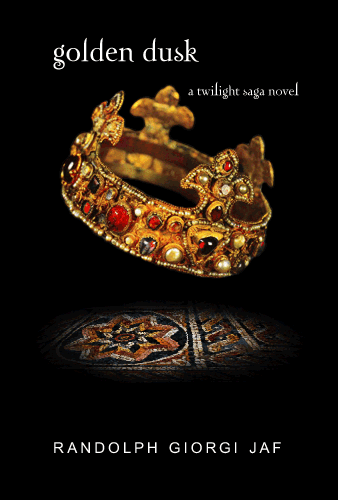
This book definitely exists. Really.
It should be obvious from this, I think, that I hold fanfiction in a particularly high regard; on the same level, in fact, that I hold more traditional forms of critical analysis. Both occupy the same space in culture when it comes to interacting with ideas. They use similar techniques of analysis, similar methods of picking things apart, often act as either homages to good works or dismantlings of bad ones. The fact that they engage the reader in different ways does not, ultimately, make them different processes. It's just that fanfiction ends up creating its own complete text at the end that someone else can analyze, whereas criticism just holds a mirror to the original. In a way, fanfiction might be considered more productive, in the end, than criticism because of the way it produces something new that can be built upon in the end.

You can write a fanfic of a fanfic, but you can't write a fanfic of a critical essay.

Probably.

Well, alright, maybe Godel Escher Bach counts as a fanfic of a critical essay. Ah.

Anyway, the point is, these types of texts are important because they uncover and preserve good ideas. But unless you've got a narrow exception like Godel Escher Bach or the notes to The Waste Land or an Umberto Eco essay, criticism doesn't do the one thing that fanfiction can, even though it's using largely the same processes.

It doesn't take that golden, glowing kernel of an idea and nurture it into something new.

And that's a power that we have an imperative to put into use when the original author of an idea can't put that idea into use.

See, sometimes, for whatever reason, a creator cannot or will not explore one of their ideas to its fullest extent. This doesn't even mean that something has fallen through the cracks, necessarily. There's nothing in Scorsese's recent film Hugo that strikes me as conspicuously omitted--it's a tight film, as my collaborator Leslie the Sleepless Film Student would say. But there are still ideas there that could be explored from another angle. The nature of the Great War could certainly be explored further, and the trauma driving the Stationmaster (it seemed clear to me that he was shellshocked, no?). This is an area where fanfiction can serve perhaps more effectively than criticism, because it allows the viewer to not just analyze the character's psychology but to add to it and imagine, in more detail, just what his history and experiences are made of.

So, this is an area where fanfiction can fill in some gaps. It's not exactly what I would call an example of the sort of moral imperative I'm talking about, though.

Something like writing a "Manos" The Hands of Fate fanfiction is.

What makes the difference is that what good ideas there are in "Manos" are in danger of being lost. The film itself is already in rather poor condition, and I doubt anyone has watched it recently without the hilarious commentary of the Mystery Science Theater 3000 crew. If there are any creepy moments at all in "Manos"--and I assert that there most certainly are--they are in danger of vanishing, and what we might learn from the film could be lost.

This is where the Reader's Right of Fanfiction kicks in. We've got an idea on the verge of vanishing into the cultural haze, a certainty that the creators of the film (if any are still alive) will never revisit the film's ideas, and a platform--The Internet--where fans can share and explore their takes on the film. In that situation, readers have an ethical right to take everything in the film and run with it, copyright be damned.

The Idea is preeminent above all else.

But, alright, "Manos," though I love it so, isn't the kind of sparkling gem that's going to convince a lot of people, I suspect. So, let me use an example that has a few more fans, and is a bit closer to my heart, though it's still not exactly what you might call an elite masterpiece of artistry.

I'm talking about the storyline for the game Magic: The Gathering.

For the uninitiated, it might surprise you to know that Magic has a pretty intricate backstory--one I've been following for quite a while now. The idea is that there are countless worlds, each unique and magical, that make up the Multiverse known as Dominia. These worlds are closed off from one another... unless you are a Planeswalker, a being capable of stepping through the void between worlds, a being capable of exploring the Multiverse in all its wonder.

The interactions of these Planeswalkers, the normal beings that inhabit the planes, supernatural entities, and the core mechanics of the Five Colors of Magic knit together to create a  complex, fascinating fabric of a narrative. And certainly, many of the individual threads are broken in one way or another, what with plot holes, dumb storylines, bad writing or editing, and so on, but generally the storyline is a compelling thing for one reason. To borrow the words of my good friend Jon of Everyday Abnormal:
"I've followed from the beginning. Somewhere, somehow (probably from Richard Garfield sitting in on one too many Planescape sessions), WotC stumbled onto an amazing, unique fantasy world... one that was all fantasy worlds. It was a setting that offered up nearly limitless storytelling possibilities. There were ups and downs, but there were amazing concepts and wonderful stories told within it."
Yep, that about sums it up. It was a world that was all worlds. The potential there is astounding.

Or, it was.

Until the novel line got cancelled a few months ago.

Whoops.

The game will go on, of course, like my heart (ahem), but there doesn't seem to be much hope of us getting the kind of detailed narratives that held the storyline together in the past. I could be wrong, of course, but as of now, the actual long form stories--and even short stories, according to the Creative Director--are things of the past.

Now, are you starting to see why I think this idea of the reader's rights and duties to preserve an idea is so strikingly important?

A little over a year and a half ago, I helped to kickstart a fan project known as the Expanded Multiverse. The idea was to take the spaces in Magic's narrative that couldn't be feasibly filled by the creative team, and fill them in ourselves. The lofty goal was to create a secondary fan-generated canon that was cohesive, well written, and in-line with the established world and stories. A few days ago, when we first got the news that the novels were effectively as over as The Internet (although we didn't hear the news from Prince this time...) I concluded that the Expanded Multiverse was done for as well.

And then, as I got to thinking, and as I read some of the other responses from people on the forums, I realized that the exact opposite is the case: the Expanded Multiverse is more important than ever. The cards aren't going away, the settings aren't going away, the game will continue to explore at least an outline of a plot each time new cards are released... so, we effectively have all the tools we need to build a storyline ourselves.

Now, of course, it's important to recognize what this does NOT mean. It doesn't mean a reader is entitled to mooching off a creator's money. JK Rowling has apparently said that fanfiction is acceptable to her as long as no one charges for it, and that seems to me an ethical model. After all, what I'm advocating here is the primacy of ideas, and limiting access to those ideas by slapping a price tag on seems rather counterproductive, even without considering that you are kinda ripping off someone else's stuff. That ethic, of course, carries over to my own work: I take the Creative Commons license on this site very seriously.

So, I would never suggest that those of us involved with the Expanded Multiverse should get paid (unless Wizards of the Coast decided to throw some money our way, which, hey, I'm not going to say no to, necessarily). But we are still doing an important thing: we're ensuring that the bright kernel of an idea, all the bright fragments of thought that make the storyline so powerful, don't go to waste simply because the company can't economically justify printing books that only a handful of people read.

It's also not a condemnation of creators. As I mentioned with Hugo, there's nothing in this ethic that implies a failure on a creator's part, simply a lack of a particular path chosen. Sometimes that is certainly the result of lack of skill, but the imperative to explore otherwise lost details is not an insult in and of itself. (And I really wish authors would quit taking it that way.) If anything, it's a gesture of respect to someone that created an idea worth exploring.

So, this is, perhaps, a manifesto of sorts for one of the core reader's rights. There are others that I've got bouncing around my head, but this should suffice for now. I need to stop talking and let you get to work.

After all, there are so many ideas out there waiting to be explored; get out there and explore them!

If you like what you've read here, share it on Facebook, Google+, Twitter, Reddit, Equestria Daily, Xanga, MySpace, or whathaveyou, and leave me some kind words in the comments below.

Wednesday, December 28, 2011

Into the Back Room: Modes of Storytelling in Porn

Porn is one of those genres that has a hard time dragging itself into the realm of art--partly because theorists keep creating arcane bullshit arguments for why pornography is definitionally incompatible with artistry. It seems like the majority of people interested in quality have just dismissed porn, leaving it to the normal Joe Bloe(job) (sorry) who doesn't care much about relative quality levels in porn, science fiction, blockbuster movies, food, or anything else for that matter. It's difficult to find a system of connoisseurs when it comes to porn, so there's no one to really draw the quality level upward.

But that's not the only problem. The other issue is the fact that people don't seem to really know what to do with porn artistically. I mean, where do you go with porn? The goal--erotic satisfaction--is so... well... simple. How do you artistically expand upon that while not complicating and subverting the goal?

Remember that article on modes of storytelling that depend upon a single scene or moment or image acting as a catalyst for the brain to generate a whole sequence of other ideas? I think this might be the best way of looking at and understanding the artistic side of porn. Ultimately the question I want to ask here is what can porn do, and what makes it count as art.

To do that, though, let's take a trip back into the more private booths in the depths of the pub. Oh, you didn't know these were here? Come, let's take a look.


Tuesday, November 29, 2011

Finding Feminist Characters

The major problem that I keep noticing with feminist critiques of art is that they tend to be framed around the idea of reforming all feminist critiques of art.

So, we're already off to a terrible start here.1

But the other problem that I've noticed is that there tends to be a decided lack of solid methodology. I mean, how does one go about finding works that do, in fact, get it right and depict women (and men) in a feminist way? Or, perhaps more importantly, how does one go about finding stages where the story goes wrong? I, admittedly, have this difficulty as well--it is only recently that, thinking about it, I began to construct a scheme for myself. It's very easy and tempting to just glance at a work and say, "wow, strong women! Nice! FEMINISM!" or "Wow, [name redacted] is just fawning all over her stalker vampire lover the whole book. SETS FEMINISM BACK A CENTURY!" This stuff tends to be pretty intuitive. But I'm not comfortable with that, because it's not really fair to creators to tell them, "well, trust me, if your work was feminist it would feel more feministyish." And besides, I hate not having a schematic way of analyzing things. It's just who I am.

My criteria break down like this:

1. Is the character someone I can admire or find compelling?

This works a bit better than you might think, because of the compelling rider. I don't necessarily have to like or even empathize with a villain, for example, to find them compelling. If a character fails this first test, that's a warning sign--especially when this is the main character.

Another phrasing for this question would be "Is the character three-dimensional, and is it a problem if they aren't?"

2. Is my feeling in line with the author's?

This gets into the murky area of authorial intent, something rather at odds with my love of the Death of the Author. This is more a useful tool for analyzing the gaps between an intended view and my actual perception.

3. Is the gap in the above due to stereotypical assumptions, or simply differences in things like personality and so on?

And, finally, and most importantly,

4. Can I justify my reading of the character, even in opposition to the actual intent of the author. Or, to put it more bluntly, can I work past the author's bad ideas to find a way of making the work still enjoyable to me?

This is kind of dense, sometimes weirdly phrased stuff, and I had to go back and figure out what the hell I meant by most of it just now (give me a break, I wrote the first half of this article like a month ago). So, let me try to break it down using three different characters. Introducing:

Eowyn! From The Lord of the Rings!

Hermione Granger! From Harry Potter!
And, last but certainly not least:

Lord Humongous! The Ayatollah of Rock and Ro--
Oh, no, wait, that's wrong...

Uh, let's go with:

I know it's cliche. I'm sorry. It just works too well.


CATEGORY I: WELL ROUNDEDNESS:

Right from the start we're seeing some interesting things here. Hermione and Eowyn are both characters that I greatly admire for very different reasons--Hermione for her intellectual prowess and levelheadedness in the face of the kind of crazy things that were going on by the end of the Harry Potter series, and Eowyn for facing down the fucking Witch King of Angmar. Listen, this dude was a being so powerful that he locked up Gandalf for a while.

Bella, on the other hand... aaeeeeahhhh.

What's interesting about Eowyn here is that she isn't the kind of female character we normally get in fantasy and science fiction. She isn't an irrepressible badass. She's a human being with definite flaws--obsessiveness, a a tendency to be a bit over dramatic. This is why I phrased the question the way I did: there is nothing compelling in a two dimensional female character, no matter how many bad guys they kill over the course of a film. What makes Eowyn compelling is how she comes to heroism through despair, and ultimately chooses to attack death head on rather than succumb to it. What makes Hermione compelling is how she comes to balance her tendency to obsess over the intellectual side of things with real heroism and a bond with other human beings.

What makes Bella Swan less compelling is her fundamental lack of a characterization beyond "in love with Edward" and "doesn't like math."2

CATEGORY II: HOW THIS LINES UP WITH THE AUTHOR'S INTENTIONS

This tells us less about the work and more about the author, but it's important for the overall critique of these characters in the next two questions. In Eowyn's case, I have seen absolutely nothing that implies to me that she is supposed to be anything less than a compelling, fully realized female character. To some extent, she exists so that Tolkien can pull his "I am no man" trick on the audience, but the fact that he spends so much damn time on her and Faramir at the end indicates to me that he was fundamentally committed to turning her into a true character.

Of course, there's another possibility here, one that I've seen hinted at (although not explicitly stated) in other Feminist critiques: that Eowyn exists so that Tolkien can, at the end, set her up to be married to Faramir and retire from combat to a comfortable home. This is, as far as I can see, the only way you can effectively claim that Eowyn is not a feminist character. And it doesn't work. See, part of having a well rounded character is, of course, having flaws. And I see her mooning over Aragorn as a flaw. But more importantly for the sake of this critique, I think Tolkien does, too.

Similarly, Rowling seems committed to portraying Hermione as a rounded character that has a number of flaws--her temper, her obsession with studying, her awkwardness in some social situations--but it wouldn't make sense to view these flaws as anti-feminist, because both Rowling and I agree that they aren't necessarily good qualities in ANYBODY.

Bella, on the other hand, represents everything that Smeyers loves and everything that I can't stand. Especially the bit about hating math. I mean, come on, Smeyers, how much pandering are you really willing to do here? 3

CATEGORY IV: WHERE DOES THE GAP COME FROM?

If I perceive a character differently from the author, I want to know why. Hermione is easy here--there doesn't seem to be one, besides me feeling like she should be the main character rather than that ass Harry. Hermione Forever! But, I can see the logic behind keeping Harry as the main character, so I'm happy writing that off as me being kinda silly, more than anything else.

Bella is similarly straightforward, albeit in a different way. The difference does, in fact, come from a total difference in opinion on the role of women in society. I think they shouldn't be subservient to gender stereotypes. Smeyers does. Here, I think the problem lies with her.

Now, notice what I'm doing here. I'm critiquing my critique by figuring out why my perceptions don't line up with the author's. This helps me to evaluate whether I'm correct in criticizing the character, or whether I need to repeat the MST3K Mantra:

"If you're wondering how he eats or breaths
And other science facts (la la la)
Repeat to yourself 'It's just a show,
I should really just relax...'"

Sound advice.

Especially with Eowyn. If I were to take the position of her critics for a moment, how would I answer the question of the gap in perception between me and Tolkien? Well, the first possible criticism is that she spends too much time mooning over Aragorn. Isn't that rather Bella of her? Well, this was answered by the second question--there isn't actually a gap here, because Tolkien doesn't approve of her gloomyness either. So, what's the second one? Well, the critique I've seen is that her sudden falling for Faramir at the end of the story undermines her strength as a character. Again, I don't think Tolkien sees it that way, so let's look at where the difference in perceptions comes from. I think what's going on here is that commentators are looking at her action in the abstract and reading it as representative of a message about, I don't know, women finding happiness in marriage, I suppose.

Tolkien, on the other hand, is giving Eowyn and Faramir their one chance at happiness--the only chance at happiness they have left.

See, it's not like Faramir is any happier at this point. He's just been almost burned alive by his father, and then functionally deposed by Aragorn. Eowyn has just witnessed the death of her father and killed a being that can destroy your will to live simply by standing next to you. What Tolkien has realized here is that Faramir and Eowyn are probably the only humans that can understand each other's trauma. Having them fall in love here isn't a cop-out, it's a story of two terribly scarred people finding solace in the person that can truly understand their pain. (Remember, Tolkien lived through two World Wars--he was surely aware of the results of war.)

In this case, I think the gap lies in the fact that the critics are looking for a message, whereas Tolkien is looking for a character arc. To avoid that would, for me, flatten Eowyn out into the kind of 2D badass gritty perfect female warrior of modern fantasy. Yes, she's vulnerable here. Yes, that means that she isn't as perfectly strong a character as we might, in some ways, want. But that's what makes her a deeply compelling character. 4

CATEGORY FINAL: CAN I MISREAD THE CHARACTER BACK TO LIFE?

Maybe you don't buy my reading of Eowyn, or my assertion that this is what Tolkien was going for. Alright. That's cool. But I'm willing to bet you can think of it the way I am. Even if you think it's a misreading, I bet you can misread Eowyn as a powerful, admirable, and compelling character.

And isn't that better than just writing her off entirely? Remember, Anything Can Be Salvaged, and if it can be salvaged... well, it probably should.

Hermione is already awesome. She doesn't need to be fixed.

Bella, on the other hand, is beyond my help. 5

THIS WAS A BAIT AND SWITCH

Alright, I admit it, really what I was most interested in here was explaining why I love Eowyn. What can I say? My whole family is basically in the Eowyn/Faramir fanclub. They are probably our collective favorite characters in The Lord of the Rings. (No, we were not happy about Faramir's movie appearance. At. All.) But I wanted to actually set up a way of looking at this character before I delved into why I think she's so great, because otherwise I'm just rambling rather than explaining my reasoning. And I think providing the counterexamples of Hermione and Bella helped to clarify just how my system works.

But ultimately I think the important thing is that we have systems--personal, if not universal--because otherwise we're just going off of how things feel intuitively, and there's not really an effective way of communicating that. There's value in those intuitions, of course, but ultimately what I'm interested in is a way of expressing the intuitions.

But what do you think? 6

As always, feel free to leave comments, complaints, or, best of all, your own interpretations, or e-mail me at keeperofmanynames@gmail.com . And, if you like what you've read here, share it on Facebook, Google+, Twitter, Xanga, Netscape, or whatever else you crazy kids are using to surf the blogoblag these days.


1. It's worth noting here, of course, that this could just be a quirk of perception. Still, I keep seeing discussions framed in this way... I'm honestly not sure why.

2. What makes Lord Humongous compelling is his utter conviction of his own ultimate power--he is a being obsessed with obedience and defiance, a man with delusions of imperial power.

3. I think the creators of Road Warrior are very aware of Humongous's nature. This is part of why his character design involves the mask covering a burned face--he is a large, brutal ruler that seeks to hide his flaws. He is both odious and compelling, and the creators are quite aware of that.

4. Again, I think I'm right on the same mental track as the creators of Humongous. No commentary needed here.

5. My only criticism of Road Warrior's treatment of Lord Humongous is that there isn't more Lord Humongous. We just need more!

6. LIIIITTLE PUUUPPY?
Support on Patreon
Store
Reader's Guide
Tag Index
Homestuck Articles
Solarpunk Articles
Mastodon/Fediverse
Tumblr
Bluesky
RSS Feed