The Worst Filing System Known To Humans

-Punk (5) A Song of Ice and Fire (2) Affect (9) Alienating My Audience (31) Animation (28) Anime (19) Anonymous (3) Anything Salvaged (15) Art Crit (42) Avatar the Last Airbender (2) Black Lives Matter (1) Bonus Article (1) Children's Media (6) Close Reading (90) Collaboration (1) comics (30) Cyborg Feminism (3) Deconstruction (10) Devin Townsend (2) Discworld (1) Evo Psych (1) Fandom Failstates (7) Fanfiction (28) Feminism (24) Fiction Experiments (13) Food (1) Fragments (11) Games (29) Geek Culture (28) Gender Shit (2) Getting Kicked Off Of TV Tropes For This One (11) Gnostic (6) Guest Posts (5) Guest: Ian McDevitt (2) Guest: Jon Grasseschi (3) Guest: Leslie the Sleepless Film Producer (1) Guest: Sara the Hot Librarian (2) Guest: Timebaum (1) Harry Potter (8) Harry Potter and the Methods of Rationality (3) Has DC Done Something Stupid Today (5) Hauntology (6) Homestuck (18) How Very Queer (35) hyperallthethings (10) hyperanimation (1) Hypercomics (11) I Didn't Ask For Your Life Story Sheesh (24) Illustrated (37) In The Shadow Of No Towers (1) It Just Keeps Tumblring Down Tumblring Down Tumblring Down (9) It's D&D (2) Judeo-Christian (9) Lady Gaga (5) Let's Read Theory (3) Lit Crit (20) Living In The Future Problems (11) Lord of the Rings (4) Mad Max (1) Madoka Magica (1) Magic The Gathering (4) Manos (2) Marvel Cinematic Universe (17) Marx My Words (15) Medium Specificity (15) Meme Hell (1) Metal (2) Movies (33) Music (26) Music Videos (21) NFTs (10) Object Oriented Ontology (4) Occupy Wall Street (3) Pacific Rim (2) Paradise Lost (2) Parafiction (6) Patreon Announcements (15) Phenomenology (4) Poetry (6) Pokemon (3) Politics and Taxes and People Grinding Axes (13) PONIES (9) Pop Art (6) Raising My Pageranks Through Porn (4) Reload The Canons! (7) Remixes (8) Review Compilations (6) Room For You Inside (2) Science Fiction Double Feature (32) Self-Referential Bullshit (23) Semiotics (3) Sense8 (4) Sociology (12) Spooky Stuff (45) Sports (1) Star Wars (6) Steven Universe (3) Surrealism (11) The Net Is Vast (36) Time (1) To Make An Apple Pie (4) Transhumanism (9) Twilight (4) Using This Thing To Explain That Thing (120) Video Response (2) Watchmen (3) Webcomics (2) Who Killed The World? (9)

Reload the Canons!

This series of articles is an attempt to play through The Canon of videogames: your Metroids, your Marios, your Zeldas, your Pokemons, that kind of thing.

Except I'm not playing the original games. Instead, I'm playing only remakes, remixes, and weird fan projects. This is the canon of games as seen through the eyes of fans, and I'm going to treat fan games as what they are: legitimate works of art in their own right that deserve our analysis and respect.

Showing posts with label Illustrated. Show all posts

Tuesday, January 31, 2023

Age of the Executive Auteur

The Auteur as a figure in entertainment is dead. Grown strong on digital production, a more artistically bankrupt creature emerges in their place. It is the Executive Auteur, and it's coming soon to a theater near you, whether you like it or not.

Wednesday, August 31, 2022

Give Me Wings: Dance Dance Danseur and the Craft of Gender

The anime Dance Dance Danseur dwells on the angst of conforming to standards of performance--of art, and of gender. Why does its protagonist seek out the pain of classical ballet training?


Friday, December 31, 2021

Boxing Day

I found myself lost for words and drowning in boxes. I started drawing, and I didn't stop. These are comics for the old year.


Monday, March 8, 2021

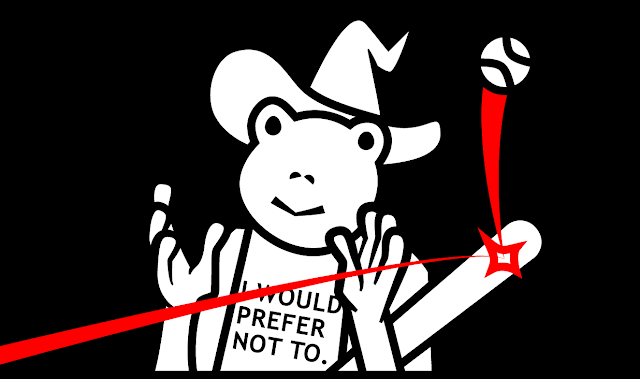
Chorby Prefers Not To: Blaseball, Bartleby, and a Fandom's Malicious Compliance

Chorby Short is an adorable frog girl who is also sometimes a witch. Or perhaps, she's just some data in a game taking the internet by storm called Blaseball. Or perhaps, she's a new example of an idea from an 1853 Herman Melville story. Or perhaps, she's all this and more? 

Monday, November 30, 2020

What I Learned Painting 2,047,500 Pixels of Homestuck Fan Art

I didn't expect painting a series of illustrations for Sarah Zedig's Homestuck novel Godfeels would involve so much deconstruction of my identity and how I make art! Here's what I learned from the experience.

content warnings: depictions of physical assault and gun violence, abstract depictions of violence, soviet constructivism, suicidal ideation, homestuck, internalized transmisogyny and ableism, aggressive colors, self doubt


Thursday, October 22, 2020

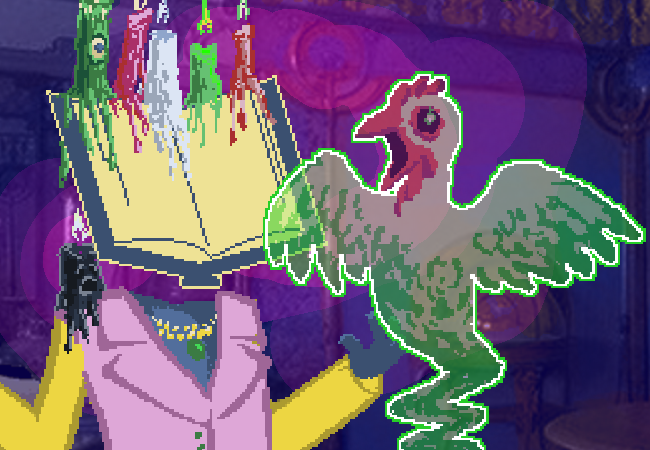
Webworks: The Magnus Archives and the Powerful Failure of Diverse Horror

The Magnus Archives made a name for itself as inclusive horror. But when even a schlocky tale of giant spiders takes on resonances with transgender oppression and sexual exploitation, can the show's listeners evade the webs of trauma?

content warning: spoilers for The Magnus Archives, spiders as metaphor, spiders as monster, coercive dynamics (interpersonal, professional, sexual), transmisogyny, uncomfortable bargains with power, content warnings. 

Tuesday, October 22, 2019

Shade World: A Player's Guide (Preview 1)

Storming the Ivory Tower presents Shade World: A Player's Guide, a parafictional choose your own adventure experience, by Sam Keeper and Juniper Theory.


Monday, June 10, 2019

Evil Be Thou My Good, or Why Dirk Strider Is Literally Satan

Homestuck was a Gnostic story. The Homestuck Epilogues are a satanic one. Dirk Strider is the devil. To understand, we'll have to consult a poet who's of the devil's part: John Milton.

Thursday, February 2, 2017

Announcing: Two New Twine Projects!


Twilight of the Superheroes

Narrowly winning the recent vote for what book project I should tackle next, Twilight of the Superheroes will collect my critical writing on superhero media that didn't make it into My Superpower is Manpain!, and release it with a bunch of bonus content and an overarching structure drawing upon Alan Moore's planned-but-never-realized superhero crossover epic of the same name. Like If The Train Stops We All Die, this will be released in an experimental Twine format that uses hypertext to imagine new possibilities for a series of essays about the failure of imagination in superhero media.

Twilight of the Superheroes will be available to $5 Patreon backers, and the raw text and bonus essays will be available to $1 backers.


A Host of Gentle Terrors

(a walking simulator)

You remember wandering in a strange and disorienting land, a land of fluid geography and unstable biology...

A Host of Gentle Terrors is a text-based exploration of a constantly shifting world and its strange inhabitants. Currently in demo form, this twine might be called an open-world procedurally generated walking simulator, or it might just be called a free-form narrative about discovery, monstrosity, and being alone in an often surreal and unsettling landscape.

This demo will be available both to Patreon backers and on (as yet undetermined) other platforms in the near future, with a fully realized release possible depending on interest.

This Cool Walking Simulator Features:

  • No Leveling
  • No Crafting System
  • Bullets! (but no guns to shoot them with)
  • No Stamina Meters
  • No Retro Pixel Art
  • Some Zombies?
  • Non-Euclidean Geography
  • Uncomfortably Biological Machinery
  • A Fishing Mini Game Everyone Loves Fishing Mini Games Right?
  • Tyranny And Mutation (The Concepts, Not The Album)
  • Queer Shit I Mean It's A Twine What Honestly Did You Expect
Keep checking Storming the Ivory Tower and the StIT Patreon for these releases, coming soon!

Monday, November 7, 2016

Jared Dark'ness Dementia Raven Leto: Is Suicide Squad Mall Goth?

As trailers for Suicide Squad rolled out, they brought with them jokes about the film resurrecting mall goth and scene kid culture. But we don't joke here on Storming the Ivory Tower, we just do hard hitting serious journalism. If we want to figure out whether Suicide Squad belongs in your local Hot Topic alongside trip pants and Invader Zim hoodies, we have to ask: just what is Mall Goth, and what makes it different from Goth proper?


Monday, October 31, 2016

Which Wicked: Castle Hangnail and Navigating Fantasy Narratives

Ursula Vernon's Castle Hangnail, about a 12 year old girl striving to become master of an ancient magical castle, shares a tradition of humorous and somewhat self-aware fantasy with modern authors like Terry Pratchett and early fantasy writers like Edith Nesbit. Exploring those connections can help us see the way Vernon's book explores ideas about consent, narrative convention, and the vulnerability that comes with being strange. In a world of witches and sorceresses, what does it really mean to be "Wicked," and is it really the same thing as "Bad?"

This article and all the normally Patron-exclusive features accompanying this piece free to the public were underwritten by $10 backer David Formosa. The article was written and edited in a live stream here. To learn when future live streams are happening, and to follow StIT's projects like this, sign up on Patreon and follow the site's Facebook and Twitter.


Monday, October 24, 2016

Tangled in Tentacles: The Hauntological and the Weird

China Mieville posits two types of horror: the Weird and the Hauntological. But the boundaries between the two are sometimes hard to make out, and it's possible to mistake one for the other. This review roundup looks at three different mergers of the Weird and the Hauntological--the Rubbery Men of Fallen London, the skulltopus that is HYDRA, and the phenomenon of Global Warming, and asks: just what is the core of the horror here?


Monday, October 10, 2016

Too Much Horseman: The Reset Button vs Continuity in BoJack Horseman

You enter the pub, as you always do, and find that, as always, Sam Keeper is sitting in your chair. They've been sitting in your chair rambling at you for years now about everything under the sun, but mostly media studies. Criticism may be a conversation but it's hard to get a word in edge-wise!

Nevertheless, that's the status quo, and the status quo doesn't change.

Well, except for the fact that there's a bunch of other freaks here now, including the infamous Lord Humongous, and a couple of unicorns. Oh and everyone's wearing horse masks today, that's new.


Not the unicorns, they just look like that. You think they... live here now?

Still. When you get right down to it, everything around here stays pretty much the same and oh, hey, Keeper has started talking about that very subject.

BoJack Horseman, the show that we're all dressed as because it's the 10th of Halloween, is fundamentally a sitcom, and as such it's characterized by stasis. It's a show that is really about things remaining the same over time, returning to their starting points. But unlike similar shows which might hang a lampshade on their constant use of a reset button at the end of every episode, this is a show where cyclicality is welded deep into the narrative skeleton.

The premise of BoJack Horseman is that there's people, and there's also people with animal heads. Like in the video for Blow! It's sorta... post-furry.

Within that very strange context, the actual premise of BoJack Horseman is to follow the attempts of a middle-aged washed up former sitcom star, the titular BoJack, to move forward with his career and interpersonal relationships. Much of the show focuses on his search for meaning in his hollow and decadent existence, as his life and the lives of everyone around him continually are propelled back into old habits and self-destructive behaviors.

It's a comedy!

So this is a show characterized fundamentally by a consistent return to the status quo. This causes problems in the final episode of season 3, due to the problem of continuity.

Ghost Sam Coper: Hah, of course an underdeveloped version of myself would think continuity is the big problem here. I remember when I was so naive!

Sam Keeper: Wow what the heck? You're supposed to be dead!


Oh, yeah, you guess this person IS supposed to be dead. This alternate reality version of Keeper tried to take over the blog and then was murdered by the original, much less well adjusted Sam Keeper. You really didn't expect that continuity to be relevant again.

Sam Keeper: I really didn't expect this continuity to be relevant again! Who could possibly have predicted that there might be consequences to my long series of disastrous decisions!

Ghost Sam Coper: See because unlike me, a person who constantly rises above my past faults, you're constantly bogged down by your unacknowledged mistakes! Just like the characters in BoJack Horseman, actually. See this is REALLY a show characterized most strongly by continuity, and it's primarily continuity that allows the final episode of season 3 to succeed! If anything, it's an over-reliance on the reset button that bogs it down.

Sam Keeper: Well that's just ridiculous.

Oh great. They're clearly going to hash this all out, with you as a captive audience.

Ghost Sam Coper: Clearly we need to hash this all out, since we've got a captive audience!

Sam Keeper: Absolutely. Let's start by digging into the main arc of Season 3.


Tuesday, August 16, 2016

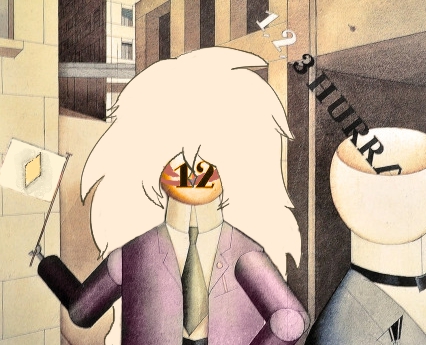
Self Portrait as a Fused Gem: Steven Universe and 20th Century Art

I've been trying to find an angle on Steven Universe for a while now. It's basically tailor made for my blogging, but I've never quite been able to pull an argument together. This isn't because there's not enough to work with. Rather, there's almost too much to work with! It's an expansive show with a whole lot of complexity and nuance--more so than many of the ostensibly adult-oriented shows that I've covered here previously--and tackling any one subject directly has left me overwhelmed and frustrated.

Luckily, two recent episodes, Beta and Earthlings, gave me just the angle I needed to make headway:

They gave me the chance to talk about early 20th century art.

I swear, I'm not just sort of shoehorning this into Steven Universe as a way of tricking people into learning things. Yes, I have a background in art history from this time period, but my goal here isn't to just invent some thin pretext for babbling about Dadaism. It's actually totally the opposite: I think we can understand Steven Universe better, and in particular understand what's going on thematically in these two episodes, if we understand art in our world similar to the art created by Lapis Lazuli and Peridot!

Excuse me, the "Meep-Morp" created by Lapis Lazuli and Peridot.

And the major question the show is interested in answering is essentially: "what is the use of art within the context of war and trauma?"

What better way to answer that than looking at art produced after the First and Second World Wars?

I'm honestly considering writing an article just on this one gag image.

Thursday, June 30, 2016

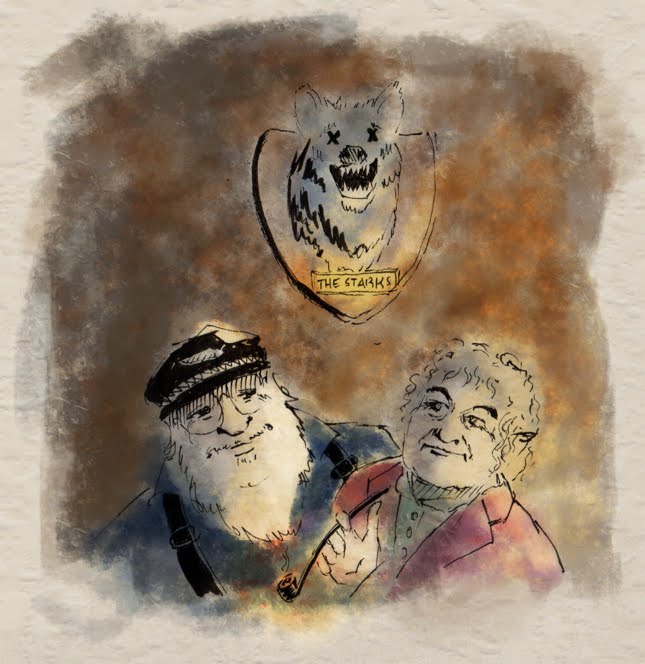
Not All Who Wander Are Lost: George RR Martin and Tolkien as Fellow Travelers

My first introduction to A Song of Ice and Fire was as a deconstruction of fantasy. George RR Martin's epic (now a "daring" and "brave" television series which you can see on HBO if you turn the brightness and contrast on your TV way, way, WAY up!!!) is, I was told, dark fantasy, with lots of shades of grey and violence and sex and so on.

It is, the subtext and sometimes the explicit text ran, not like Lord of the Rings. Or at least not like the traditions of Tolkienesque fantasy. This review of a recent episode of the (brave! genius! award winning!) tv show for example takes umbrage at the fact that the ending of a battle "has replaced that deconstruction with a blatant lift from Tolkien’s book, with the Vale forces riding in to save the day like Gandalf riding in to save Helm’s Deep." The notion of Tolkien and Martin as in some sort of competition or stark (hah) contrast is in the zeitgeist, is what I'm saying.

Having recently read the books, though, and also recently revisited The Lord of the Rings, I can't help but see this as more a product of a very narrow reading of Tolkien, and of Martin.


Some of this reading is possibly derived less from the source texts themselves but from Peter Jackson's adaptation. Look, I'm not gonna pretend that I haven't been deeply frustrated with The Lord of the Rings films since I was like 12. A lot of the stuff that most resonated with me as a kid ended up weirdly flattened, sensationalized, cut apart, or altered beyond recognition. And in the process everything got a lot more simple. I'm personally never going to forgive The Two Towers for introducing some fucking nonsense Aragorn Falls Off A Cliff subplot only to make up for it by hacking huge holes in the plot of Faramir, one of my absolute favorite characters. And others have written about some of the ways that in Jackson's hands characters like Saruman lose their thematic reason-to-be, becoming one note villains rather than complex and tragic figures.

Martin has suffered some of the same problems from the "brave" adaptation of his books, an adaptation I can't claim to have seen much of but which on a basic stylistic level seems to be run by people who don't understand that "dark fantasy" doesn't literally mean that all the sets should be chronically underlit and the characters should all wear the most drab clothing possible. I mean given that in the original text the Others are described basically as evil elves and the show develops them into ice orcs, and given that no one is walking around in the show with dyed-green beards like they commonly do in the book, it's pretty clear that they're more interested their sense of a "grim and gritty" aesthetic than what the text is trying to actually say.

Unfair? Not really. The critically lauded masterminds behind the "adaptation" literally once stated: "Themes are for eighth-grade book reports.” 

My contempt, I'd say, is well earned.

As a result perhaps of these less than stellar adaptations that have overtaken the originals, and as a result no doubt of Tolkien's many far lesser imitators, and probably to some extent as just a result of overexposure and fan discourses sort of overwhelming the original texts, a pretty remarkable fact has become obscured:

Lord of the Rings and A Song of Ice and Fire are much more a part of the same thematic tradition than in opposition. Basically, on a lot of levels, Tolkien and Martin are interested in the same stuff, and talking about the same things, and traveling on the same paths. And in fact some of their same formal "stumbling blocks"--things that people find particularly infuriating--parallel each other and do similarly important work within their respective narratives.

And to explain just how this makes sense, I want to talk a little bit about a book called The Worm Ouroboros.

Wednesday, May 4, 2016

Just Peachy: Homestuck, Act 6, and Difficulty

==> Storming the Ivory Tower Writer: Fondly Observe Libations


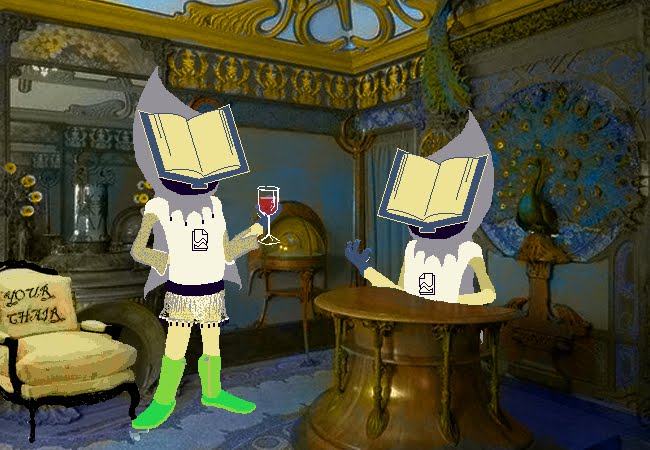
You, which is to say I, observe your, which is to say my, IMMACULATE DOMAIN, containing my IMMACULATE CHAIR and IMMACULATE SELF. You (read: I) have cleared away all those EXTRA SAM KEEPERS which were clogging up the joint, repaired the roof that's been busted for SEVERAL YEARS, and finally gotten some NICE WINE which you (still me) are currently fondly regarding.

You (I) have achieved the absolute apex of God Tier powers, which includes among other things fixing roofs, ushering extraneous versions of people gently but firmly out of the narrative so they don't clutter up things for the real, true versions, and to make absolute pronouncements with assured certainty, which everyone will accept automatically you're sure (which is to say I am sure).

==> StIT Writer: Demonstrate Abilities.

Act 6 and Act 7 do a much better job of addressing and resolving character arcs than [s] Cascade does.

Boom. See that?

Staggering in its radical brilliance but fundamentally undeniable in its accuracy.

(Sam Keeper): What? You can't just say something like that and pat yourself on the back! There's loads of stuff you'd have to explain to make that make sense to people.

==> StIT Writer: Ignore Unwelcome Intrusion


(Sam Keeper): Are you listening to me? You're leaving out so much important information, like even ignoring the fact that you haven't explained why you're even MAKING that comparison, the comparison is only interesting if you talk about a bunch of other stuff that Act 6 is doing. I mean yeah the whole act is basically about experiencing difficulty and working through that difficulty rather than expecting flashy magical solutions, and that APPLIES to this comparison, but the comparison really isn't interesting unless you talk about all that stuff first!

(Sam Keeper): In fact, even people that seem to agree with me that the end of Homestuck was pretty great take as given the idea that [s] Cascade resolved a load of stuff, and they position [s] Act 7 in opposition to this.

(Sam Keeper): Look, just, fill people in a bit! Act 6 is difficult but that difficulty is really interesting and worth talking about, so let's talk about it!

==> StIT Writer: Indulge This Walking Narrative Cul-De-Sac


Wednesday, April 27, 2016

Homestuck, Destiny, and why Social Constructs are Bullshit

==> StIT Reader: Survey The Mayhem


You enter the pub to find that things are EVEN WORSE THAN USUAL. Most notably, there seem to be MANY SAM KEEPERS. This is a terrible development, you think to yourself. And you are correct. One Sam Keeper was already just about all that you could handle. This is ENTIRELY TOO MANY SAM KEEPERS.

The most agitated looking of the Sam Keepers is PONTIFICATING ABOUT SOME BULLSHIT.

==> StIT Reader: Listen to pontification

Sam Keeper: Oh god, who could have possibly predicted that my extremely nebulously defined and possibly totally bullshit powers as the mythic Page of Paper could have caused so many problems? All the jumping I've done recently between various places has just created all these weird, kind of creepy alternate versions of myself, and now the whole blog is stuck under some mountain... I'll never finish my epic quest at this point and grow up to be a Well Adjusted Adult! And I have this whole article to write about how totally perfect and unassailable every aspect of Troll culture is! What the heck am I going to do???

==> StIT Reader: Offer to listen to Keeper's excellent theories about quadrant shipping

Hell no. Keeper made her bed and she can sleep in it. Or more specifically she stole your chair and she can sit in it. Yeah, that metaphor scans, kinda. Anyway it's probably just Keeper's intractable destiny to fuck everything up forever.

Hold on, though, it looks like one of the other Keepers has something to say.

==> Sam Coper: Sort this mess out


Sam Coper: You know Alternian culture is bullshit though right?

Sam Keeper: What the heck? Who are you?

Sam Coper: I'm you, but way, way calmer. Way calmer. Jesus buddy. I'm the you that actually learned to cope with things instead of doing an acrobatic fucking pirouette off the handle every time something goes wrong. And also I figured out that I can make this God Tier outfit have a cool skirt and shit, look at it!

Anyway, for real though, Alternian culture is bullshit, and so is your destiny, and that's... actually kind of a huge theme within the comic.

Sam Keeper: Ok, look, you're gonna have to break this one down for me a bit more.

Sam Coper: With pleasure.

See, Homestuck, among many other things, reveals that lots of stuff we think is natural or an inescapable fact of reality is actually a social and historical construct! And in fact, Homestuck shows that our identities might be a lot more free and fluid than we think.

==> StIT Reader: Try to understand.


Monday, February 29, 2016

Horror After Humans: Beautiful Landscapes and Difficult Affect in The Last Of Us

Well look I know that rattling the controller around to charge the flashlight feels distracting but I’m sure if you just let yourself get used to the motion controls--Ah! You’re here! Excellent! We were just about to start playing a game!

Who’s we?

Oh, just you, me, and my friend, fellow trans feminist Vivian James!

She's wearing her Genderqueer Flag hoodie it's very stylish
I decided to invite James over because I wanted to talk about difficult games, and she’s, well, a bit of a difficulty junky. Vivian James is a hardcore gamer, and she and I share an interest in games that really push your limits. It seemed natural that she should help us play The Last Of Us.

What, you don’t think The Last Of Us is that difficult? I suppose if you’re just looking at gameplay… but what about the dark and affecting storyline? What about the hard decisions the game forces you to make, or the perhaps unsatisfying and even frustrating ending?

No, tonight we’re interested in a different kind of difficulty than a difficult puzzle or difficult boss battle or difficult timed jump. In fact, I’m particularly interested in talking about one of the most difficult things in The Last Of Us. Difficult to explain, at least.

To properly explore that, I think what we need is a change of scenery to something more fitting for a horror experience. Something like…

The bleak and desolate wasteland known as the New Jersey Pine Barrens!
Ah, that’s better! What, you don’t think this is a proper setting for a horror game? Well that’s convenient, because it’s the difficulty that comes from setting a horror game in such a beautiful landscape that we’re going to discuss tonight!


Monday, August 10, 2015

The Radical Implausibility of Love


This article is going to start out profoundly superficial, but I hope it will end at a place that is at least superficially profound.

I want to start the article with a discussion of shipping in the Dumbing of Age fandom.

Yeah, see what I mean? Don't worry, you won't need to be familiar with the comic for this article--it's one of those articles that's not exactly about what it's ostensibly about.

Dumbing of Age is a webcomic written by David Willis about a wide range of characters navigating their first year of college. It’s not particularly important for this article, but it’s maybe interesting to note that almost all of these characters came from several other interconnected comics that Willis has been writing since the early days of webcomics. To an extent, Dumbing of Age gives these characters a new lease on life.

The post that got me thinking about this week’s topic was actually a piece of fan art posted on the blog Queering of Age, whose purpose you can probably figure out from the title alone. The art depicts four of the characters on a couch together, cuddling and playing video games. I’ll link to my reblogged version of the post, since tumblr shenanigans have made the original post inaccessible:


You can see, in my reblog, basically an elevator pitch for this article. In summary, this article came about because of three reactions in quick succession that I noted in my response to the post:

First, I felt excited and gratified that a polyamorous ship that I had considered before was getting play in the wider realm of the Internet (or at least that’s the implication I read into the picture).

Then, I checked myself and thought, “No, this is cute, but it’s impossible with these characters. It simply isn’t plausible.”

And that thought was followed by the thought that prompted this article:

“Wait, what’s actually plausible about my own relationships?”

Monday, June 29, 2015

"Repent, Feminist!" Said the Wiki Man (Or: Deface Wikipedia Today!)

As I wrote the first draft of this article, a few months ago now (god help me), I took periodic breaks to look at my dashboard on Tumblr. Not because I was really reading any of the content but because I was skimming for instances of people taking advantage to the most recent site update to totally break the website's functionality. If you missed that exciting experience, let me tell you it was at times pretty breathtakingly disorienting, with various icons, text boxes, images, and so on, bouncing all over the screen. While they've caught the major bugs of that update a few more incredible little glitches keep popping up to trash the screen in exciting new ways, months after the fact.

I'm starting here because I think it sheds light, in the usual roundabout sort of way, on the recent clusterfuck over on Wikipedia. If you haven't been following the conflict, the long and short of it is that Gamergate, the violently misogynistic hate group ostensibly dedicated to "ethics in game journalism" but in fact dedicated to hounding women out of the game industry, has been gaming (ahah.) Wikipedia's systems for a while now in order to gain dominance over the article about them. A group dubbed the Five Horsemen has repeatedly opposed their efforts. Wikipedia's Arbitration Committee ("ArbCom") responded by handing down a decision that ousted the Five Horsemen along with a few gamergater burner accounts, patted itself on the back for a job well done, and effectively handed gamergate the keys to the kingdom. You can read about this on the blog of Mark Bernstein (and on his twitter), who broke the story and was banned and denounced in retaliation, or on Wikipedia itself in this editorial by user Protonk... who of course was ALSO banned and denounced in retaliation. Exciting times over on Wikipedia. The story's continued since then but those are the basic facts in the case that I think are worth relaying.

Before getting back to Wikipedia though let's take a moment to talk about the culture of Tumblr and its attitude towards its leaders. Any time Tumblr's staff updates the site there's immediately a race to see who can figure out the best ways to break the new features, or at least do something truly bizarre with the new features. Some of this of course stems from the endless frustration that we all have with a staff that prioritizes trivialities over critically absent core features (a functional blocking system! a functional inbox!) but more broadly speaking I think there's also an attitude on the site that if something CAN be fucked with, it SHOULD be fucked with. It's a creative attitude, and an oppositional one as well, one that resists rather than encourages consensus.

It's this attitude, more than any other form of resistance, that feels to me like the right strategy for dealing with Wikipedia's increasingly glaring flaws. Wikipedia is an engine for generating consensus, so artistic interventions--more plainly, vandalism, or even more plainly, fucking shit up--are essential for disrupting that engine. If Wikipedia has failed to live up to its ideals, instead becoming mired in the dehumanizing mechanisms of a bureaucracy that only a plutocracy of technocrats can engage with, then it's time to stop thinking about incrementally transforming the system, and start thinking about a way of breaking the system in half.

There's a really obvious pun I could make here but I'll resist.
Support on Patreon
Store
Reader's Guide
Tag Index
Homestuck Articles
Solarpunk Articles
Mastodon/Fediverse
Tumblr
Bluesky
RSS Feed