In movies, comics, games, tv, and books, Expanded Universes are everywhere. But these huge multi-author, multi-story projects are controlled by huge corporate monopoly holders. Isn't it time we built some universes of our own?
The Worst Filing System Known To Humans
-Punk
(5)
A Song of Ice and Fire
(2)
Affect
(9)
Alienating My Audience
(31)
Animation
(28)
Anime
(19)
Anonymous
(3)
Anything Salvaged
(15)
Art Crit
(42)
Avatar the Last Airbender
(2)
Black Lives Matter
(1)
Bonus Article
(1)
Children's Media
(6)
Close Reading
(90)
Collaboration
(1)
comics
(30)
Cyborg Feminism
(3)
Deconstruction
(10)
Devin Townsend
(2)
Discworld
(1)
Evo Psych
(1)
Fandom Failstates
(7)
Fanfiction
(28)
Feminism
(24)
Fiction Experiments
(13)
Food
(1)
Fragments
(11)
Games
(29)
Geek Culture
(28)
Gender Shit
(2)
Getting Kicked Off Of TV Tropes For This One
(11)
Gnostic
(6)
Guest Posts
(5)
Guest: Ian McDevitt
(2)
Guest: Jon Grasseschi
(3)
Guest: Leslie the Sleepless Film Producer
(1)
Guest: Sara the Hot Librarian
(2)
Guest: Timebaum
(1)
Harry Potter
(8)
Harry Potter and the Methods of Rationality
(3)
Has DC Done Something Stupid Today
(5)
Hauntology
(6)
Homestuck
(18)
How Very Queer
(35)
hyperallthethings
(10)
hyperanimation
(1)
Hypercomics
(11)
I Didn't Ask For Your Life Story Sheesh
(24)
Illustrated
(37)
In The Shadow Of No Towers
(1)
It Just Keeps Tumblring Down Tumblring Down Tumblring Down
(9)
It's D&D
(2)
Judeo-Christian
(9)
Lady Gaga
(5)
Let's Read Theory
(3)
Lit Crit
(20)
Living In The Future Problems
(11)
Lord of the Rings
(4)
Mad Max
(1)
Madoka Magica
(1)
Magic The Gathering
(4)
Manos
(2)
Marvel Cinematic Universe
(17)
Marx My Words
(15)
Medium Specificity
(15)
Meme Hell
(1)
Metal
(2)
Movies
(33)
Music
(26)
Music Videos
(21)
NFTs
(10)
Object Oriented Ontology
(4)
Occupy Wall Street
(3)
Pacific Rim
(2)
Paradise Lost
(2)
Parafiction
(6)
Patreon Announcements
(15)
Phenomenology
(4)
Poetry
(6)
Pokemon
(3)
Politics and Taxes and People Grinding Axes
(13)
PONIES
(9)
Pop Art
(6)
Raising My Pageranks Through Porn
(4)
Reload The Canons!
(7)
Remixes
(8)
Review Compilations
(6)
Room For You Inside
(2)
Science Fiction Double Feature
(32)
Self-Referential Bullshit
(23)
Semiotics
(3)
Sense8
(4)
Sociology
(12)
Spooky Stuff
(45)
Sports
(1)
Star Wars
(6)
Steven Universe
(3)
Surrealism
(11)
The Net Is Vast
(36)
Time
(1)
To Make An Apple Pie
(4)
Transhumanism
(9)
Twilight
(4)
Using This Thing To Explain That Thing
(120)
Video Response
(2)
Watchmen
(3)
Webcomics
(2)
Who Killed The World?
(9)
Reload the Canons!
This series of articles is an attempt to play through The Canon of videogames: your Metroids, your Marios, your Zeldas, your Pokemons, that kind of thing.
Except I'm not playing the original games. Instead, I'm playing only remakes, remixes, and weird fan projects. This is the canon of games as seen through the eyes of fans, and I'm going to treat fan games as what they are: legitimate works of art in their own right that deserve our analysis and respect.
Showing posts with label Remixes. Show all posts
Tuesday, August 20, 2019
Wednesday, August 7, 2019
Just Put "Whatever" Down For Gender: Gonzo, the Muppets, and Queerness
Gonzo The Great: famous muppet, cultural icon, and... queer non-binary performance artist? Join us as we attempt the death defying feat of discussing the queerness of the muppets, and Gonzo as modern artistic genius
Co-Written with Juniper Angel Barber
(Note: This piece looks slightly less awesome on Mobile)
Co-Written with Juniper Angel Barber
(Note: This piece looks slightly less awesome on Mobile)
![]() |
| Art from The Muppet Show Comic Book by Roger Langridge. |
Thursday, January 26, 2017
So Much To Do/So Much To Say: What Even Is Neil Cicierega's Mouth Moods?
This week, rather than the normal StIT article, I'm instead releasing several pieces of more experimental criticism. The first, going up today, is a live commentary on Mouth Moods, the new mashup album by Neil Cicierega. The second, coming tomorrow to Eruditorum Press's blog, is going to be a more traditional article on some apocalyptic music that all coincidentally came out around January 20th for some weird reason. And finally, there will be a bonus Patreon-exclusive piece posted tomorrow as well on a recent form-shattering Idea Channel video.
You can find some guiding thoughts on this whole experiment, as well as links to the Patreon content, below the cut.
You can listen to the podcast here.

You can find some guiding thoughts on this whole experiment, as well as links to the Patreon content, below the cut.
You can listen to the podcast here.

Sunday, April 13, 2014
Parafanfiction and Oppositional Fandom
Over the course of the last week, I've been working on a very involved project called "The Parafiction Museum." This project, incidentally, is why there wasn't a Storming the Ivory Tower last week. The assignment was to create an entire catalogue for a fantasy exhibition of contemporary art. Alright. That's pretty straightforward.
I, of course, decided to host an exhibition based around the most confusing idea I could find: Parafiction.
Now, all of this is explained within the essay for the catalogue (which can be viewed here, although I recommend downloading it since Drive visually compresses PDFs) and I won't go on too long because A. the essay in the catalogue is already 2000 words not counting all the information on individual works so I'm bloody sick of writing and want to go break rocks in Minecraft for a while and B. I actually do think the essay does a good job of explaining what Parafiction is and why it matters. But the essay is written for a fine art audience rather than you weird fandom people, and I want to do a little bit of work contextualizing why its important particularly to fan works and transformative works.
So what is parafiction?
Saturday, July 28, 2012
Poetry is Dead
What if I drop one breath?
What does it mean for a medium to be dead? I mean really dead, totally stopped in place with nowhere to go, no way forward?
What does it mean to have nothing new to explore technically?
I think about this quite a bit, actually, because of my weird background with media. Although new media is very important to me, my training comes from art history and lit crit, so I'm what you would call a child of the Old School. And one of the things I've noticed is that all sorts of media have died off over the years, just sort of spun their wheels and finally stopped.
And it's not necessarily big things. Like, there's no Death of Music (despite what both Don McLean and Devin Townsend say), and I doubt there will be in my lifetime. There's just too much territory to explore. But you can kill off a single instrument. When was the last time you heard a crumhorn, for example? It's a medium of expression just as surely as the paintbrush is, but it's fallen by the wayside. And there's other little odd things that live in the space between media and genres, things like...
Well, how about Radio Dramas?
When was the last time you heard a radio drama?
I can remember the last time I heard one. It was sometime back in, oh, 1997 maybe, somewhere around there. It was a radio dramatization of Star Wars: A New Hope. And that broadcast captivated me, it went far beyond the movie ever could, for it became my personal Star Wars, the Star Wars that played out visually inside my own head.
But you don't hear too many radio dramas these days, do you? It's another dead medium. It reached the end of what it could do, new things drew the attention of the masses, and people moved on, leaving a media ghost town.
Oh, and then, of course, there's poetry.
Poetry is dead.
But wait, let me back up a bit and explain just what I mean by a medium having nothing new to explore technically. This isn't a new concept for me, actually. It's something I call the Medium Singularity. I've already talked about it in relationship to painting, but let us roll through the main points again.
A Medium Singularity is the point where we expand a medium as far as it can go, where we reach the end, essentially, of Progress. It signifies the point where our ability to predict future possibilities goes completely out the window, where there's no technique that hasn't been taken to its furthest possible point. It borrows the concept from Transhumanism, actually--the Singularity signifies the moment of push, the great thrust beyond the limits of the merely human, where all bets are off and something totally new emerges.
Another possible term for it is Art At The End Of History. What does that mean exactly? Well, I think this quote just about sums it up:
Youch. Heavy stuff there. That's a quote from a Belgian paper, actually, translated by a friend of mine. (He couldn't locate the original source, unfortunately--another interesting example of information lost within an information flood.) The statement encapsulates, for me, the sensation of being post-historical. It's the sensation of realizing that Progress, at least in little corner of the artistic world, is over. Our happy story of a history that moves ever forward hits a wall and we're left stranded, with all the achievements of the masters of the past gathered up behind us.
And that can be insanely frustrating for artists! I don't deny that it can be the hardest part of playing in these fields today. Hell, it's a cornerstone of modernist philosophy, where instead of making new material you just endlessly disembowel the great works of the past in search of some elusive meaning among the cast out guts of consonants and vowels. From J Alfred Prufrock all the way down to Howl, there's dross left for us after the last masters plucked out their gold, and standing on the shoulders of giants, as the song goes, leaves us cold.
Poetry is the latest victim of the End of History. Think about it, when's the last time you bought a book of poetry? When's the last time you saw someone stand and recite aloud, or heard the sound on the radio?
And you know, people have been releasing new poetry. But they're the vinyl freaks of the lit world, the people who still buy their albums pressed onto those big beautiful discs, the dying crowd with their dying tech, playing out their songs till their needle jumps and another one bites the dust.
Poetry killed itself, hung itself in the attic on a tetragrammaton string that read PoMo. Some of its acolytes killed it with sound, broke it to pure noise like speaking in tongues, like gifts from the mad god of the 20th Century. Some made it a grocery list, gathered their affairs in order like Pink arranging guitar splinters in a hotel room, then passed away into the West taking the magic of the Elves with them. And some, knowing the time was at hand, hearing the tune of the jazz band, took their books and ran, their pages fanned out in a flickering street lamp in the wasteland.
Poetry hit a wall. It beat up language for its lunch money, and the funny thing was, when it was through it found nothing more to do with the change it had effected. The beat was rejected: each meter was reduced to a kind of tired pattern of use, and the modernists refused its tired truths.
And what could they do? All the clear visions of the Chinese masters were used up faster than you could conceive, they had received all the alliterating letters from the Nordic breed, and the call and answer patterns from across the Mediterranean Sea. Even long and short vowel beats, those pounding feet, had been retreaded from the Greeks by Edgar Allen Poe.
So where was there to go
but down?
But let's rein it in, I'm losing breath.
It came to the point that every technique you can imagine was played out, and, like the modernist painters, the modernist poets pushed every possibility as far as they could: repetition, the abandonment of meter and rhyme, the collapse of grammar and punctuation, the abandonment of meaning in favor of pure sound... every way you could mutilate a poem, the modernists did it. Sometimes their work was staggeringly beautiful. Sometimes it was dead. But I think that explosion of panicked experimentation can be seen as the death throes--it was the final moments of poetry's life, the rush claim the last innovatable territory.
But if you've been paying attention, you know that death isn't the end.
It's just the beginning stage of the metamorphosis.
See, just because you can't do something new technically with a medium doesn't mean you're out of things to say with that medium. In fact, I would argue that it becomes far easier to say what you want after a medium is dead, because you've got all of the tools imaginable, and you can pick and choose the tool for the message you want to convey. You're cut free from the stupid demand of the critics to be avant-garde--which isn't to say the avant-garde is bad, but the constant push in the art world for the next shock is absolutely a hard limitation that you don't have when your medium is dead. How on earth can you respond to a demand for the fury of artistic progress with anything but laughter when your medium's already been buried?
And after that laughter you can really get them worried, 'cause once the tools are all laid out before you, all the ones that are played out can start to be questioned. And this may cause some tension, but I just have to wonder:
Is poetry dead, or has it found a way to live under a new name? A name that to old poets is profane, but that has gushing through its veins the methods of Homer and the rushing presentation of a great Orator's proclamations? I speak of "SLAM," a poetry that positions its hand upon the shoulder of the oral tradition, that is bolder than the gentle bleating lamb beats that the ivory tower demands.
Tell me, when is the last time you heard a man raise a crowd's voice and hands with rhymed out lines out of his very soul? When a whole gathering of people stood at attention to hear their lives and feelings captured in a poem's mention?
But don't listen to all my nonsense, listen to Saul present this:
You can see how I might get irate when I hear someone pontificate about the youth today and how they don't appreciate art. Let me do my part as a lit crit theorist and say the nearest I've ever come to Dead Poet Society is when I'm listening to a playlist of hip hop. Hear this! The Modernists let the beat drop! And this genre caught the ball and slammed it, sample loops and all, through the hoop.
You could call it a SLAM dunk.
And you don't have to punk out
your lines, or rap to these jams,
This just shows with no doubt
that poetry died and came back
like Adonis. And I'll be honest,
I can't tell you what all this means
because once you've crossed the singularity
you're in the land of the Absolutely Free--no limits.
So give it a shot, don't let poetry
rot in a grave of its own making.
Because we're making art
at the end of history.
And poetry's only as dead
As we let it be.
Give my regards to Brooklyn.
This article really took on a life of its own--I wasn't going to write it this way, but the rhymes just started coming, and the rest, as it were, is history. No idea if it actually worked or not. You can follow me on Google+ at gplus.to/SamKeeper or on Twitter @SamFateKeeper. As always, you can e-mail me at KeeperofManyNames@gmail.com. If you liked this piece please share it on Facebook, Google+, Twitter, Reddit, Equestria Daily, Xanga, MySpace, or whathaveyou, and leave some thoughts in the comments below.
What does it mean for a medium to be dead? I mean really dead, totally stopped in place with nowhere to go, no way forward?
What does it mean to have nothing new to explore technically?
I think about this quite a bit, actually, because of my weird background with media. Although new media is very important to me, my training comes from art history and lit crit, so I'm what you would call a child of the Old School. And one of the things I've noticed is that all sorts of media have died off over the years, just sort of spun their wheels and finally stopped.
And it's not necessarily big things. Like, there's no Death of Music (despite what both Don McLean and Devin Townsend say), and I doubt there will be in my lifetime. There's just too much territory to explore. But you can kill off a single instrument. When was the last time you heard a crumhorn, for example? It's a medium of expression just as surely as the paintbrush is, but it's fallen by the wayside. And there's other little odd things that live in the space between media and genres, things like...
Well, how about Radio Dramas?
When was the last time you heard a radio drama?
I can remember the last time I heard one. It was sometime back in, oh, 1997 maybe, somewhere around there. It was a radio dramatization of Star Wars: A New Hope. And that broadcast captivated me, it went far beyond the movie ever could, for it became my personal Star Wars, the Star Wars that played out visually inside my own head.
But you don't hear too many radio dramas these days, do you? It's another dead medium. It reached the end of what it could do, new things drew the attention of the masses, and people moved on, leaving a media ghost town.
Oh, and then, of course, there's poetry.
Poetry is dead.
But wait, let me back up a bit and explain just what I mean by a medium having nothing new to explore technically. This isn't a new concept for me, actually. It's something I call the Medium Singularity. I've already talked about it in relationship to painting, but let us roll through the main points again.
A Medium Singularity is the point where we expand a medium as far as it can go, where we reach the end, essentially, of Progress. It signifies the point where our ability to predict future possibilities goes completely out the window, where there's no technique that hasn't been taken to its furthest possible point. It borrows the concept from Transhumanism, actually--the Singularity signifies the moment of push, the great thrust beyond the limits of the merely human, where all bets are off and something totally new emerges.
Another possible term for it is Art At The End Of History. What does that mean exactly? Well, I think this quote just about sums it up:
"We're the generation of 'they have already done that. They have already been there."
Youch. Heavy stuff there. That's a quote from a Belgian paper, actually, translated by a friend of mine. (He couldn't locate the original source, unfortunately--another interesting example of information lost within an information flood.) The statement encapsulates, for me, the sensation of being post-historical. It's the sensation of realizing that Progress, at least in little corner of the artistic world, is over. Our happy story of a history that moves ever forward hits a wall and we're left stranded, with all the achievements of the masters of the past gathered up behind us.
And that can be insanely frustrating for artists! I don't deny that it can be the hardest part of playing in these fields today. Hell, it's a cornerstone of modernist philosophy, where instead of making new material you just endlessly disembowel the great works of the past in search of some elusive meaning among the cast out guts of consonants and vowels. From J Alfred Prufrock all the way down to Howl, there's dross left for us after the last masters plucked out their gold, and standing on the shoulders of giants, as the song goes, leaves us cold.
Poetry is the latest victim of the End of History. Think about it, when's the last time you bought a book of poetry? When's the last time you saw someone stand and recite aloud, or heard the sound on the radio?
And you know, people have been releasing new poetry. But they're the vinyl freaks of the lit world, the people who still buy their albums pressed onto those big beautiful discs, the dying crowd with their dying tech, playing out their songs till their needle jumps and another one bites the dust.
Poetry killed itself, hung itself in the attic on a tetragrammaton string that read PoMo. Some of its acolytes killed it with sound, broke it to pure noise like speaking in tongues, like gifts from the mad god of the 20th Century. Some made it a grocery list, gathered their affairs in order like Pink arranging guitar splinters in a hotel room, then passed away into the West taking the magic of the Elves with them. And some, knowing the time was at hand, hearing the tune of the jazz band, took their books and ran, their pages fanned out in a flickering street lamp in the wasteland.
Poetry hit a wall. It beat up language for its lunch money, and the funny thing was, when it was through it found nothing more to do with the change it had effected. The beat was rejected: each meter was reduced to a kind of tired pattern of use, and the modernists refused its tired truths.
And what could they do? All the clear visions of the Chinese masters were used up faster than you could conceive, they had received all the alliterating letters from the Nordic breed, and the call and answer patterns from across the Mediterranean Sea. Even long and short vowel beats, those pounding feet, had been retreaded from the Greeks by Edgar Allen Poe.
So where was there to go
but down?
But let's rein it in, I'm losing breath.
It came to the point that every technique you can imagine was played out, and, like the modernist painters, the modernist poets pushed every possibility as far as they could: repetition, the abandonment of meter and rhyme, the collapse of grammar and punctuation, the abandonment of meaning in favor of pure sound... every way you could mutilate a poem, the modernists did it. Sometimes their work was staggeringly beautiful. Sometimes it was dead. But I think that explosion of panicked experimentation can be seen as the death throes--it was the final moments of poetry's life, the rush claim the last innovatable territory.
But if you've been paying attention, you know that death isn't the end.
It's just the beginning stage of the metamorphosis.
See, just because you can't do something new technically with a medium doesn't mean you're out of things to say with that medium. In fact, I would argue that it becomes far easier to say what you want after a medium is dead, because you've got all of the tools imaginable, and you can pick and choose the tool for the message you want to convey. You're cut free from the stupid demand of the critics to be avant-garde--which isn't to say the avant-garde is bad, but the constant push in the art world for the next shock is absolutely a hard limitation that you don't have when your medium is dead. How on earth can you respond to a demand for the fury of artistic progress with anything but laughter when your medium's already been buried?
And after that laughter you can really get them worried, 'cause once the tools are all laid out before you, all the ones that are played out can start to be questioned. And this may cause some tension, but I just have to wonder:
Is poetry dead, or has it found a way to live under a new name? A name that to old poets is profane, but that has gushing through its veins the methods of Homer and the rushing presentation of a great Orator's proclamations? I speak of "SLAM," a poetry that positions its hand upon the shoulder of the oral tradition, that is bolder than the gentle bleating lamb beats that the ivory tower demands.
Tell me, when is the last time you heard a man raise a crowd's voice and hands with rhymed out lines out of his very soul? When a whole gathering of people stood at attention to hear their lives and feelings captured in a poem's mention?
But don't listen to all my nonsense, listen to Saul present this:
You can see how I might get irate when I hear someone pontificate about the youth today and how they don't appreciate art. Let me do my part as a lit crit theorist and say the nearest I've ever come to Dead Poet Society is when I'm listening to a playlist of hip hop. Hear this! The Modernists let the beat drop! And this genre caught the ball and slammed it, sample loops and all, through the hoop.
You could call it a SLAM dunk.
And you don't have to punk out
your lines, or rap to these jams,
This just shows with no doubt
that poetry died and came back
like Adonis. And I'll be honest,
I can't tell you what all this means
because once you've crossed the singularity
you're in the land of the Absolutely Free--no limits.
So give it a shot, don't let poetry
rot in a grave of its own making.
Because we're making art
at the end of history.
And poetry's only as dead
As we let it be.
Give my regards to Brooklyn.
This article really took on a life of its own--I wasn't going to write it this way, but the rhymes just started coming, and the rest, as it were, is history. No idea if it actually worked or not. You can follow me on Google+ at gplus.to/SamKeeper or on Twitter @SamFateKeeper. As always, you can e-mail me at KeeperofManyNames@gmail.com. If you liked this piece please share it on Facebook, Google+, Twitter, Reddit, Equestria Daily, Xanga, MySpace, or whathaveyou, and leave some thoughts in the comments below.
Tuesday, July 17, 2012
Fertile Ground
My sister does not read this blog. She claims that it is because she is "Too Busy" to read--which really means "Way Too Cool" to read, of course. So, when she said to me, "Hey, I want to read your take on the Dead Can Dance video "Persephone" I jumped on that prompt like a DDR junkie slamming zir feet down at the sight of a looming <= =>.
And at first, the assignment seemed pretty manageable. Check the video out:
Wow. It's a nice piece, actually, saturated with a mythic post-apocalyptic gloom that is so over the top that it staggers with wild junkie eyes straight back into the realms of Wonder. It's like a live action Goya painting, from the incomprehensible rites of fertility to the laughing crones to the bleak and horrible landscape.
Let's dig into the symbolism a bit, though, shall we?
Check out the kid at the beginning with the crucifix. Now, what we can draw from that is that this is some sort of debased civilization--the relics of the past have been left in the mud. The serpent (or, maybe some sort of giant hideous worm? We never see more than the slithery tail) slips through this landscape unhindered. I love the little touch, incidentally, of the child nailing the little Christ to his little cross with a big honking brick. The video doesn't linger on this image, which is a good choice--with such a brief presence the clip remains sly rather than obnoxiously overt. Taken together, these images proclaim a kind of barbarity holding sway over the world. This is even more profound when paired to the sepulchral background music, which groans ponderously in a medieval dirge.
Welcome, the video says, to the new dark age.
Then, if you weren't overstuffed with Christ already, we've got an almost pagan blood rite between our two protagonists, as they cut their hands (in the middle of a mud covered wasteland, I might add--hope penicillin isn't a lost technology here) and join their blood together. I bring it up as another nod to Christianity, though, because these hand wounds are rather reminiscent, in my mind, to stigmata, the wounds of Christ on the cross, wounds that would appear sometimes upon the palms of the devout. (This is, you'll recall, an image the Surrealists really dig.)
I would normally feel a bit odd about the repeated footage of the hand carving scene here, but I think the reintroduction of the footage, its use of slow motion, and the pairing of that moment with a shift in the music itself to a clearer choral sound actually works in the video's favor. It all seems to emphasize a sort of inevitability of the whole thing, an almost obsessive caressing of details, an etherization of time itself upon the examiner's table, a sense of how one moment plods hopelessly into the next.
I think this actually works quite well with the title--Persephone. For those unfamiliar with Greek myth (not that common these days, I know, but let's review just in case) Persephone was a goddess of nature and fertility that Hades, the dark god of the underworld, fell in love with--or at least in lust with. In typical Greek God fashion, instead of asking her on a date like a normal, well adjusted God, he just rode out of the realm of the dead, scooped the screaming goddess up, and dragged her straight to hell, as it were. Charming. Her mother, Demeter, understandably freaked the fuck out and killed basically all the vegetation until an exasperated Zeus finally agreed to get off his ass and make a bargain with his creepy basement-dwelling brother to let the poor goddess go. They made a deal where Persephone would hang out in the world's largest basement dwelling neckbeard den for half the year, and the other half would live in the world of sunlight and so forth. Her mother, true to form, freaked out again every year, which is why Pennsylvania's roads are either covered in ice, or covered in road crews, depending on the season.
Not that I'm bitter or anything.
Wait, where was I?
Oh, right, Persephone.
Now, what's interesting about this is that Persephone's stories is one of a larger class of stories about death and rebirth--cyclical fertility stories, if you will--that often depended upon the idea of a god sacrificing himself and then returning to life. We see this even more overtly with Adonis, with Osiris, and, yes, with Jesus Christ.
Except... this video isn't exactly doing it right, is it? Do you see, at the end of the video, any hint of rebirth? Nooot really. As soon as our red head, ridden by Satan, jams her bull horns (another symbol of fertility and virility, incidentally) into her lover it does start raining, of course, but the watching old creeps react by putting on their veils and hats again and heading for dryer pastures. The grimy kids hang about gathering up the coins left behind, which doesn't strike me as a particularly optimistic symbol of rebirth. (Note also that the coins are rather reminiscent of the silver paid to Judas in return for his betrayal of Christ.) Our sacrificial lamb does smile at the end, but there sure doesn't seem to be much to indicate that his smile--and, presumably, the hope it carries of some meaning to the death--is anything more than dying delusion, and we're left with a shot of our protagonist sitting in the rain crying tears of blood.
Everything here indicates to me that this is not a resurrection right but a failed, perverse echo of an ancient hope in a blasted post-civilization wasteland. It is not a fertility rite, it is an infertility rite, with sterile coins tossed by sterile crones at children murdering each other for what amounts to empty entertainment. Whether it be Christ or Persephone, the old myths, the old rites, have no meaning here. What's more, sacrifice here seems sanctioned not by some higher divinity but by the malignant, possessing perversity of Hell, as our protagonist is ridden and reduced to bestial fury by some occult force.
It's a stunningly bleak video that has, as its aim, the creation of a dark mythology, a mythology that Lovecraft would doubtless recognize: the myth of a world where the only divinity you're likely to find is the divine presence of horrors that toy with humanity for their languid amusement.
Wow.
And that's the essay Emily wanted me to write. Not my longest or my best work, I don't think, but it digs into the video effectively enough, and I think I've uncovered some themes that might not be as immediately apparent. It would be easy, after all, to just read the video as a fertility rite, missing the heavy irony suggested by the final image and the dirgelike tone of the music.
I finished up this analysis satisfied that I had done all I needed to do.
But then, like a moron, I scrolled down to look at the YouTube comments. My reactions ran something like this:
Alright, first comment, pretty damn incoherent, actually. It doesn't even really work grammatically, but hey, it's possible this is their second language. Whatever, moving on...
Yeah, kind of a shallow reading that doesn't take into account the full range of the symbols, but I like the whole three women motif, that's an interesting bit of analysis.
...Uh oh.
Looks like my homework assignment just got doubled.
Yes, ladies and gentlemen, it turns out that this is NOT a Dead Can Dance video at all. It is a video produced for a French artist Mylène Farmer, for her song Sans Logique--a song from 1988, if you can believe it. Yes, that's a video from the late 80s, when American videos were still just a bunch of people in odd clothes dancing. Hm.
Let's take a look:
Now, there's two things this video shows us. The first is that music videos are fundamentally, inextricably linked to their music, far more so than other cinema. This is partly because of how elements like the title and lyrics alter the meaning of the video. Here, for example, the change to Farmer's lyrics and title emphasize not the idea of the failed, barren rite but the sheer absurdity of the whole situation and the war within the female protagonist. She seems to struggle with the rising force of unreason and diabolical possession within a world that has long since disintegrated.
The music, too, transforms from dirgelike medieval groaning to a danceable cabaret rhythm that heightens not the desolation of the world at large but the perversity of the protagonist's struggles, and the warped nature of the event. There is no longer the sense of hopeless inevitability, but it is replaced not by an new sense of hope but by a sense of the absurd randomness of the world. Freedom amidst absolute chaos and capriciousness, after all, is no better than an inevitable, ritualized fate--you still can't successfully control your life or even choose your own poison. Yikes.
So, the change doesn't make the video any less bleak, but it dramatically alters our understanding of the video's message. And, while we're at it, it's worth pointing out that the video has countless other possible interpretations that are generated by its pairing to Farmer's score--and, by extension, the pairing to Dead Can Dance should at the very least double that number. The simple act of changing the tune and making the few other minor cuts necessary to extend the video to the required length can make visible a whole new range of meanings that might not have been initially visible.
And that's pretty freaking cool.
But there's a second lesson here:
The history of Music Videos is totally unwritten, and might already have passed the point where we can make sense of it.
See, unless that heroic YouTuber had mentioned the fact that this was originally a video for a totally different song, I would have no way of knowing one way or another. Documentation of music videos is horrifically sloppy even in databases like Wikipedia which categorize every other damn trivial bit of information about an artist. There's no easy way to confirm that there ISN'T a video for Dead Can Dance's "Persephone"--in fact, it never occurred to me to even try. There's just too little record of who is producing music videos, and recognizing a reworked video can be downright impossible, especially when the video is, as here, devoid of anyone actively singing the song.
On top of that, there is an overwhelming amount of information to sift through, and any historian of music videos is going to immediately be faced with the problem of specialized, localized knowledge. I had never heard of Farmer, for example, despite the fact that she was doing, two decades ago, what I've been analyzing in Lady Gaga videos for the past year or so. I mean, everything that I've praised Gaga's videos for, their willingness to push the boundaries of possibility, their length, their production value, their unique aesthetic and European arthouse sensibilities... all of that is present in Farmer's work. It's really, really worth checking out if you're at all interested in the medium, in other words.
But there's no way for the casual viewer to know that this stuff exists, because the information is so piecemeal.
And WOW is that exciting.
See, this might be a staggeringly daunting task, but it's also a sign that this field is absolutely rife with possibilities. As we critics start to build up a preliminary history, more and more gems will be unearthed from the sludge, more and more interesting material that hasn't crossed the Atlantic, or that hasn't spread out of particular genres (I just spent the day discovering the brilliance that is early rap and hip hop, for example) is going to start seeing the light of day. It's an exciting time to be looking at music videos, because everywhere you turn there's something new.
And that's not even taking into account the myriad possibilities of interpretation within each video.
So, I think there's a wonderful kind of irony to this bleak video. Although its message is one largely of confusion and hopelessness, it also represents a different kind of confusion. It demonstrates the fertile Precambrian chaos, the fecund disorder, of the Music Video medium. Dig into the soil and you'll find all sorts of life scuttling around. And as you do, please, leave a record of your discoveries. Don't let the myths fall into disrepair over the grinding ages--let's share the secrets that we find.
Oh, and if you, like my sister, want me to dig into a particular work, let me know. I'm always looking for new things to explore, and it's always more fun to go exploring when you've got a companion.
You can follow me on Google+ at gplus.to/SamKeeper or on Twitter @SamFateKeeper. As always, you can e-mail me at KeeperofManyNames@gmail.com. If you liked this piece please share it on Facebook, Google+, Twitter, Reddit, Equestria Daily, Xanga, MySpace, or whathaveyou, and leave some thoughts in the comments below.
And at first, the assignment seemed pretty manageable. Check the video out:
Wow. It's a nice piece, actually, saturated with a mythic post-apocalyptic gloom that is so over the top that it staggers with wild junkie eyes straight back into the realms of Wonder. It's like a live action Goya painting, from the incomprehensible rites of fertility to the laughing crones to the bleak and horrible landscape.
Let's dig into the symbolism a bit, though, shall we?
Check out the kid at the beginning with the crucifix. Now, what we can draw from that is that this is some sort of debased civilization--the relics of the past have been left in the mud. The serpent (or, maybe some sort of giant hideous worm? We never see more than the slithery tail) slips through this landscape unhindered. I love the little touch, incidentally, of the child nailing the little Christ to his little cross with a big honking brick. The video doesn't linger on this image, which is a good choice--with such a brief presence the clip remains sly rather than obnoxiously overt. Taken together, these images proclaim a kind of barbarity holding sway over the world. This is even more profound when paired to the sepulchral background music, which groans ponderously in a medieval dirge.
Welcome, the video says, to the new dark age.
Then, if you weren't overstuffed with Christ already, we've got an almost pagan blood rite between our two protagonists, as they cut their hands (in the middle of a mud covered wasteland, I might add--hope penicillin isn't a lost technology here) and join their blood together. I bring it up as another nod to Christianity, though, because these hand wounds are rather reminiscent, in my mind, to stigmata, the wounds of Christ on the cross, wounds that would appear sometimes upon the palms of the devout. (This is, you'll recall, an image the Surrealists really dig.)
I would normally feel a bit odd about the repeated footage of the hand carving scene here, but I think the reintroduction of the footage, its use of slow motion, and the pairing of that moment with a shift in the music itself to a clearer choral sound actually works in the video's favor. It all seems to emphasize a sort of inevitability of the whole thing, an almost obsessive caressing of details, an etherization of time itself upon the examiner's table, a sense of how one moment plods hopelessly into the next.
I think this actually works quite well with the title--Persephone. For those unfamiliar with Greek myth (not that common these days, I know, but let's review just in case) Persephone was a goddess of nature and fertility that Hades, the dark god of the underworld, fell in love with--or at least in lust with. In typical Greek God fashion, instead of asking her on a date like a normal, well adjusted God, he just rode out of the realm of the dead, scooped the screaming goddess up, and dragged her straight to hell, as it were. Charming. Her mother, Demeter, understandably freaked the fuck out and killed basically all the vegetation until an exasperated Zeus finally agreed to get off his ass and make a bargain with his creepy basement-dwelling brother to let the poor goddess go. They made a deal where Persephone would hang out in the world's largest basement dwelling neckbeard den for half the year, and the other half would live in the world of sunlight and so forth. Her mother, true to form, freaked out again every year, which is why Pennsylvania's roads are either covered in ice, or covered in road crews, depending on the season.
Not that I'm bitter or anything.
Wait, where was I?
Oh, right, Persephone.
Now, what's interesting about this is that Persephone's stories is one of a larger class of stories about death and rebirth--cyclical fertility stories, if you will--that often depended upon the idea of a god sacrificing himself and then returning to life. We see this even more overtly with Adonis, with Osiris, and, yes, with Jesus Christ.
Except... this video isn't exactly doing it right, is it? Do you see, at the end of the video, any hint of rebirth? Nooot really. As soon as our red head, ridden by Satan, jams her bull horns (another symbol of fertility and virility, incidentally) into her lover it does start raining, of course, but the watching old creeps react by putting on their veils and hats again and heading for dryer pastures. The grimy kids hang about gathering up the coins left behind, which doesn't strike me as a particularly optimistic symbol of rebirth. (Note also that the coins are rather reminiscent of the silver paid to Judas in return for his betrayal of Christ.) Our sacrificial lamb does smile at the end, but there sure doesn't seem to be much to indicate that his smile--and, presumably, the hope it carries of some meaning to the death--is anything more than dying delusion, and we're left with a shot of our protagonist sitting in the rain crying tears of blood.
Everything here indicates to me that this is not a resurrection right but a failed, perverse echo of an ancient hope in a blasted post-civilization wasteland. It is not a fertility rite, it is an infertility rite, with sterile coins tossed by sterile crones at children murdering each other for what amounts to empty entertainment. Whether it be Christ or Persephone, the old myths, the old rites, have no meaning here. What's more, sacrifice here seems sanctioned not by some higher divinity but by the malignant, possessing perversity of Hell, as our protagonist is ridden and reduced to bestial fury by some occult force.
It's a stunningly bleak video that has, as its aim, the creation of a dark mythology, a mythology that Lovecraft would doubtless recognize: the myth of a world where the only divinity you're likely to find is the divine presence of horrors that toy with humanity for their languid amusement.
Wow.
And that's the essay Emily wanted me to write. Not my longest or my best work, I don't think, but it digs into the video effectively enough, and I think I've uncovered some themes that might not be as immediately apparent. It would be easy, after all, to just read the video as a fertility rite, missing the heavy irony suggested by the final image and the dirgelike tone of the music.
I finished up this analysis satisfied that I had done all I needed to do.
But then, like a moron, I scrolled down to look at the YouTube comments. My reactions ran something like this:
"thank all my fans, means a lot to raise awareness of our feelings and human decadence, but we know that love is always hope ..."
Alright, first comment, pretty damn incoherent, actually. It doesn't even really work grammatically, but hey, it's possible this is their second language. Whatever, moving on...
"This is about the old pagan rites for fertility.The old women represent the crone..the pregnant one, the mother..the young one the maiden.The young man is the corn or wheat God who must die to be reborn.For the sake of the land.Hence the rain..the planting.They mourn his death..celebrate his rebirth."
Yeah, kind of a shallow reading that doesn't take into account the full range of the symbols, but I like the whole three women motif, that's an interesting bit of analysis.
"Lol, the video matches with the song so well that i tend to forget that is actually a Mylene Farmer video. Even though i like the original background song."
...Uh oh.
Looks like my homework assignment just got doubled.
Yes, ladies and gentlemen, it turns out that this is NOT a Dead Can Dance video at all. It is a video produced for a French artist Mylène Farmer, for her song Sans Logique--a song from 1988, if you can believe it. Yes, that's a video from the late 80s, when American videos were still just a bunch of people in odd clothes dancing. Hm.
Let's take a look:
Now, there's two things this video shows us. The first is that music videos are fundamentally, inextricably linked to their music, far more so than other cinema. This is partly because of how elements like the title and lyrics alter the meaning of the video. Here, for example, the change to Farmer's lyrics and title emphasize not the idea of the failed, barren rite but the sheer absurdity of the whole situation and the war within the female protagonist. She seems to struggle with the rising force of unreason and diabolical possession within a world that has long since disintegrated.
The music, too, transforms from dirgelike medieval groaning to a danceable cabaret rhythm that heightens not the desolation of the world at large but the perversity of the protagonist's struggles, and the warped nature of the event. There is no longer the sense of hopeless inevitability, but it is replaced not by an new sense of hope but by a sense of the absurd randomness of the world. Freedom amidst absolute chaos and capriciousness, after all, is no better than an inevitable, ritualized fate--you still can't successfully control your life or even choose your own poison. Yikes.
So, the change doesn't make the video any less bleak, but it dramatically alters our understanding of the video's message. And, while we're at it, it's worth pointing out that the video has countless other possible interpretations that are generated by its pairing to Farmer's score--and, by extension, the pairing to Dead Can Dance should at the very least double that number. The simple act of changing the tune and making the few other minor cuts necessary to extend the video to the required length can make visible a whole new range of meanings that might not have been initially visible.
And that's pretty freaking cool.
But there's a second lesson here:
The history of Music Videos is totally unwritten, and might already have passed the point where we can make sense of it.
See, unless that heroic YouTuber had mentioned the fact that this was originally a video for a totally different song, I would have no way of knowing one way or another. Documentation of music videos is horrifically sloppy even in databases like Wikipedia which categorize every other damn trivial bit of information about an artist. There's no easy way to confirm that there ISN'T a video for Dead Can Dance's "Persephone"--in fact, it never occurred to me to even try. There's just too little record of who is producing music videos, and recognizing a reworked video can be downright impossible, especially when the video is, as here, devoid of anyone actively singing the song.
On top of that, there is an overwhelming amount of information to sift through, and any historian of music videos is going to immediately be faced with the problem of specialized, localized knowledge. I had never heard of Farmer, for example, despite the fact that she was doing, two decades ago, what I've been analyzing in Lady Gaga videos for the past year or so. I mean, everything that I've praised Gaga's videos for, their willingness to push the boundaries of possibility, their length, their production value, their unique aesthetic and European arthouse sensibilities... all of that is present in Farmer's work. It's really, really worth checking out if you're at all interested in the medium, in other words.
But there's no way for the casual viewer to know that this stuff exists, because the information is so piecemeal.
And WOW is that exciting.
See, this might be a staggeringly daunting task, but it's also a sign that this field is absolutely rife with possibilities. As we critics start to build up a preliminary history, more and more gems will be unearthed from the sludge, more and more interesting material that hasn't crossed the Atlantic, or that hasn't spread out of particular genres (I just spent the day discovering the brilliance that is early rap and hip hop, for example) is going to start seeing the light of day. It's an exciting time to be looking at music videos, because everywhere you turn there's something new.
And that's not even taking into account the myriad possibilities of interpretation within each video.
So, I think there's a wonderful kind of irony to this bleak video. Although its message is one largely of confusion and hopelessness, it also represents a different kind of confusion. It demonstrates the fertile Precambrian chaos, the fecund disorder, of the Music Video medium. Dig into the soil and you'll find all sorts of life scuttling around. And as you do, please, leave a record of your discoveries. Don't let the myths fall into disrepair over the grinding ages--let's share the secrets that we find.
Oh, and if you, like my sister, want me to dig into a particular work, let me know. I'm always looking for new things to explore, and it's always more fun to go exploring when you've got a companion.
You can follow me on Google+ at gplus.to/SamKeeper or on Twitter @SamFateKeeper. As always, you can e-mail me at KeeperofManyNames@gmail.com. If you liked this piece please share it on Facebook, Google+, Twitter, Reddit, Equestria Daily, Xanga, MySpace, or whathaveyou, and leave some thoughts in the comments below.
Monday, July 2, 2012
Reflecting on PONIES The Anthology
I was going to write an entire article about all the depressing problems with TV Tropes. It was going to be an amazingly complex analysis, full of critical theory and stern reprimands against a toxic anti-discourse culture.
And then a good friend of mine sent me PONIES The Anthology II.
And I realized that, frankly, I wasn't nearly as interested in my critique of TV Tropes as I was in this silly movie-length collection of clips. It was actually an enormous relief to be away from the sturm und drang of my analysis.
But, being who I am, I had to wonder: what makes this video style so compelling?
Well, first let me give you the video, and then let me give you a bit of a history lesson. Here's PONIES The Anthology I and II:
And here's the video that the creators declared, borrowing a line from the anime Cowboy Bebop, would "become a new genre itself":
You know, looking back on AMV Hell 1, the video that helped to launch a whole genre of immitators, you can see how crude it is. There's some really good jokes, but it's an experimental work, and it doesn't always hold together.
That video came out of the AMV culture--the Anime Music Video creator culture that video sites like Youtube enabled midway through the Aughties. The idea was to take footage from a show and pair it with audio--the goal was to create a music video that related the show's original footage. Here's an example that is often cited as a classic due to its high production values and its blending of song and show:
See how it blends the two media together for a powerful, emotional effect? It's got style, it's got class, it's got serious emotional weight.
AMV Hell tossed all that garbage out the window.
Instead of attempting to find a "serious" emotional commentary in the space between sound and video, the creators of AMV Hell wanted to find humor--whether ironic, pitch black, wordplay-inspired, or just straight up absurdist. And what's more, they put together not one complete AMV but a bunch of fragmentary clips. This meant that the videos had to last only as long as the gag. The commedy was scattershot, rapid, often even of a blink-and-you'll-miss-it pace. A lot of the jokes weren't even dependent upon the shows themselves--although knowing the shows usually made the gags better.
In fact, it had more in common with the other creator subculture given a stage by Youtube: the Youtube Poop genre. These videos used clips of various cartoons and games to piece together absurd, bizarre narratives. The humor, like AMV Hell's, was chaotic, often nonsensical, and could jump from razor sharp wit to pure Dadaist anti-art in literally seconds. These creators shared useful source clips back and forth and tried to find ways to cleverly distort and pervert the original content (So, a character intoning "Snooping as usual, I see!" is clipped to "PINGAS!"--juvenile, perhaps, but pretty funny if you're not expecting it.)
From there, the genre became more refined, the jokes got better, the videos got more self-reflexive and sly, and the fans began to create their own spinoffs in other media--hence PONIES The Anthology.
But none of this explains just why these videos are compelling to me. It often--especially when you're talking about the spiritual successor genre of Youtube Poop--seems like Dumb Internet Humor, the kind of random phrases spammed by /b/tards and people who absorb their culture from a distance.
Well, let me see if I can break down the reasons. I think, if I can beg your tolerance for a moment for what is probably a rather smarmy statement, I think it revolves around Delight.
Reinterpretation
I talk a lot about analysis here, and how Fanfiction can act as a critical lens that recontextualizes works. I've said similar things about the power of remixes. I don't think that's going to be new to longtime readers--those articles have been fairly popular, and I've returned to the idea repeatedly.
Simply put, reframing a work forces the reexamination of that work.
What I've left out previously is that this reframing, this reexamination, doesn't have to be deadly serious. It can be downright hilarious, in fact. But there's no fundamental difference between the act of recontextualizing Harry Potter by making Draco Malfoy one of the "good guys," and the act of recontextualizing My Little Pony by putting the Imperial March to a clip of Princess Celestia walking cheerfully between kneeling subjects.
One is a serious critical commentary on the nature of the characters and their world.
One is a humorous critical commentary on the nature of the characters and their world.
The only difference is between the words "Serious" and "Humorous." The act, the effect, is the same.
Interestingly, the simplest form of that in these videos is the recontextualization of something figurative to something literal. So, the song "I Wanna Rock" is paired with footage of Rarity obsessing over Tom, her boulder, and Twilight's groan of "Oh Fluttershy, not you too!" is paired to music from U2.
This suggests an interesting conclusion to me: wordplay, punning, this kind of wit... perhaps it is simply the most simplified form of critical analysis. It would certainly explain the Deconstructionist obsession with wordplay.
That aside, I think this is the first thing that appeals to me about these videos: it makes me see the material in a totally new way. That's the first aspect of the delight inherent in this work: the delight of something familiar becoming new.
Craft
It's legitimately amazing to see some of what these creators put together. Have you watched the second Anthology video yet?
Yes?
Then you know that it ends with an extended parody of the movie 2001: A Space Odyssey.
Including original animation that is, speaking as someone who has done animation, really freaking impressive animation for a fan project like this.
With pitch-perfect parodies of the source materials.
Wow.
That's really, really impressive. And it's all being done by hobbyists--people who love their shows, and want to do something creative in response.
Listen, as an Art Historian, as a Literary Theorist, I CONSTANTLY have to justify to people why frivolous things of beauty are important. And you know what? Here's a culture that doesn't question the utility of art. They're just that compelled to create. I absolutely abhor the attitude that the computer generation is a generation of lazy consumers, and these sorts of projects are the reason why.
It would be easy to dismiss these efforts as frivolous, but between a frivolous art and no art at all, isn't it better to be a bit frivolous? No, even if the content is humorous and absurd, there's nothing frivolous about this. There's nothing more profoudn than people coming together across the wode expanse of the Net, united by just two things: their love of media, and their desire to Make Something New.
I think perhaps it's a mark of our overacclimation to net culture that prevents us from realizing what a wonder such collaborations are. If I might preach for a moment, we should all feel delight that such a world is ours.
Community
I'm cheating now, because I touched on this before in the previous entry, but I want to elaborate on something I think is important:
These aren't lone creators. They are a community.
Nothing shows that more than PONIES II and AMV Hell 5. The first is dedicated to fideo creator Magnus, the latter to Dio (the movie is even subtitled Dedicated to Dio, and the opening video plays a fantastic triple pun, equating the creator Dio, the metal mmusician Dio, and an anime character Dio). Both video artists died of cancer. Both communities responded by honoring their memory, and the Anthology creators responded by creating a cancer charity.
That's really, really cool.
Shared Experience
I think there's a common perception that reference humor is either lazy or elitist. This is often true, I'm not going to deny that. T.S. Eliot is showing off his brilliance just as much as The Big Bang Theory is showing off its low opinion of its audience's intelligence.
But I don't think this is inherent. In fact, I think obscure jokes can sometimes be the most unifying. Think about it: why do you laugh at an obscure joke, because you're happy that other people don't get it?
Or because you're happy that you do?
You're not happy because you're excluding others, unless you're a complete creep; you're happy because you're included. It's even better when the joke is one you've repeatedly missed before. It took me a second watch to catch the U2 joke, for example. And I also missed the parody versions of Shepard Fairey and Banksy street artworks that first time through. But I loved the gags when I saw them, because I knew I could appreciate the humor.
I would argue that this is actually the opposite of elitist. Those of us who make bizarre jokes that only we understand make those jokes not to feel superior--that's just the sad consolation prize that we buck ourselves up with. What we live for--what really makes us giddy, and fills us with delight--is if someone else Gets It. Because then a sly private joke becomes a shared experience. Humor is contageous, and there's a special joy in knowing that someone, even someone far removed across Cyberspace, shares your disease.
This, I think, really gets to the heart of the matter. All of this is about shared experience--whether its shared aesthetic appreciation, shared senses of humor, shared support and respect, or shared commentary on works that are mutually understood and appreciated. These videos are dependent upon knowing the source material, sure. So, I guess they're exclusive in a way. But they're also great at bringing newcomers into the fold--I can't tell you how many bands and shows I've discovered via AMV Hell's movies--and they're only as exclusive as the viewer makes them. At their core, these videos are about sharing a simple joy:
The delight of laughter.
And that was a whole lot more fun to write than an article about why TV Tropes sucks. You can follow me on Google+ at gplus.to/SamKeeper or on Twitter @SamFateKeeper. As always, you can e-mail me at KeeperofManyNames@gmail.com. If you liked this piece please share it on Facebook, Google+, Twitter, Reddit, Equestria Daily, Xanga, MySpace, or whathaveyou, and leave some thoughts in the comments below.
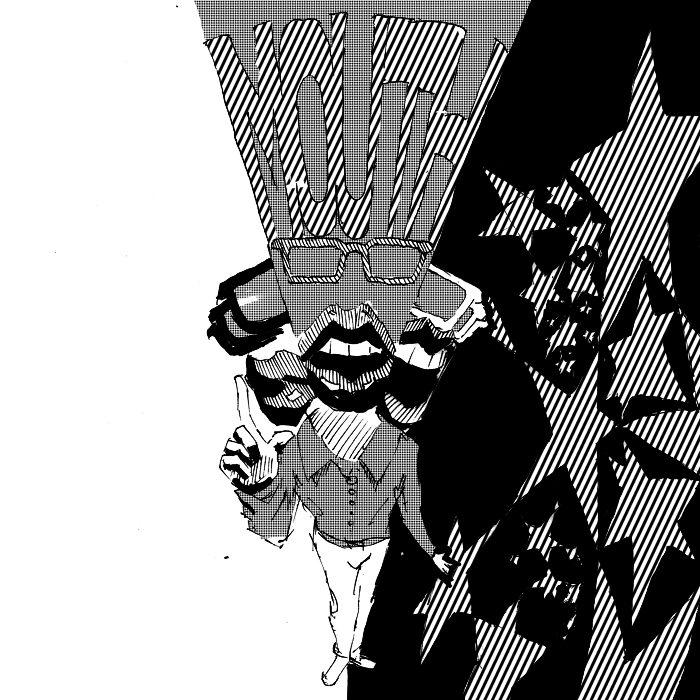
And then a good friend of mine sent me PONIES The Anthology II.
And I realized that, frankly, I wasn't nearly as interested in my critique of TV Tropes as I was in this silly movie-length collection of clips. It was actually an enormous relief to be away from the sturm und drang of my analysis.
But, being who I am, I had to wonder: what makes this video style so compelling?
Well, first let me give you the video, and then let me give you a bit of a history lesson. Here's PONIES The Anthology I and II:
And here's the video that the creators declared, borrowing a line from the anime Cowboy Bebop, would "become a new genre itself":
You know, looking back on AMV Hell 1, the video that helped to launch a whole genre of immitators, you can see how crude it is. There's some really good jokes, but it's an experimental work, and it doesn't always hold together.
That video came out of the AMV culture--the Anime Music Video creator culture that video sites like Youtube enabled midway through the Aughties. The idea was to take footage from a show and pair it with audio--the goal was to create a music video that related the show's original footage. Here's an example that is often cited as a classic due to its high production values and its blending of song and show:
See how it blends the two media together for a powerful, emotional effect? It's got style, it's got class, it's got serious emotional weight.
AMV Hell tossed all that garbage out the window.
Instead of attempting to find a "serious" emotional commentary in the space between sound and video, the creators of AMV Hell wanted to find humor--whether ironic, pitch black, wordplay-inspired, or just straight up absurdist. And what's more, they put together not one complete AMV but a bunch of fragmentary clips. This meant that the videos had to last only as long as the gag. The commedy was scattershot, rapid, often even of a blink-and-you'll-miss-it pace. A lot of the jokes weren't even dependent upon the shows themselves--although knowing the shows usually made the gags better.
In fact, it had more in common with the other creator subculture given a stage by Youtube: the Youtube Poop genre. These videos used clips of various cartoons and games to piece together absurd, bizarre narratives. The humor, like AMV Hell's, was chaotic, often nonsensical, and could jump from razor sharp wit to pure Dadaist anti-art in literally seconds. These creators shared useful source clips back and forth and tried to find ways to cleverly distort and pervert the original content (So, a character intoning "Snooping as usual, I see!" is clipped to "PINGAS!"--juvenile, perhaps, but pretty funny if you're not expecting it.)
From there, the genre became more refined, the jokes got better, the videos got more self-reflexive and sly, and the fans began to create their own spinoffs in other media--hence PONIES The Anthology.
But none of this explains just why these videos are compelling to me. It often--especially when you're talking about the spiritual successor genre of Youtube Poop--seems like Dumb Internet Humor, the kind of random phrases spammed by /b/tards and people who absorb their culture from a distance.
Well, let me see if I can break down the reasons. I think, if I can beg your tolerance for a moment for what is probably a rather smarmy statement, I think it revolves around Delight.
Reinterpretation
I talk a lot about analysis here, and how Fanfiction can act as a critical lens that recontextualizes works. I've said similar things about the power of remixes. I don't think that's going to be new to longtime readers--those articles have been fairly popular, and I've returned to the idea repeatedly.
Simply put, reframing a work forces the reexamination of that work.
What I've left out previously is that this reframing, this reexamination, doesn't have to be deadly serious. It can be downright hilarious, in fact. But there's no fundamental difference between the act of recontextualizing Harry Potter by making Draco Malfoy one of the "good guys," and the act of recontextualizing My Little Pony by putting the Imperial March to a clip of Princess Celestia walking cheerfully between kneeling subjects.
One is a serious critical commentary on the nature of the characters and their world.
One is a humorous critical commentary on the nature of the characters and their world.
The only difference is between the words "Serious" and "Humorous." The act, the effect, is the same.
Interestingly, the simplest form of that in these videos is the recontextualization of something figurative to something literal. So, the song "I Wanna Rock" is paired with footage of Rarity obsessing over Tom, her boulder, and Twilight's groan of "Oh Fluttershy, not you too!" is paired to music from U2.
This suggests an interesting conclusion to me: wordplay, punning, this kind of wit... perhaps it is simply the most simplified form of critical analysis. It would certainly explain the Deconstructionist obsession with wordplay.
That aside, I think this is the first thing that appeals to me about these videos: it makes me see the material in a totally new way. That's the first aspect of the delight inherent in this work: the delight of something familiar becoming new.
Craft
It's legitimately amazing to see some of what these creators put together. Have you watched the second Anthology video yet?
Yes?
Then you know that it ends with an extended parody of the movie 2001: A Space Odyssey.
Including original animation that is, speaking as someone who has done animation, really freaking impressive animation for a fan project like this.
With pitch-perfect parodies of the source materials.
Wow.
That's really, really impressive. And it's all being done by hobbyists--people who love their shows, and want to do something creative in response.
Listen, as an Art Historian, as a Literary Theorist, I CONSTANTLY have to justify to people why frivolous things of beauty are important. And you know what? Here's a culture that doesn't question the utility of art. They're just that compelled to create. I absolutely abhor the attitude that the computer generation is a generation of lazy consumers, and these sorts of projects are the reason why.
It would be easy to dismiss these efforts as frivolous, but between a frivolous art and no art at all, isn't it better to be a bit frivolous? No, even if the content is humorous and absurd, there's nothing frivolous about this. There's nothing more profoudn than people coming together across the wode expanse of the Net, united by just two things: their love of media, and their desire to Make Something New.
I think perhaps it's a mark of our overacclimation to net culture that prevents us from realizing what a wonder such collaborations are. If I might preach for a moment, we should all feel delight that such a world is ours.
Community
I'm cheating now, because I touched on this before in the previous entry, but I want to elaborate on something I think is important:
These aren't lone creators. They are a community.
Nothing shows that more than PONIES II and AMV Hell 5. The first is dedicated to fideo creator Magnus, the latter to Dio (the movie is even subtitled Dedicated to Dio, and the opening video plays a fantastic triple pun, equating the creator Dio, the metal mmusician Dio, and an anime character Dio). Both video artists died of cancer. Both communities responded by honoring their memory, and the Anthology creators responded by creating a cancer charity.
That's really, really cool.
Shared Experience
I think there's a common perception that reference humor is either lazy or elitist. This is often true, I'm not going to deny that. T.S. Eliot is showing off his brilliance just as much as The Big Bang Theory is showing off its low opinion of its audience's intelligence.
But I don't think this is inherent. In fact, I think obscure jokes can sometimes be the most unifying. Think about it: why do you laugh at an obscure joke, because you're happy that other people don't get it?
Or because you're happy that you do?
You're not happy because you're excluding others, unless you're a complete creep; you're happy because you're included. It's even better when the joke is one you've repeatedly missed before. It took me a second watch to catch the U2 joke, for example. And I also missed the parody versions of Shepard Fairey and Banksy street artworks that first time through. But I loved the gags when I saw them, because I knew I could appreciate the humor.
I would argue that this is actually the opposite of elitist. Those of us who make bizarre jokes that only we understand make those jokes not to feel superior--that's just the sad consolation prize that we buck ourselves up with. What we live for--what really makes us giddy, and fills us with delight--is if someone else Gets It. Because then a sly private joke becomes a shared experience. Humor is contageous, and there's a special joy in knowing that someone, even someone far removed across Cyberspace, shares your disease.
This, I think, really gets to the heart of the matter. All of this is about shared experience--whether its shared aesthetic appreciation, shared senses of humor, shared support and respect, or shared commentary on works that are mutually understood and appreciated. These videos are dependent upon knowing the source material, sure. So, I guess they're exclusive in a way. But they're also great at bringing newcomers into the fold--I can't tell you how many bands and shows I've discovered via AMV Hell's movies--and they're only as exclusive as the viewer makes them. At their core, these videos are about sharing a simple joy:
The delight of laughter.
And that was a whole lot more fun to write than an article about why TV Tropes sucks. You can follow me on Google+ at gplus.to/SamKeeper or on Twitter @SamFateKeeper. As always, you can e-mail me at KeeperofManyNames@gmail.com. If you liked this piece please share it on Facebook, Google+, Twitter, Reddit, Equestria Daily, Xanga, MySpace, or whathaveyou, and leave some thoughts in the comments below.
Monday, September 19, 2011
Modern Music, Modernist Poetry
I love mashups. I love them for the same reason that I love odd covers, remixes, and fanfiction: mashups take something that I'm familiar with (or two things that I'm familiar with) and turn them into something unfamiliar. They allow me to get a whole new perspective on a work. It might not even be a profound new understanding of the meaning of the work, but it can still give me a new sense of how something works musically, how the lyrics interact with the other instruments, and so on.
And sometimes it uncovers interesting parallels between different songs, resulting in a completely new composite message.
Consider the "State of Pop" mix by DJ Earworm for 2009:
What's particularly interesting about this mix is the fact that the original lyrics are compiled into a whole new set of lyrics. And these new lyrics make coherent sense, in a pop music sort of way, despite being from so many different sources. What the venerable Earworm has done here is he's pulled together a bunch of parts of other works to create something new.
This isn't a crazy 21st century trick, though. No, they were doing it way back at the turn of the last century as well. In fact, in literature there's a whole term for this sort of thing.
We call it shameless theft.
We call it... "allusion."
Well, not exactly. Usually what "allusion" means is that an author takes a previous work and deliberately makes reference to, or quotes bits of, that work in order to make their own creating a little bit deeper, or more rewarding for the dedicated reader. So, when you've got a serpent in something, that tends to hint at a biblical allusion--it's alluding to the serpent in the Garden of Eden. Or, a character in a vampire story proclaiming whether or not they drink wine would be an allusion to the classic line from Dracula. It's a bit different than something like a full-out borrowed character, or a retelling of another story, because it tends to rely on smaller references, structural similarities, and symbolic parallels. And, of course, as with anything dealing with symbolism, there is always plenty of room for interpretation.
DJ Earworm's mix, then, is basically Allusion On Steroids. It's all allusion--all snippets of other works composed into a new work. There's no original work--it's all other source material. This is a weird concept, and it sounds like a very modern kind of thing, but it's older than you might think. T.S. Eliot was doing this sort of thing back in the 1920s. Check out this passage from his sprawling, chaotic epic The Waste Land:
And I will show you something different from either
Your shadow at morning striding behind you
Or your shadow at evening rising to meet you;
I will show you fear in a handful of dust.
Frisch weht der Wind
Der Heimat zu
Mein Irisch Kind
Wo weilest du?
The beginning bit there is one of the most famous chunks of The Waste Land. It's an incredibly evocative passage, alluded to (are you starting to see how this works?) rather famously by Stephen King in his Dark Tower series.
But then the poem sort of clatters off the rails into four lines of German, of all things.
What's going on here?
Well, Eliot is sampling. First of all, all of that babbling about handfuls of dust? That shows up in a John Donne poem. The German bits? That's a sample from the famous Tristan und Isolde (or, The Romeo and Juliet Alpha Test). And the bits about the shadow? All of that's a sample too, of Eliot's own work! A big swath of the first part of The Waste Land actually comes from an earlier poem--"The Death of Saint Narcissus". Everything has been tweaked a bit to fit the structure of Eliot's new poem--maybe it's been autotuned or manipulated so that the key matches up--but ultimately this evocative, powerful passage is a mashup, just like Earworm's "State of Pop".
Eliot even plays games with the audience by including a bunch of notes (as in footnotes, not musical notes) that supposedly clear up all of his allusions. Spoiler alert: they do not. In fact, even he described his notes as a masterpiece of "bogus scholarship". He'll do things like reference a particular passage to a narrative about an arctic expedition when, as other scholars have pointed out, it's just as likely that he was thinking of passages from the New Testament. Sometimes he ends up sampling other people's samples. It's a mess.
It's a complex game Eliot is playing, and the end result is that the major theme of the poem is reinforced. That theme, of course, is fragmentation and collapse, reinforced by this confusing jumble of references. DJ Earworm has created a song that emphasizes the unity of its component parts, and while it can be argued that this is possible because pop music has basically three or four subjects (Sex, Dancing, More Sex, Lack Of Sex and How Lame That Is) that it never swerves from, ultimately the result is that the structure reinforces the theme of people coming together. In fact, the end message of the song is that pop music does have the power to bring us joy and comfort, even when life knocks us down. It's an incredibly optimistic message that is full of a belief in the ultimate power of art. In The Waste Land, the sense is only that people are dividing ever further and further apart, and this optimism is constantly denied. The places where the sampling is heaviest create not a sense of unity but a sense of disorder and the uselessness of our artistic traditions.
Two different works.
Two very different ways of using sampling as a tool for the generation of meaning.
The DJs of today are, in short, the Modernist Poets of our generation, spinning meaning out of the fractured images of the past. And call it sampling or call it allusion, the technique isn't going away any time soon. Because I agree with DJ Earworm: art has power, and we can find meaning amongst the fractured images shored against our ruins.
As always, feel free to leave comments, complaints, or, best of all, your own interpretations, or e-mail me at keeperofmanynames@gmail.com . And, if you like what you've read here, share it on Facebook, Google+, Twitter, Xanga, Netscape, or whatever else you crazy kids are using to surf the blogoblag these days. ALSO, I'm calling in favors. I'm living in The Week From Hell at the moment, and I'm going to need a guest article for Friday. Anyone have something they want to share? Let me know.
And sometimes it uncovers interesting parallels between different songs, resulting in a completely new composite message.
Consider the "State of Pop" mix by DJ Earworm for 2009:
What's particularly interesting about this mix is the fact that the original lyrics are compiled into a whole new set of lyrics. And these new lyrics make coherent sense, in a pop music sort of way, despite being from so many different sources. What the venerable Earworm has done here is he's pulled together a bunch of parts of other works to create something new.
This isn't a crazy 21st century trick, though. No, they were doing it way back at the turn of the last century as well. In fact, in literature there's a whole term for this sort of thing.
We call it... "allusion."
Well, not exactly. Usually what "allusion" means is that an author takes a previous work and deliberately makes reference to, or quotes bits of, that work in order to make their own creating a little bit deeper, or more rewarding for the dedicated reader. So, when you've got a serpent in something, that tends to hint at a biblical allusion--it's alluding to the serpent in the Garden of Eden. Or, a character in a vampire story proclaiming whether or not they drink wine would be an allusion to the classic line from Dracula. It's a bit different than something like a full-out borrowed character, or a retelling of another story, because it tends to rely on smaller references, structural similarities, and symbolic parallels. And, of course, as with anything dealing with symbolism, there is always plenty of room for interpretation.
DJ Earworm's mix, then, is basically Allusion On Steroids. It's all allusion--all snippets of other works composed into a new work. There's no original work--it's all other source material. This is a weird concept, and it sounds like a very modern kind of thing, but it's older than you might think. T.S. Eliot was doing this sort of thing back in the 1920s. Check out this passage from his sprawling, chaotic epic The Waste Land:
And I will show you something different from either
Your shadow at morning striding behind you
Or your shadow at evening rising to meet you;
I will show you fear in a handful of dust.
Frisch weht der Wind
Der Heimat zu
Mein Irisch Kind
Wo weilest du?
The beginning bit there is one of the most famous chunks of The Waste Land. It's an incredibly evocative passage, alluded to (are you starting to see how this works?) rather famously by Stephen King in his Dark Tower series.
But then the poem sort of clatters off the rails into four lines of German, of all things.
What's going on here?
Well, Eliot is sampling. First of all, all of that babbling about handfuls of dust? That shows up in a John Donne poem. The German bits? That's a sample from the famous Tristan und Isolde (or, The Romeo and Juliet Alpha Test). And the bits about the shadow? All of that's a sample too, of Eliot's own work! A big swath of the first part of The Waste Land actually comes from an earlier poem--"The Death of Saint Narcissus". Everything has been tweaked a bit to fit the structure of Eliot's new poem--maybe it's been autotuned or manipulated so that the key matches up--but ultimately this evocative, powerful passage is a mashup, just like Earworm's "State of Pop".
Eliot even plays games with the audience by including a bunch of notes (as in footnotes, not musical notes) that supposedly clear up all of his allusions. Spoiler alert: they do not. In fact, even he described his notes as a masterpiece of "bogus scholarship". He'll do things like reference a particular passage to a narrative about an arctic expedition when, as other scholars have pointed out, it's just as likely that he was thinking of passages from the New Testament. Sometimes he ends up sampling other people's samples. It's a mess.
It's a complex game Eliot is playing, and the end result is that the major theme of the poem is reinforced. That theme, of course, is fragmentation and collapse, reinforced by this confusing jumble of references. DJ Earworm has created a song that emphasizes the unity of its component parts, and while it can be argued that this is possible because pop music has basically three or four subjects (Sex, Dancing, More Sex, Lack Of Sex and How Lame That Is) that it never swerves from, ultimately the result is that the structure reinforces the theme of people coming together. In fact, the end message of the song is that pop music does have the power to bring us joy and comfort, even when life knocks us down. It's an incredibly optimistic message that is full of a belief in the ultimate power of art. In The Waste Land, the sense is only that people are dividing ever further and further apart, and this optimism is constantly denied. The places where the sampling is heaviest create not a sense of unity but a sense of disorder and the uselessness of our artistic traditions.
Two different works.
Two very different ways of using sampling as a tool for the generation of meaning.
The DJs of today are, in short, the Modernist Poets of our generation, spinning meaning out of the fractured images of the past. And call it sampling or call it allusion, the technique isn't going away any time soon. Because I agree with DJ Earworm: art has power, and we can find meaning amongst the fractured images shored against our ruins.
As always, feel free to leave comments, complaints, or, best of all, your own interpretations, or e-mail me at keeperofmanynames@gmail.com . And, if you like what you've read here, share it on Facebook, Google+, Twitter, Xanga, Netscape, or whatever else you crazy kids are using to surf the blogoblag these days. ALSO, I'm calling in favors. I'm living in The Week From Hell at the moment, and I'm going to need a guest article for Friday. Anyone have something they want to share? Let me know.
Subscribe to:
Comments (Atom)

