

Oddball media crit--laying siege to academia's ivory tower from pop culture's gutter
Showing posts with label Alienating My Audience. Show all posts
Showing posts with label Alienating My Audience. Show all posts
Monday, January 28, 2019
Best of 2018 PART THE SECOND
Hey remember when I said this would be up the monday after New Years'? Hahaha. Anyway, part 1 of my Best of 2018 list is here; part 2 is below. Thanks to everyone who supports me on Patreon I was able to use the money from the last article to see an actual oral surgeon, so thanks for helping me out like that.


Wednesday, February 28, 2018

Sunday, January 28, 2018
BLAME!: The End of Cyberpunk
Cyberpunk is dead. Tsutomu Nihei's BLAME! is its bloating corpse. We're just living in it.
This is very much a Part 1.

Sunday, December 31, 2017
Sam Keeper's Top 20 Of 2017
Every year, increasing in frequency as we approach New Years Eve, you can find me grumbling to myself that I'm going to write this specific article. The amount of grumbling varies based on how many articles sort of like it I've seen within a few days of each other, and how annoyed they made me.
Oh yeah folks I really don't love the "top x of y medium" genre. What the heck even is a genre? Who elected these stooges deciding what wins and what doesn't? What's the criteria here, huh?
This year it's not too bad. Sure there's the usual stupidity of, say, top 10 comic lists that snidely proclaim that there's not been any good comics this year. Just for example. Which, for the record, let me pull anyone thinking this aside and gently suggest that you fire up a Computing Device and surf onto the information superhighway, since webcomics are actually culturally relevant in a way that print comics are, bluntly, not. But as exasperating as that kind of weird medium parochialism stuff is, it's counterbalanced by things like Colin Spacetwinks un self consciously wandering through a "top 10 games" list that included ports of weird fishing rpgs and digital versions of vintage pinball tables. (Publisher Giant Bomb also let Nier Automata developer Yoko Taro do something similar, so, good for GB for taking this exactly as seriously as I do.)
It's a little odd, then, that this is the year I finally decided to write a flippant parody listicle, since I'm not actually all that irked. Maybe I've just been waiting for the right mental moment where I could translate that feeling of irritation into something more productive, though. Anyway, my alternative is to finish writing a screed about how disillusioned I am with open source as praxis and that just seems exhausting to me right now. Somehow after a year of relentless catastrophe, constant retraumatization, and a bunch of shitty superhero shows, I actually feel, bizarrely, like sincerely celebrating some of the bright spots in the wretched slog of 2017.
Screw doing this in any kind of reasonable way though. This isn't top 20 comics or movies or concept albums about self annihilation and transformation into some sort of vengeful ghost of knowledge haunting the present.
This is just my top 20, of 2017.
Thursday, November 23, 2017
The Trash World of Ideology: Thor Ragnarok Wants You To Destroy America
It's a StIT Thorsgiving Special! Feeling harried by your racist relatives? Hide in the bathroom, pull up this essay, and talk turkey with me about how Thor: Ragnarok really does seem to think Marvel, Disney, and America all need to be destroyed!
 |
| Image extremely helpfully provided by EssayofThoughts |
Friday, September 29, 2017
Here's A Follow Up Post About My Immortal and Death of the Author
I wrote about Tara Gilesbie. I podcasted about Death of the Author. Now I'm writing about both together. Because everyone kind of expects me to.

Wednesday, August 23, 2017
Let's Play 17776 Part 1: Is This 'Football'?
In the future, we hang out. Hang out with me as I read Jon Bois's epic sci fi hypercomic 17776 for the first time and discover the power of duration art, the stress of immortality, and the fact that everything continues to basically be Homestuck.
Bonus Patreon Content:
Read more about 17776 and its hypercomics techniques
Go behind the scenes and learn the workflow I used both to create this video and to end my own existence
Hungry for more video content? Can't wait till next week? Check out the extended cut of part 1
Wednesday, July 19, 2017
Hey, What's Going On (With Sense8 Perception)
I said I was going to write about the orgy scenes in Sense8. This is what came out instead.

Thursday, January 26, 2017
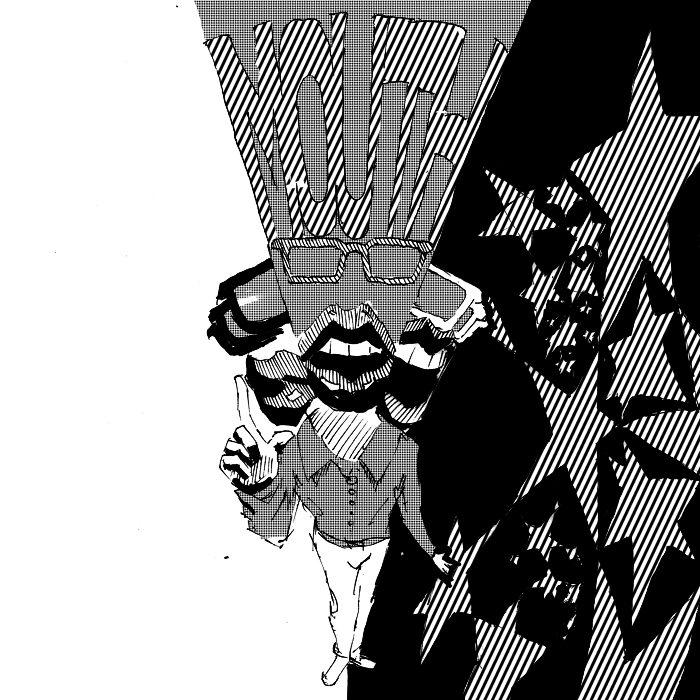
So Much To Do/So Much To Say: What Even Is Neil Cicierega's Mouth Moods?
This week, rather than the normal StIT article, I'm instead releasing several pieces of more experimental criticism. The first, going up today, is a live commentary on Mouth Moods, the new mashup album by Neil Cicierega. The second, coming tomorrow to Eruditorum Press's blog, is going to be a more traditional article on some apocalyptic music that all coincidentally came out around January 20th for some weird reason. And finally, there will be a bonus Patreon-exclusive piece posted tomorrow as well on a recent form-shattering Idea Channel video.
You can find some guiding thoughts on this whole experiment, as well as links to the Patreon content, below the cut.
You can listen to the podcast here.
You can find some guiding thoughts on this whole experiment, as well as links to the Patreon content, below the cut.
You can listen to the podcast here.
Wednesday, December 21, 2016
If The Train Stops We All Die: 2016 In Review
2016 sucked. Let's talk about Snowpiercer, clipping., and seceding from a broken reality.
 |
| All art in this article is by Kathe Kollwitz, queer revolutionary socialist engraver. |
Tuesday, November 15, 2016
Populism, Politics, People and Superpeople: Luke Cage and This Fucking Election
Luke Cage is a narrative drawing heavily on popular antiracist politics, so why is it so suspicious, narratively, of populism? And how did the Democratic ruling class's own contempt for populism cost them an entire election and usher in four to eight years of proto-fascist stoogery? This article's two interwoven threads explore these questions and freely allows Perfect to be the enemy of Good, because sometimes "good" doesn't translate to "good enough," and god dammit, there's a whole lot of things that just aren't good enough anymore.
This article is basically a 4500 word primal scream and it is not designed to make anyone feel better about anything at all. Instead of reading this deeply bitter article you could play this as loud as possible. The experience is probably roughly the same.
 |
Thursday, September 29, 2016
A Metroid And Its Human: What Does 'Another Metroid 2 Remake' Tell Us About Environment?
The Chozo Temple Complex is beautiful, golden, expansive. It is a space of lurid yellows, soft oranges, and shadows shading almost into violet, and while much of one's time spent navigating the space and avoiding the various still-active ancient defense systems, it's hard for me not to stop and admire the scenery of this ancient and crumbling structure. Walking across the top of the structure in particular is delightful (if you avoid the native life trying to kill you) as you can see layer upon layer of cavern opening out into mountains and an acid sunset beyond. There's a real sense of depth and space.
I'm not talking about Metroid 2: The Return of Samus. I CAN'T be talking about that game for one major reason: I haven't played Metroid 2, not even once. I didn't grow up in a family where expensive game consoles--and yes, I'd count a gameboy as "expensive"--weren't really a big economic priority, and even if we had the disposable income for them, I get the distinct impression that my parents would've put them in the same highly suspect category as tv shows not on PBS, and music not performed by a symphony. I missed out on most of The Games Canon.
Oh, and well, I guess the other dead giveaway is that Metroid 2 was in black and white.

And yet, I can talk about the vivid colors of the Chozo temple because while I have not played Metroid 2, I have played Another Metroid 2 Remake. AM2R hit the Internet about a month ago, causing significant buzz before basically immediately being slammed with a DMCA takedown notice from Nintendo. Thankfully, the game is still fairly easy to access.
This is a good thing, because AM2R offers up a pretty incredible experience, one that doesn't deserve to be buried under questionable intellectual monopoly laws. AM2R is doing something very special here. It's not just making accessible once more a game made for an obsolete platform. I mean, making the game itself accessible would probably be enough to justify its existence. But AM2R goes a step further, and setpieces like the Chozo Temple help us understand the new value it adds:
AM2R turns Metroid 2 into a game about our interaction with space, our use of space, and possibly, by the end, new ways of thinking about our place within an environment.
Thursday, March 24, 2016
But Nobody Gamed: Undertale vs The Difficulty Discourse In Gaming
Well look I'm sure you can play a browser game with a controller if you just TRY harder to-
Oh, welcome back! My good friend Vivian James and I were about to play Undertale! Why is Vivian James here again you ask? Well, it's simple, really. I want to talk about difficulty, and as a True Hardcore Gamer Vivian has lots of experience with difficult games.

But Undertale is difficult in a way that a lot of True Hardcore Gamers seem to hate, and even resent. Some of this is because of the queer and female and queer female characters... some of this is because they just hate anything popular on Tumblr... but a lot of it is because these guys just for some reason can't get over how difficult this game is. Not mechanically, I mean. No, they can't get over how difficult it is affectively--how difficult it is on a visceral emotional level. And they really, really seem to hate how challenging it is when it comes to typical game content!
For this reason, a lot of gamers seem to have denounced the game entirely.
Vivian, as a hardcore gamer, what do you think of this attitude?

You don't think so?

Indeed.
And like the last two games we discussed, Undertale offers a particular kind of horror experience that's outside the realm of the typical horror game, a kind of horror that assaults the player directly. Tonight I want to talk about this element of Undertale, why it's important, and just what it means that so many of the people who consider themselves True Hardcore Gamers, the same people, perhaps, that would like to see themselves as Vivian James's comrades in arms, hate the way this game challenges them.
Oh, welcome back! My good friend Vivian James and I were about to play Undertale! Why is Vivian James here again you ask? Well, it's simple, really. I want to talk about difficulty, and as a True Hardcore Gamer Vivian has lots of experience with difficult games.
But Undertale is difficult in a way that a lot of True Hardcore Gamers seem to hate, and even resent. Some of this is because of the queer and female and queer female characters... some of this is because they just hate anything popular on Tumblr... but a lot of it is because these guys just for some reason can't get over how difficult this game is. Not mechanically, I mean. No, they can't get over how difficult it is affectively--how difficult it is on a visceral emotional level. And they really, really seem to hate how challenging it is when it comes to typical game content!
For this reason, a lot of gamers seem to have denounced the game entirely.
Vivian, as a hardcore gamer, what do you think of this attitude?
You don't think so?
Indeed.
And like the last two games we discussed, Undertale offers a particular kind of horror experience that's outside the realm of the typical horror game, a kind of horror that assaults the player directly. Tonight I want to talk about this element of Undertale, why it's important, and just what it means that so many of the people who consider themselves True Hardcore Gamers, the same people, perhaps, that would like to see themselves as Vivian James's comrades in arms, hate the way this game challenges them.
Wednesday, October 7, 2015
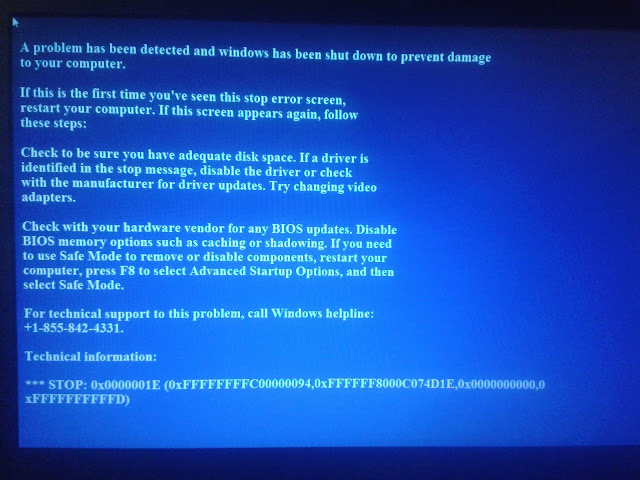
Blue Screen of Death
Last week I downloaded 100 viruses to my computer, then downloaded a virus to myself, and then someone downloaded all of Patreon's information to their computer and uploaded it to the Internet.
None of this is an explanation, really, for why I haven't gotten shit done for several weeks--the timeline is wrong for one thing--but I think this hilarious chronicle of mishaps can maybe shed some light into just how precarious a project like Storming the Ivory Tower is, and all the ways that it can all come crashing down unexpectedly--the ways that it can bluescreen.
None of this is an explanation, really, for why I haven't gotten shit done for several weeks--the timeline is wrong for one thing--but I think this hilarious chronicle of mishaps can maybe shed some light into just how precarious a project like Storming the Ivory Tower is, and all the ways that it can all come crashing down unexpectedly--the ways that it can bluescreen.

Friday, September 11, 2015
ANNOUNCING: My Superpower is Manpain!
Folks there's no article this week, if you haven't caught on to that yet, for a variety of reasons that I won't bore you with involving my day job and my mental illness.
However, I have not been idle! No indeed, I have been hard at work on a scheme that is only now coming to fruition! You see, I have a plot, a grand plot, to defeat all my foes in one blow, with my ultimate superpower!
What is my superpower you ask?
Hah. Hahahaha. HahahHAHAHA
MY SUPERPOWER...
IS MANPAIN!!!

Yes, at long last the first Storming the Ivory Tower article collection is nearly complete! Featuring revised versions of my articles on The Dark Knight Rises (Shadow of the Bat), Arrow (Liberal from a Distance and Love Me I'm a Liberal), and Grant Ward (Everybody Hates Grant Ward), the collection explores the idea of the male superhero and his power to warp the narrative and the ethics of a story around himself.
In addition to these updated versions of past articles, now with new illustrations, the collection also includes an all new, exclusive article entitled Hugging the Joker, which grapples with the theme and legacy of Alan Moore's famous Batman comic The Killing Joke.
The whole collection will be released on SEPTEMBER 21 (or at least that's the deadline I'm going to try to set for myself here) and can be accessed through my Patreon for $5 subscribers.
If you can't afford the full ebook version of this collection, however, there's still ways you can view the content, based on the other Patreon reward tiers:
$1 BACKERS:
You get to read the full draft text of the collection, including the bonus article, Hugging the Joker! I'll be working on revising this over the next week if you feel like watching my progress.
$2 BACKERS:
Want to see the progress on the cover image and some commentary on my creation process? This is the tier for you. I'll also be posting some more images as I finalize them.
$3 BACKERS:
The Podcast Tier! None of the early articles have podcasts, but I delayed so long in working on this that I ended up doing a podcast for the Killing Joke article. That audio is available to $3 subscribers.
$5 BACKERS:
You get to read the full, finalized, typo free, illustrated version of the document, in lovely PDF form! And, of course, you'll get to read the article collections that will follow!
$.50 BACKERS:
Don't have enough to contribute to these tiers? You can still guide Storming the Ivory Tower by commenting on my ongoing list of future articles, which I have updated to include ideas for future article collections.
However, I have not been idle! No indeed, I have been hard at work on a scheme that is only now coming to fruition! You see, I have a plot, a grand plot, to defeat all my foes in one blow, with my ultimate superpower!
What is my superpower you ask?
Hah. Hahahaha. HahahHAHAHA
MY SUPERPOWER...
IS MANPAIN!!!

Yes, at long last the first Storming the Ivory Tower article collection is nearly complete! Featuring revised versions of my articles on The Dark Knight Rises (Shadow of the Bat), Arrow (Liberal from a Distance and Love Me I'm a Liberal), and Grant Ward (Everybody Hates Grant Ward), the collection explores the idea of the male superhero and his power to warp the narrative and the ethics of a story around himself.
In addition to these updated versions of past articles, now with new illustrations, the collection also includes an all new, exclusive article entitled Hugging the Joker, which grapples with the theme and legacy of Alan Moore's famous Batman comic The Killing Joke.
The whole collection will be released on SEPTEMBER 21 (or at least that's the deadline I'm going to try to set for myself here) and can be accessed through my Patreon for $5 subscribers.
If you can't afford the full ebook version of this collection, however, there's still ways you can view the content, based on the other Patreon reward tiers:
$1 BACKERS:
You get to read the full draft text of the collection, including the bonus article, Hugging the Joker! I'll be working on revising this over the next week if you feel like watching my progress.
$2 BACKERS:
Want to see the progress on the cover image and some commentary on my creation process? This is the tier for you. I'll also be posting some more images as I finalize them.
$3 BACKERS:
The Podcast Tier! None of the early articles have podcasts, but I delayed so long in working on this that I ended up doing a podcast for the Killing Joke article. That audio is available to $3 subscribers.
$5 BACKERS:
You get to read the full, finalized, typo free, illustrated version of the document, in lovely PDF form! And, of course, you'll get to read the article collections that will follow!
$.50 BACKERS:
Don't have enough to contribute to these tiers? You can still guide Storming the Ivory Tower by commenting on my ongoing list of future articles, which I have updated to include ideas for future article collections.
Sunday, January 26, 2014
Heywoood Jabrony, or, Notes from the Center of a Fandom's Implosion
There's nothing like a continuous ongoing storm vast enough to dwarf planets to really make a place inhospitable.
This is why I have begun to reconsider my decision to relocate this blog to the center of the Great Red Spot.
It's also why lately it's been harder and harder to shut out the noise and just enjoy My Little Pony: Friendship is Magic. Because the raging storm surrounding Bronydom has gotten so loud I can even hear it over the icy winds of Jupiter.
Things have gotten particularly bad lately, in part due to the shutdown of the heinous rape-joke blog Princess Molestia by Hasbro, and the reactions from within the fandom and without to that event. However, the storm's been raging for quite a while now, largely involving the question of male roles within the fandom, feminism, the systematic suppression of female voices, the relationship between Bronydom and wider questions of women's involvement in geekdom, and the rise of a horrifying reactionary sect of bronies that have positioned themselves as staunch supporters of the masculine supremacy movement that seems to have infiltrated countless web spaces. (See also: fedoras.) The interference of outsiders who condemn the fandom as a whole whipped those winds further into a tempest, resulting in a complex interweaving of zephyrs that make navigating the various problems difficult. It's hard to sit back and assess the problems of a community when you're being buffeted by howling winds of outrage from multiple sides, and no group involved in this ongoing conversation seems inclined to howl less loudly.
I feel compelled to navigate the tempest, though, in part because I want, somehow, to find my way back to a show that I still love but am increasingly alienated from, in part because I feel loyalty toward a show that helped nudge me towards an internal acceptance of my identification as a genderqueer person, and because... well...
Let me put it this way. When the show first came out and Bronydom became a clear, persistent subcultural group on the 'Net, some people thought that, as Tumblr user Rincewitch puts it, "maybe the wider than expected demographic appeal of my little pony is a bellwether for the destigmatization of femininity."
Well, I didn't just think it.
Almost exactly two years ago, I wrote a whole god damn article proclaiming that it was the case, and that My Little Pony would open up a new golden age for feminism as traditional gender roles collapsed like the houses of lies they were!
WHOOPS.
This is, without a doubt, the single biggest critical blunder I've ever made. Worse than that time I accused Sequart of editorial gender bias, without knowing that their archives had crashed prior to me writing my article, resulting in most of the articles (including all of the ones written by women) being lost. Worse than the time I tried to persuade the Lovecraft subreddit that Cthulhu was boring and overused. Worse than my attempts to shoehorn references to Lord Humongous into all my writing.
I literally could go back in time to the middle of the Somme Valley in 1914 and cheerfully proclaim “This will just be a nice summer war!” and in 1919, as we travel to his place of exile, Kaiser Wilhelm will look me in the eye and you know what he’ll say? You know what he’ll find most pertinent to bring up, what he’ll take the greatest issue with?
He’ll say “Man you sure were dead wrong about Bronydom being a bellweather for the destigmatization of femininity, weren’t you?”
So, all of this in mind, I feel a certain amount of responsibility for the clusterfuck that the tempest within the fandom, and the wider climate instability between the fandom as a whole and its detractors, have become.
In honor of the memory of what the fandom could have been--and, frankly, still is when it's at its absolute best!--I want to try to navigate the storm and provide something like a history of how the fandom foundered, what its challenges were at the outset, and where we might go in building a better fandom.
Trigger warnings for sexism, rape culture, and homophobia.
This is why I have begun to reconsider my decision to relocate this blog to the center of the Great Red Spot.
It's also why lately it's been harder and harder to shut out the noise and just enjoy My Little Pony: Friendship is Magic. Because the raging storm surrounding Bronydom has gotten so loud I can even hear it over the icy winds of Jupiter.
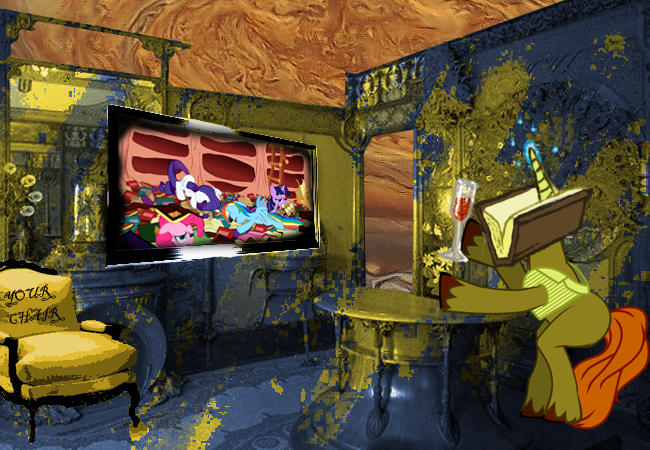 |
| Pictured: countless, countless terrible decisions. |
I feel compelled to navigate the tempest, though, in part because I want, somehow, to find my way back to a show that I still love but am increasingly alienated from, in part because I feel loyalty toward a show that helped nudge me towards an internal acceptance of my identification as a genderqueer person, and because... well...
Let me put it this way. When the show first came out and Bronydom became a clear, persistent subcultural group on the 'Net, some people thought that, as Tumblr user Rincewitch puts it, "maybe the wider than expected demographic appeal of my little pony is a bellwether for the destigmatization of femininity."
Well, I didn't just think it.
Almost exactly two years ago, I wrote a whole god damn article proclaiming that it was the case, and that My Little Pony would open up a new golden age for feminism as traditional gender roles collapsed like the houses of lies they were!
WHOOPS.
This is, without a doubt, the single biggest critical blunder I've ever made. Worse than that time I accused Sequart of editorial gender bias, without knowing that their archives had crashed prior to me writing my article, resulting in most of the articles (including all of the ones written by women) being lost. Worse than the time I tried to persuade the Lovecraft subreddit that Cthulhu was boring and overused. Worse than my attempts to shoehorn references to Lord Humongous into all my writing.
I literally could go back in time to the middle of the Somme Valley in 1914 and cheerfully proclaim “This will just be a nice summer war!” and in 1919, as we travel to his place of exile, Kaiser Wilhelm will look me in the eye and you know what he’ll say? You know what he’ll find most pertinent to bring up, what he’ll take the greatest issue with?
He’ll say “Man you sure were dead wrong about Bronydom being a bellweather for the destigmatization of femininity, weren’t you?”
So, all of this in mind, I feel a certain amount of responsibility for the clusterfuck that the tempest within the fandom, and the wider climate instability between the fandom as a whole and its detractors, have become.
In honor of the memory of what the fandom could have been--and, frankly, still is when it's at its absolute best!--I want to try to navigate the storm and provide something like a history of how the fandom foundered, what its challenges were at the outset, and where we might go in building a better fandom.
Trigger warnings for sexism, rape culture, and homophobia.
Saturday, May 25, 2013
Not Proud To Be A Geek
 |
| This isn't going to be a cheery article. |
What glubbed forth in the precambrian dawn was a lengthy, overwrought explanation of how countless frustrations slowly burned from me my ability to wear the moniker of "Geek" with pride. Yes, ladies and gentlemen, I am renouncing the term "geek." Or, I should say rather, it renounced me.
But I'm getting ahead of myself. Let's trace the evolution of this event.
Starting With The Last Straw: Geek Pride Day
I actually was unaware of Geek Pride Day until this morning, when I awoke to see some mentions of it on... actually, I don't recall now. Probably Google+, which seems to largely be a haven for geeks of all sorts (since, to their credit, geeks are early adopters of weird tech, and the broader Facebook set haven't migrated). Initially, my response was neutral-to-cynical. Geekdom and I haven't been getting along much lately (I'll explore the reasons why later in the article) so while I wasn't really irate at this point, I wasn't really enthused, either.
I decided to do some research, though, and initially found the results quite heartening. The holiday originated in Spain, apparently. Cool! A lot of geekdom seems to be Americocentric in nature, so having the holiday originate in Europe is pretty neat. And what's more, the day is associated with a list of rights and responsibilities. Responsibilities! That's pretty cool! Geeks have a lot of good to offer the world, and acknowledging that openly seems like a reasonable strategy.
Things were looking up.
And then I read a translation of the list.
Rights:How utterly disappointing.
Responsibilities:
- The right to be even geekier.
- The right to not leave your house.
- The right to not like football or any other sport.
- The right to associate with other nerds.
- The right to have few friends (or none at all).
- The right to have as many geeky friends as you want.
- The right to be out of style.
- The right to show off your geekiness.
- The right to take over the world.
- Be a geek, no matter what.
- Try to be nerdier than anyone else.
- If there is a discussion about something geeky, you must give your opinion.
- To save and protect all geeky material.
- Do everything you can to show off geeky stuff as a "museum of geekiness."
- Don’t be a generalized geek. You must specialize in something.
- Attend every nerdy movie on opening night and buy every geeky book before anyone else.
- Wait in line on every opening night. If you can go in costume or at least with a related T-shirt, all the better.
- Don’t waste your time on anything not related to geekdom.
- Try to take over the world!
How disappointing that instead of looking inward and seeing how we can make our community better, instead of looking outward and seeing how we can improve the world, how we can be MORE inclusive, MORE welcoming, MORE passionate in a communal way, these rules detail all the ways in which we should become LESS inclusive, LESS welcoming, and passionate only in the things we can own and control and dominate and use as status symbols. The rights are fairly innocuous--there's some stuff missing (again, I'll get to that) but for the most part they're reasonable--but the responsibilities list represents almost nothing but narrowmindedness, status-obsession, and arrogant exceptionalism.
I find only two of the responsibilities reasonable: the first, which urges a self-determined identity (ironically a sentiment undermined by the rigid social code that follows) and the fourth, which urges artistic preservation, a value desperately needed when the speaker for the new XBOX One can blithely claim, "If you’re backwards-compatible, you’re really backwards."
Two out out ten.
Geeks do have responsibilities, responsibilities derived from the positive qualities people bandy about whenever geek pride as a notion comes up. Geeks have responsibilities that come from their intellects and their status as (former) outsiders.
Had we upheld our end of the bargain--had we acknowledged our important role in culture and reacted accordingly--I would be proud to be a geek.
But we failed.
And I am not proud to be a geek.
The reasons why follow.
WE CLOSED OUR DOORS TO NEWCOMERS AND PASSIONATE AMATEURS
There's an attitude in geekdom that intelligence is best expressed through a kind of arrogant dismissal of those less familiar with geek media, and that attitude is absolutely, incontrovertibly holding us back. It's ok to tell someone that they are wrong if, y'know, they are, but that's not a license to take on an air of absolute superiority over younger or newer enthusiasts who are genuinely just seeking answers, or seeking mentors that can lead them to greater understanding. Yet this is the response to newcomers that I see all the time. When you talk about "being the nerdiest," as though it's a competition, this is the ideology you buy into.
This even extends to the way that we deny certain activities the moniker of "geek." Look at responsibility 9 in the list above: "Don’t waste your time on anything not related to geekdom." That's pretty messed up, if you really think about it. That's the kind of dictum present in the strict fundamentalist religions that a significant number of geeks claim to abhor. Abandon this world of things and come to Geekdom! Yuck.
As a consequence, we impoverish our own existence by denying the value of anything outside our narrow spheres of interests and disparage the people (think of "casual gamers," for example, or people who got into the Teen Titans cartoon when they were too young to read the comics) who we deem to be less fully integrated into the cult of Geek.
If we truly love and appreciate our geek media, why do we hide it from the world? We could enrich the lives of so many--and enrich our own lives--if we opened up more of a dialogue with those not traditionally considered geeks. It was our responsibility to open that door, but we closed it, instead.
Of course, the dividing line between geeks and non-geeks emerges from more than a simple judgment of experience. The fact of the matter is:
WE FAILED TO CONVERT SAFE SPACES FOR GEEKS INTO SAFE SPACES FOR ALL
Women. Queers. People of color. Geeks increasingly embrace a policy of marginalization and exclusion against these groups. I'm sure most of the regular readers of this blog are well aware of the issues, but it bears repeating, I think. If I catalogue the sins of geeks, this is certainly one of the top few.
How does this happen? Ugh, all kinds of different ways. A lot of social justice folks talk about microaggressions, but I'm more concerned with people just straight up being overt, aggressive assholes.
Like, let me give you an example. On the Wizards of the Coast forums, the word "queer" is censored, which I guess makes sense since it can be used as an insult, but which makes it difficult for me to discuss LGBTQ issues as openly as I would like. To get around the problem, I replace the "u" in the word with a "v."
Here's another poster's condescending response:
Why do you keep using a v instead of a w? You're not using real words even if the "community" thinks they are. Now we should definitely take this to another thread but I don't tolerate using fake words to make people feel special.Reread that first sentence a few times. "Instead of a w." Yeah. He then proceeded to misuse the term "asexual" after I had literally just gotten through explaining the fact that "asexual" and "intersexual" don't mean the same things in gender and sexuality studies as they do in biology.
Sigh.
But the unique stupidities aside, what this really tells me is that I should shut up about my queerness, just as women should shut up about their womenness, and people of color should shut up about their weird skin. We don't need diversity, is the message here. You're the REAL racist/sexist/homophobe (how the fuck does that one work?) for wanting more people of color/women/queers in your fiction! And asking for special treatment is just reverse discrimination.
Women who speak out against misogyny within geek culture are slutshamed, harassed, threatened with rape. Casual homophobia seems to be a core part of the First Person Shooter and Fighting Game scenes these days. People straight up flipped shit when they found out that a non-canon parallel universe's Spiderman had died and was to be replaced by a young black boy. They did the same thing when they found out that there was going to be a black Lancelot. Oh, and then there's the Homestuck fandom. Remember when the fandom shit itself because a bunch of assholes used a joke in the comic to harass cosplayers of color and people who drew non-white fan art? And then shit itself further when Andrew Hussie removed the joke and those same fans decided that a horrible crime against artistic genius had been committed? That sure was... peachy.
The story of geekdom of late has been one of a minority of straight white males railing against political correctness, activism gone mad, and the destruction of their last safe space. Men's Rights idiocy spreads like malignant cancer through the body of our culture, and the message I hear again and again--loud and clear though it comes veiled in a pseudo-intellectual cloak--is that I am not welcome here unless I keep my fag mouth shut.
What kills me about this is that I remember a different geekdom. I remember geeks that accepted anyone that was an outcast, because WE were outcasts. If you would associate with us, we would associate with you. For a long time, I thought acceptance and understanding was, albeit imperfectly, woven into the DNA of geeks. Weren't we responsible for the first interracial kiss on American television? Didn't our authors push the boundaries of gender and sexuality (I think of people like Ursula LeGuin in particular, here) further than anyone but the most advanced of ivory tower intellects? Shit, didn't we used to be better than this? I have conversations sometimes with older geeks that are just as disturbed as I am by the current trends. They, too, remember when geekdom represented something more.
We had a responsibility to band together against those who did not understand us, those who found us weird or freaky. We had a responsibility to welcome other outsiders, the dispossessed, with open, if slightly smelly, arms. We failed.
And then we committed an even greater sin:
WE REBUFFED THOSE WHO POINTED OUT OUR FAILINGS
People spoke out. We turned them away, threatened them, called for their heads, declared them collaborators with the enemy. We did that Robespierre shimmy, danced beside the guillotine as, one by one, our former allies lost their heads.
The man who openly sneers at the dispossessed is a danger, sure... but more insidious is the man who reacts to conflict with endless cries for peace and calm!
More insidious is the man who chides the activist for raising a fuss, who scolds the activist for "sinking to their level," who bemoans the activist's constant need to bring up the uncomfortable, push things further than polite conversation allows, or show fury or hurt when attacked, insulted, dragged through the mud, and forced to endure insult after insult.
Where is that man when his fellow geek jeers and mocks the woman, the queer, the man of color? Nowhere to be found, in my experience. Because it takes two to fight and one to bully; when a fight breaks out, it's because the attacked party responds in kind. The fight would be impossible if we would just TAKE IT LIKE A BITCH.
So many speak out against the toxicity of our culture, and we had a responsibility to listen, to stand beside them, to defend them. And we rebuffed them instead, and made them the source of the problem. I see it on, again, the Wizards community forums, when female members react with justified rage to a poster that for six years has stalked, harassed, condescended, and made deeply disturbing sexual advances towards any openly female poster. The mods will not ban him, and more and more I see other posters chiding the women for reacting with anger and disrupting the community.
We rebuff them instead.
And as a consequence,
WE BLINDED OURSELVES TO REAL ISSUES
Listen:
I hate The Big Bang Theory. Everything geeks say about it--that it laughs at us rather than with us, that it relies on shallow stereotypes rather than a deep understanding of geekhood for its humor, that its gender dynamic is frustratingly regressive--is true.
But.
The Big Bang Theory is not "Blackface For Geeks."
In fact, if you think it is, I recommend that you go see an eye doctor immediately, because shit, son, you got to get yourself some fucking perspective.
It is so damn offensive to compare a show about white male geeks that is a little stereotypical to a practice that systematically denied the acting capabilities of people of color while simultaneously reinforcing racist stereotypes that were part of a systematic disenfranchisement and, in some places, an establishment of an economic system that was slavery in all but name.
Similarly:
Male geeks? For fuck's sake, LOSING A GAME OF MAGIC: THE GATHERING IS NOT GETTING RAPED. I don't care how quickly your opponent beat you, I don't care how much damage that spell did in one turn, I don't care, I don't care, I don't care. It's not rape, it's not comparable to rape, and the fact that you are describing yourself as "getting raped" shows that you are at best profoundly insensitive, and at worst profoundly misogynistic.
Geeks pride themselves on their intelligence (this is a point that'll show up later on as well). We pride ourselves on having more adapted imaginations than others, better insight. And yet somewhere along the way, we forgot that with that great power comes great responsibility. We blinded ourselves to the realities of oppression, we lost our sense even of what truly constituted our own exploitation and abuse and transformed trivialities into great crimes.
But it's no surprise we can't even recognize when we're getting fucked over. See,
WE POISONED DISCOURSE
Yeah, now we're getting a bit meta here. See, there's two camps of very vocal geeks these days. There's the people that absolutely cannot be satisfied with anything and work themselves into a frothy-mouthed rage each time something happens that they don't like. And on the flip side of that coin, there's the people who go into a frothy mouthed rage any time someone decides that something new isn't to their taste. "You're raping my childhood!" one side screams. "If you don't like it, get out!" howls the other side.
And in the process we've absolutely slaughtered substantive discourse.
How do you begin to analyze whether or not The Dark Knight Rises or Iron Man 2 were functional films when the voices of critics with actual deep-level understanding of narratives or the broader political implications of certain film ideas are drowned out by people howling that the continuity has been screwed with, or backstories don't work? Or when the response is that anyone criticizing the films on their own terms are simply grognards unable to adjust to changes? Even changes that are legitimately boneheaded and insulting, decisions that legitimately undermine a work or pander to the lowest common denominator, simply cannot be discussed any more because there's so much damn noise. The discourse has been poisoned because we collectively decided that we didn't need theory, we didn't need to find better ways to articulate our complaints, we didn't want to reflect and contemplate and compare our media to other acknowledged masterpieces of literature and film and music, we didn't want to differentiate between unfocused incoherent anger and fully-articulated fury at legitimate slights.
And now that we poisoned our ability to discuss the state of our media,
WE ENSLAVED OURSELVES TO THE INTERESTS OF OTHERS
Remember when Call of Duty was advertised by Oliver North?
You know, the guy who was a part of the clever deal where we sold weapons to Iran to finance far right dictators in South America who were responsible for perpetrating all sorts of atrocities upon their own people?
That Oliver North.
Geeks are being co-opted in all sorts of deeply disturbing ways. One of them is the collusion between Call of Duty and other first person shooter game producers and the American military-industrial complex. Oliver North's endorsement of a shooting game is simply one representation of that. There was also a thing where Call of Duty was selling advertisements for real guns within their games. That's kinda sick, huh?
Another is the constant refrain I discussed above that dismisses any criticism aimed at geek products as illegitimate. This creates an atmosphere where corporations are protected by a loyal meatshield of lapdog fans, eager to explain why their favored product or company is beyond reproach. So, unfair business practices, decisions that reinforce the alienation of minorities from geekdom due to the purported "simple economic necessity" of choices like refusing to include female sprites in multiplayer games or refusing to support any game with a non-sexualized female protagonist... all these things and more are fervently explained away by the devout. In the process, they enslave our culture to people who do not have our best interests--or in some cases, the best interests of the world--at heart.
It is almost fitting, though, that this should be the case. It is almost a karmic fate, because
WE DEMANDED MORE EVEN AS WE ATTAINED THE MANTLE OF LEADERSHIP
Somehow geeks have internalized their outsider status so fucking hard that the mindbendingly huge success of a science fiction movie that features blue aliens as main characters and a movie that is the culmination of a bunch of other movies that bring together a giant green guy, a Norse god, a man in power armor, a superspy, a supersoldier, and a super... uh... archer (poor Hawkeye) is still somehow not evidence that we won. We took over. The world is effectively ours. From the bizarre surrealist and science fiction experiments in pop music videos, to the staggering success of shits like Mike Zuckerberg, to the staggering cultural penetration of weird shows like Adventure Time, geeks have taken over.
And yet we still behave as though we're outsiders, as though we're the underdogs, as though we can't catch a break.
Like, a few days ago I was wading through the maelstrom of stupidity that was the My Little Pony fandom's reaction to Equestria Girls, a movie where Twilight Sparkle goes through a magic mirror to a human high school. Amidst all the generalized stupid, there was one comment that stood out to me. The person was outraged because this was, in his mind, a clear attempt by Hasbro to take My Little Pony and turn it into something for little girls.
Yeah.
Jumping Jesus on a pogo stick.
That's the kind of acquisitiveness I'm talking about. It's like anything not for us is somehow an insult, as though we are all that matters in the world. It's not enough that we should dominate culture, we must utterly absorb it, and anything for anyone else is an abomination. Here's our weird geekdom religiosity rearing it's head again... in the dumbest way possible.
I guess this is just a variation of what I said earlier about our blindness, with a touch of my points about the pervasive racism, sexism, and homophobia in the culture mixed in for flavor, but I think it's worth saying as its own sort of point. We had a responsibility, once we finally won, once we got the respect we deserved, to rule wisely. We had a right to conquer the world! And we had a responsibility to recognize what winning looked like it. But somehow we missed it, and we kept demanding more. Eventually we're gonna do that King Midas thing, I think. We'll demand the world turned to gold. And in our glorious golden palace, we'll starve.
Which leaves us, I guess, with the elephant in the room. The final sin. The final great failure that underlies all the others.
WE EXPLOITED OUR INTELLIGENCE AS A STATUS SYMBOL, NOT A TOOL
We decided we were brilliant, and that we deserved to rule, and that the world should dance to our tune.
And then instead of using that intelligence, instead of using our sight, and our thoughts, and our hands, and our hearts, we erected greater and greater monuments to our own genius--sterile and perfect, reaching upward to the sky.
Seeing the ivory towers of those who had spurned us, we did not use our minds--our greatest gifts--to build a new kind of dwelling for culture, a new kind of fortress with walls to protect, not to exclude. We built, instead, our own towers and cried, "Look, we are surely gods! We have surpassed all those who spurned us, all those who sought to limit or exclude us!" We built our own Babels, our language degraded as we increasingly shouted out liturgies to our own egos, and now the animals look back and forth between the humans and the geeky, nearsighted pigs, and they just can't quite tell the difference.
We cry that pop culture exploits us, while we exploit ourselves. We turn ourselves into cultural commodities, scrabbling for every ounce of respect we can get, acquiring flunkies and moochers and fans of our own. We built high and lost sight of the dirt from which we climbed, and we keep building with our own hands, enslaving ourselves to our intellects rather than enslaving our intellects to a deeper purpose.
Geekdom is a failed experiment. Every responsibility that we had, we failed to fulfill. We did not keep up our end of the bargain.
The towers we built did not lead to God at all.
They just led straight up our own asses.
Don't Call Me Geek
I'm not a geek anymore. I was, but the culture has changed, and it's made it clear to me that I'm not welcome. Because I'm a critic and a theorist, and because I'm a social justice advocate, and because I'm a pansexual genderqueer, I'm not welcome.
My girlfriend, my sister, my other female friends... unwelcome.
My friends who are black and Latino... unwelcome.
Hell, a lot of the people I love and respect, simply by virtue of their particular opinions, or their acceptance of and interest in broader culture, are... unwelcome.
So, don't call me geek. I'm not that, not anymore, not just by my own choice, not just by my own disgust and anger, but because I am a storm unwelcome in these new towers.
Sometimes I bandy the idea about with my friends of starting a parallel geek culture--a fork of geek culture, if you will--that takes on the mantle of responsibility, that embraces the roles I lay out here and adds some more rights--the right to be protected from misogyny and homophobia, the right to articulate arguments of like and dislike without dismissal, the right to blend high and low culture, maybe. I'm not sure what you would call us. Maybe nothing at all. Maybe fans of our respected geek things--fans of The Avengers, fans of Tolkien, fans of Homestuck, Adventure Time, My Little Pony, but also James Joyce, Beethoven, hip hop, goth rock, whatever we like, whatever we want to geek out about.
Part of me wants to call us "Grangers." I like Hermione, ok? And her demotion to second in command maybe is a good symbol of the kind of problems we seek to solve.
But probably you don't call us anything at all. We're the geeks of geekdom, the new dispossessed.
And maybe I can be proud of being that kind of geek, after all.
Circle me on Google+ at gplus.to/SamKeeper. Follow stormingtheivory.tumblr.com for updates, random thoughts, artwork, and news about articles. As always, you can e-mail me at KeeperofManyNames@gmail.com. If you liked this piece please share it on Facebook, Google+, Twitter, Reddit, Equestria Daily, Xanga, MySpace, or whathaveyou, and leave some thoughts in the comments below.
Sunday, March 10, 2013
On Being a Mad Artist
So, there are some disadvantages to being an artist that suffers from depression.
Besides the obvious, I mean.
I want to talk a little bit about madness and genius and how we've mythologized it in our culture--I'm doing the Roland Barthes mythmaking thing, in other words--but let me first give some background so you can understand where I'm coming from personally. It won't take too long, I promise.
I've suffered from depression for quite a while now, and boy does it ever suck eggs. It's difficult to quite describe what it's like to periodically become uncontrollably sad and panicked for no external, easily understood reason, so I think I'll just stick with the "suck eggs" thing as useful shorthand. You may find Hyperbole and a Half's explanation enlightening, however.
I can, however, describe what effect it has on my work: the anxiety paralyzes me completely. You know that stretch where I was posting once or twice a month for a while? Yeah, some of that stemmed from my brain not feeling well. When you're depressed (or at least when I'm depressed) even just washing dishes becomes either an act of staggering, astonishing ray of triumphant light that simply serves to magnify the shadows, or a symbol of utter futility that reinforces what an inept, useless bag of flesh and bile you are.
So now take that feeling and apply it to the act of writing a whole essay on Homestuck, then posting said article on the web for a bunch of strangers on Reddit to complain about--an act, in other words, several magnitudes of OH SHIT SCARY FEELINGS above washing dishes.
Ahuh. Yeah. I think perhaps one can approach an understanding of mental illness and art through this basic method. Just imagine a place where simple daily activities like getting out of bed turn your stomach into a seething pool of sentient acid that wants you to know just what a bad person you are, and then apply that sensation to an activity where you are exposing uncomfortably deep parts of your brain to public scrutiny.
So now, that's a picture of what depression and anxiety have meant for me and my art. Ok? We got that?
Now.
Add to that sensation the fact that culturally I am supposed to feel this way.
Let's go mythological here, folks.
The Mad Genius trope is pretty much omnipresent in our pop cultural discussions of great men and women in art, literature, and science. Our stories overflow with eccentric artists and mad scientists, and Suffering For Your Art is the mandated mode of operation if you work in a creative field. What's more, to be creative, or creatively insightful, or innovative, you must be a little crazy, because no one normal could come up with stuff like multiple levels of infinity or End of Evangelion or The Scream. I think we can sum up the basic components of this myth thusly:
There's another aspect to this, too, that is probably less rage-worthy than the meatgrinder of celebrity culture, but is still pretty infuriating to me. I was thinking about this today in the context of this analysis of the recent AP Style Guide change that admonishes reporters not to connect crime with mental illness unless there are strong, professionally-evaluated reasons for connecting the two. The author explains how mental illness does more than explain crime, it explains any kind of convention-flouting you can imagine:
This is what I mean by patronizing indulgence of difference. (Sidenote: I hate "tolerance." Fuck "tolerance." What a patronizing term!) I recall reading a story quite a few years ago about Einstein's eccentricities, where the author, seemingly at a loss to explain the great physicist's problems with marital fidelity, or some of his other occasional odd behaviors, simply shrugged and suggested that a genius shouldn't be expected to behave the same way as you or I.
But--and as I am not a biographer of Einstein, this is ENTIRELY speculative, I really want to stress that--what if Einstein was simply strongly inclined towards polyamory? Why should our response to that be to dismiss it as an eccentricity that could never be applicable to normal people? Why should we not respond by thinking, wait, if this is good enough for Einstein, perhaps I should consider whether it works for me too? As the brilliant metalhead Devin Townsend (who, incidentally, also suffers from bipolar disorder) once sang: "I'm not insane, I'm not insane, I'm just smarter than you."
The myth of the mad artist allows us culturally to enjoy the product of artistic labor while devaluing its potential insights, and the potential insights of its creators. It allows us to avoid interpretation, to waive our responsibility to think about the artistic or ideological products we consume. The Othering of artists allows us to be pleasured by art without having to consider the ramifications of that art on our daily lives. It's a really handy way, too, of objectifying creatives--after all, if they aren't like us, we can be entertained by their crazy antics in a pretty free and uncritical way.
In fact, to get at this idea, let's talk about the Ur-Mad Artist.
Let's talk about Vincent Van Gogh.

It's hard to think of a figure that has been more mythologized in our culture than Vincent. He is, like I said, the Ur-Mad Artist, the guy who was able to paint so many cool things because he was, well, cracked.
Except that... Vincent didn't paint when he was at his lowest points. He was at his most prolific when he was actually doing better. And his death wasn't just an inevitable result of the mental illness he suffered, it came about because he had the bad luck to hook up with a quack doctor that was feeding him drugs that (as far as I recall) either didn't work at all or actually made his condition worse. Some of this sounding familiar given our discussion of Ledger earlier?
Let's talk, though, specifically about the ear cutting thing. Everyone knows the story--crazy Vincent looses his shit, cuts off his ear, and mails it to a prostitute. Wow, what a zany guy, LOL!
I bet you didn't know about the fight he had with Gauguin before he cut his ear, though.
Oh yeah. See, Vincent had this vision: he fell in love with Arles, France, and he dreamed of creating an artist commune there, a group of people that would support each other, and push the boundaries of art that the Impressionists had already started to explore. Except no one else was interested, and finally Theo, Vincent's brother, managed to persuade the Fauvist Gauguin to join Vincent. Vincent was overjoyed for a while at finally having another artist to keep him company in a town of backward farmers and suspicious villagers.
Except Gauguin was a gigantic prick. He apparently spent most of the time badgering Vincent to produce art HIS way, and Vincent grew to hate it. Eventually the two got into a blazing row in which Vincent threatened his one-time companion with a knife.
Now, here's where things get a bit speculative.
I studied art history with an early modernist scholar, and he had this theory about the events that followed. See, there was (and perhaps still is, I don't know) a tradition in bullfighting that the matador who slew the bull would cut off the bull's ear and present it to his lover.
After the fight with Gauguin, Vincent cut a piece off his ear and presented it to a prostitute.
He was declaring that Gauguin had slain him as a matador slays a bull, and the prize went not to a virginal bride but a prostitute.
Wow.
Now, this isn't rational behavior; I'm not suggesting that. What I AM suggestion, though, is that this reading of Vincent's actions is MUCH more in line with the man who experimented extensively and deliberately with form and perspective and color, the man who wrote beautiful, poetic letters to his brother that I cannot read without weeping, the man who was, by every account, extremely intelligent. Vincent, in this reconstruction, is no longer some zany artist. He's a sensitive and brilliant man who suffered unnecessarily at the hands of a disease that wasn't properly understood, and at the hands of a belligerent asshole that skipped out on his wife to go fuck teenage girls in Polynesia.
Is it clear yet that I really, really don't like Gauguin?
Anyway, the ZaNy ViNcEnT vAn GoGh myth means that we don't have to address the possibility that his death and suffering in life were totally presentable tragedies. It means we don't have to view him as a complex, thoughtful individual who, yes, behaved in a self destructive way. It means we don't have to see his actions as anything other than random craziness. You can see this in more minor forms all throughout our culture: look at the way people dismiss Lady Gaga videos as just random weirdness, or Andrew Hussie's creations as just crazy gags with no logic behind them, or even the failure to holdChris Sims Dave Sim (Ha, whoops, good catch Jon) accountable for the misogynist screeds in Cerebus, because he just kinda lost it, you know? By conflating genius with madness, we write ourselves a Get Out Of Critical Thought Free card.
And that also really sucks.
There's one last idea I'd like to touch on, and that's the Rom Com principle that I mentioned early. Deep inside, the messed up dude is a creative and imaginative individual. This is actually probably the most dangerous aspect of our conflation of madness and genius, because it encourages the tolerance of destructive behaviors in people that are just, well, actually crazy.
I ran into this recently with a longtime poster on the Magic: The Gathering forums. Now, this is a person that posts a lot of card designs in the forums, which is fine. But there's a few problems with this guy. For one thing, he's convinced that the head of Magic R&D is stealing all his cards. So, that's kinda weird. What's more, he has this bizarre cosmology that exists entirely within his own head that--I think, maybe--shows how Magic is some sort of true expression of the mythological origins of the universe in the struggle between good and evil gods and... fuck, I can't explain it. And he frequently argues with other people about his bizarre made-up religion. Alright. Worst of all, though, he creepily stalks, patronizes, and hits on every single female member of the boards. Seriously, the guy is like the Magic nerd version of Taxi Driver.
Now, it seems clear to me that, given that the Wizards forums are NOT a mental health clinic, and given that having female players hit on and then verbally abused when they rebuff unwanted advances is a poor way of supporting gender inclusivity, it seems obvious to me that this individual is fundamentally toxic and needs to be removed from the forums (he has been behaving in this way for six years, incidentally). So, I pointed this out.
The response I got from another user was that he should be kept around because even though he's clearly off his rocker, there's potential for genius there.
Hooooboy.
This is the problem with the Rom Com Principle in a nutshell. Any flagrant abuses can be ignored because someone that is mentally unbalanced might be creative. Within each manic pixie dream girl or weird, creepy dude is a unique artistic flower.
Bleh.
This is just a really gross attitude, especially because of the gendered element at work here. It's just really fucking easy to look the other way and downplay abusive or deeply dysfunctional behavior if the target of that behavior is a woman. After all, if madness and genius go together, women just have to make a sacrifice for the rest of us, right? And boy, it sure does make it easy for geeks to behave as though their maladjusted bullshit should just be accepted by everyone else. Why grow when your dysfunctions are a part of what makes you special?
So, I suppose if I can summarize my main point here, it's this: the Mad Genius myth hurts everyone. It hurts artists, it doubly hurts artists with mental illnesses, it hurts regular people with mental illness, and it hurts people affected by people with mental illnesses.
I'm sorry to leave on such a downer note, but this is kind of a downer subject. Dealing with depression is already hard enough. Culturally, we've collectively decided to make it harder. That really has to stop. So, my plea is essentially this: like the AP style guide urges, do not conflate things with mental illness unless you have a really, really good reason for doing so. Don't feed into the mad artist myth. Because as long as we keep feeding this myth, we also keep feeding it our artists.
And that sucks.
Circle me on Google+ at gplus.to/SamKeeper. As always, you can e-mail me at KeeperofManyNames@gmail.com. If you liked this piece please share it on Facebook, Google+, Twitter, Reddit, Equestria Daily, Xanga, MySpace, or whathaveyou, and leave some thoughts in the comments below.
Besides the obvious, I mean.
I want to talk a little bit about madness and genius and how we've mythologized it in our culture--I'm doing the Roland Barthes mythmaking thing, in other words--but let me first give some background so you can understand where I'm coming from personally. It won't take too long, I promise.
I've suffered from depression for quite a while now, and boy does it ever suck eggs. It's difficult to quite describe what it's like to periodically become uncontrollably sad and panicked for no external, easily understood reason, so I think I'll just stick with the "suck eggs" thing as useful shorthand. You may find Hyperbole and a Half's explanation enlightening, however.
I can, however, describe what effect it has on my work: the anxiety paralyzes me completely. You know that stretch where I was posting once or twice a month for a while? Yeah, some of that stemmed from my brain not feeling well. When you're depressed (or at least when I'm depressed) even just washing dishes becomes either an act of staggering, astonishing ray of triumphant light that simply serves to magnify the shadows, or a symbol of utter futility that reinforces what an inept, useless bag of flesh and bile you are.
So now take that feeling and apply it to the act of writing a whole essay on Homestuck, then posting said article on the web for a bunch of strangers on Reddit to complain about--an act, in other words, several magnitudes of OH SHIT SCARY FEELINGS above washing dishes.
Ahuh. Yeah. I think perhaps one can approach an understanding of mental illness and art through this basic method. Just imagine a place where simple daily activities like getting out of bed turn your stomach into a seething pool of sentient acid that wants you to know just what a bad person you are, and then apply that sensation to an activity where you are exposing uncomfortably deep parts of your brain to public scrutiny.
So now, that's a picture of what depression and anxiety have meant for me and my art. Ok? We got that?
Now.
Add to that sensation the fact that culturally I am supposed to feel this way.
Let's go mythological here, folks.
The Mad Genius trope is pretty much omnipresent in our pop cultural discussions of great men and women in art, literature, and science. Our stories overflow with eccentric artists and mad scientists, and Suffering For Your Art is the mandated mode of operation if you work in a creative field. What's more, to be creative, or creatively insightful, or innovative, you must be a little crazy, because no one normal could come up with stuff like multiple levels of infinity or End of Evangelion or The Scream. I think we can sum up the basic components of this myth thusly:
- Creativity is something innate; it cannot be learned, and only a small portion of the population can truly tap into these innate talents.
- Since inspiration and creativity are innate, but only belong to some people, it only makes sense to consider those people abnormal.
- In fact, let's take things a step further and say that great art can really only come from someone abnormally tormented internally. You can only get good art if you're a Frida Kahlo, a Vincent Van Gogh, or a Kurt Cobain.
- Because artists are, by default, kinda crazy, any of their eccentricities can be explained as coming from their mental illness. They can thus be patronizingly indulged but ultimately dismissed as impossible for Normal People to relate to.
- In fact, patronizing indulgence is the best response to even the most extreme signs of actual mental suffering, because if one were to treat a genius's mental illness, that genius would lose their innate creativity and revert to normal. Oh, and artists? Don't seek help--especially in the form of medication--because you'll lose what makes you special!
- Just as virtuosity leads to antisocial behavior, so does antisocial behavior suggest latent virtuosity. Thus, there is a certain subset of the population that will view anyone with antisocial tendencies as an unappreciated genius-in-training. Call this the RomCom Principle.
There's kind of a lot to unpack here but I think this does a good job of giving an overview of the myth we're working with and some of its effects--most notably, the cutting off of help for creatives, the comfortable castration of eccentricities that threaten to challenge convention, and the restriction of creative potential to a limited, Othered group of people.
If you want a case study, look at the reaction to the accidental death of Heath Ledger. Wow, wasn't that a shit show? It wasn't too hard for the press and the public to draw a connection between Ledger's craft (in particular, his penultimate role as The Joker), his own mental (and physical) health problems, and his death, which was at first rumored to be a suicide. Looking back on the coverage, there's something decidedly ghoulish about it, something akin to the whole Ghost of Christmas Future sequence in A Christmas Carol. While any celebrity death draws out the ghouls en masse (how's that for zombie horror?) there was a particularly vile possibility put forth with Ledger, mostly in the form of insinuation:
Ledger was only able to become The Joker so fully because he was, himself, mentally unbalanced. That his performance came about because he was a mad artist, not because he was, you know, A FUCKING GOOD ACTOR. And what's more, it was the practicing of his craft that drove him to suicide/accidental death, not something else that was broken in his head.
His death, in that narrative, transformed from tragedy into the same kind of sad inevitability as the death of Cobain or Monroe or Hendrix. Ever heard one of the variations on the old saying that the brightest flames burn out more quickly? Yeah, there's our mythology right there.
If you really want to see the myth at work, though, look to the death of another luminary, Jim Henson. I think there are some rough, broad parallels we can draw between these two men. In particular, they seem to have been driven to overwork at the cost of their own health, and they both died because of some tragic, fatal error in judgment.
But the difference is that Ledger mixed the wrong coctail of drugs for his insomnia... and Henson failed to take his case of strep throat seriously.
One died because he made an error of judgment with regard to his brain, and one made an error of judgement with regard to his lungs.
And yes, I think an argument could be made that both men were able to accomplish so much, were able to create such brilliant work, because they drove themselves to the point of exhaustion. I suppose I can accept that, although such an argument seems to depend quite a bit on big What Ifs--mainly, What If they had been persuaded to relax a little--would The Dark Knight have inevitably suffered, or is that just the myth at work? But ultimately both of these men died due to an illness. The illnesses affected different organs, but they were ultimately illnesses. And by treating them differently--by treating Ledger as fundamentally wedded to his illness while treating Henson as a man who was struck down by an illness with no symbolic relationship to the rest of his life and work--we reinforce the idea that an artist MUST suffer, an artist MUST walk the tightrope of madness, and the occasional corpse is the price we pay for creativity.
In short, if you want to be good, you better be prepared to break yourself utterly. You will leave a beautiful body behind, and that's ultimately what we want. Goodbye Norma Jean, yeah?
So, that sucks.
I mean, I don't know how to say it any more plainly than that. It sucks that artists are born to suffer and die. It's a stupid, destructive, sick way of setting up a culture. It means that artists are discouraged from seeking the help they need for fear that when they do get their lives in order, they'll lose what makes them special. I mean, look at someone like Trent Reznor of Nine Inch Nails. I have to wonder, how much longer did it take him to seek help for his drug problems because his problems were a part of the legend that had grown around him? Would Michael Jackson still be alive if... man, you know what, I could be here all day doing this. I think you catch my drift. It sucks.
It is comforting to believe that people who flout social norms, whether they’re as minor as wearing the wrong clothing or as severe as abusing and killing others, do so for individual reasons or personal failings of some sort. It’s comforting because it means that such transgressions are the acts of “abnormal” people, people we could never be. It means that there are no structural factors we might want to examine and try to change because they contribute to things like this, and it means that we don’t have to reconsider our condemnation of those behaviors.
This is what I mean by patronizing indulgence of difference. (Sidenote: I hate "tolerance." Fuck "tolerance." What a patronizing term!) I recall reading a story quite a few years ago about Einstein's eccentricities, where the author, seemingly at a loss to explain the great physicist's problems with marital fidelity, or some of his other occasional odd behaviors, simply shrugged and suggested that a genius shouldn't be expected to behave the same way as you or I.
But--and as I am not a biographer of Einstein, this is ENTIRELY speculative, I really want to stress that--what if Einstein was simply strongly inclined towards polyamory? Why should our response to that be to dismiss it as an eccentricity that could never be applicable to normal people? Why should we not respond by thinking, wait, if this is good enough for Einstein, perhaps I should consider whether it works for me too? As the brilliant metalhead Devin Townsend (who, incidentally, also suffers from bipolar disorder) once sang: "I'm not insane, I'm not insane, I'm just smarter than you."
The myth of the mad artist allows us culturally to enjoy the product of artistic labor while devaluing its potential insights, and the potential insights of its creators. It allows us to avoid interpretation, to waive our responsibility to think about the artistic or ideological products we consume. The Othering of artists allows us to be pleasured by art without having to consider the ramifications of that art on our daily lives. It's a really handy way, too, of objectifying creatives--after all, if they aren't like us, we can be entertained by their crazy antics in a pretty free and uncritical way.
In fact, to get at this idea, let's talk about the Ur-Mad Artist.
Let's talk about Vincent Van Gogh.
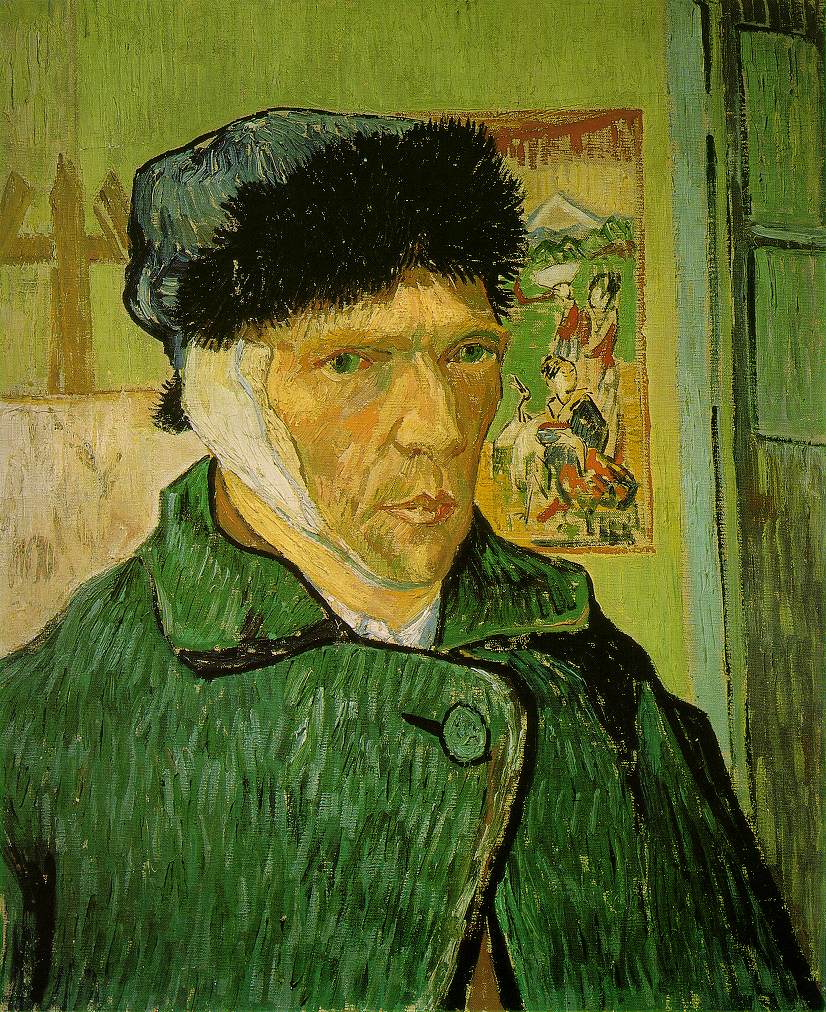
It's hard to think of a figure that has been more mythologized in our culture than Vincent. He is, like I said, the Ur-Mad Artist, the guy who was able to paint so many cool things because he was, well, cracked.
Except that... Vincent didn't paint when he was at his lowest points. He was at his most prolific when he was actually doing better. And his death wasn't just an inevitable result of the mental illness he suffered, it came about because he had the bad luck to hook up with a quack doctor that was feeding him drugs that (as far as I recall) either didn't work at all or actually made his condition worse. Some of this sounding familiar given our discussion of Ledger earlier?
Let's talk, though, specifically about the ear cutting thing. Everyone knows the story--crazy Vincent looses his shit, cuts off his ear, and mails it to a prostitute. Wow, what a zany guy, LOL!
I bet you didn't know about the fight he had with Gauguin before he cut his ear, though.
Oh yeah. See, Vincent had this vision: he fell in love with Arles, France, and he dreamed of creating an artist commune there, a group of people that would support each other, and push the boundaries of art that the Impressionists had already started to explore. Except no one else was interested, and finally Theo, Vincent's brother, managed to persuade the Fauvist Gauguin to join Vincent. Vincent was overjoyed for a while at finally having another artist to keep him company in a town of backward farmers and suspicious villagers.
Except Gauguin was a gigantic prick. He apparently spent most of the time badgering Vincent to produce art HIS way, and Vincent grew to hate it. Eventually the two got into a blazing row in which Vincent threatened his one-time companion with a knife.
Now, here's where things get a bit speculative.
I studied art history with an early modernist scholar, and he had this theory about the events that followed. See, there was (and perhaps still is, I don't know) a tradition in bullfighting that the matador who slew the bull would cut off the bull's ear and present it to his lover.
After the fight with Gauguin, Vincent cut a piece off his ear and presented it to a prostitute.
He was declaring that Gauguin had slain him as a matador slays a bull, and the prize went not to a virginal bride but a prostitute.
Wow.
Now, this isn't rational behavior; I'm not suggesting that. What I AM suggestion, though, is that this reading of Vincent's actions is MUCH more in line with the man who experimented extensively and deliberately with form and perspective and color, the man who wrote beautiful, poetic letters to his brother that I cannot read without weeping, the man who was, by every account, extremely intelligent. Vincent, in this reconstruction, is no longer some zany artist. He's a sensitive and brilliant man who suffered unnecessarily at the hands of a disease that wasn't properly understood, and at the hands of a belligerent asshole that skipped out on his wife to go fuck teenage girls in Polynesia.
Is it clear yet that I really, really don't like Gauguin?
Anyway, the ZaNy ViNcEnT vAn GoGh myth means that we don't have to address the possibility that his death and suffering in life were totally presentable tragedies. It means we don't have to view him as a complex, thoughtful individual who, yes, behaved in a self destructive way. It means we don't have to see his actions as anything other than random craziness. You can see this in more minor forms all throughout our culture: look at the way people dismiss Lady Gaga videos as just random weirdness, or Andrew Hussie's creations as just crazy gags with no logic behind them, or even the failure to hold
And that also really sucks.
There's one last idea I'd like to touch on, and that's the Rom Com principle that I mentioned early. Deep inside, the messed up dude is a creative and imaginative individual. This is actually probably the most dangerous aspect of our conflation of madness and genius, because it encourages the tolerance of destructive behaviors in people that are just, well, actually crazy.
I ran into this recently with a longtime poster on the Magic: The Gathering forums. Now, this is a person that posts a lot of card designs in the forums, which is fine. But there's a few problems with this guy. For one thing, he's convinced that the head of Magic R&D is stealing all his cards. So, that's kinda weird. What's more, he has this bizarre cosmology that exists entirely within his own head that--I think, maybe--shows how Magic is some sort of true expression of the mythological origins of the universe in the struggle between good and evil gods and... fuck, I can't explain it. And he frequently argues with other people about his bizarre made-up religion. Alright. Worst of all, though, he creepily stalks, patronizes, and hits on every single female member of the boards. Seriously, the guy is like the Magic nerd version of Taxi Driver.
Now, it seems clear to me that, given that the Wizards forums are NOT a mental health clinic, and given that having female players hit on and then verbally abused when they rebuff unwanted advances is a poor way of supporting gender inclusivity, it seems obvious to me that this individual is fundamentally toxic and needs to be removed from the forums (he has been behaving in this way for six years, incidentally). So, I pointed this out.
The response I got from another user was that he should be kept around because even though he's clearly off his rocker, there's potential for genius there.
Hooooboy.
This is the problem with the Rom Com Principle in a nutshell. Any flagrant abuses can be ignored because someone that is mentally unbalanced might be creative. Within each manic pixie dream girl or weird, creepy dude is a unique artistic flower.
Bleh.
This is just a really gross attitude, especially because of the gendered element at work here. It's just really fucking easy to look the other way and downplay abusive or deeply dysfunctional behavior if the target of that behavior is a woman. After all, if madness and genius go together, women just have to make a sacrifice for the rest of us, right? And boy, it sure does make it easy for geeks to behave as though their maladjusted bullshit should just be accepted by everyone else. Why grow when your dysfunctions are a part of what makes you special?
So, I suppose if I can summarize my main point here, it's this: the Mad Genius myth hurts everyone. It hurts artists, it doubly hurts artists with mental illnesses, it hurts regular people with mental illness, and it hurts people affected by people with mental illnesses.
I'm sorry to leave on such a downer note, but this is kind of a downer subject. Dealing with depression is already hard enough. Culturally, we've collectively decided to make it harder. That really has to stop. So, my plea is essentially this: like the AP style guide urges, do not conflate things with mental illness unless you have a really, really good reason for doing so. Don't feed into the mad artist myth. Because as long as we keep feeding this myth, we also keep feeding it our artists.
And that sucks.
Circle me on Google+ at gplus.to/SamKeeper. As always, you can e-mail me at KeeperofManyNames@gmail.com. If you liked this piece please share it on Facebook, Google+, Twitter, Reddit, Equestria Daily, Xanga, MySpace, or whathaveyou, and leave some thoughts in the comments below.
Tuesday, February 5, 2013
100%
It's been about a month of peace. Sure, the bottles still haven't been cleaned up, but the bar is quiet, at least, and you have your chair all to yourself for once. And yet, something tells you that such idyllic tranquility cannot last. It is bound to be shattered by tragedy once more.
And lo and behold, today when you walk through the door you see a strange guy wearing broken sunglasses and gray body paint standing by your seat holding a sheaf of papers. And sweating. He is sweating quite a lot, actually. He hands you the papers and you sit down. And then he stands there. And watches.
After a few moments of this, you sigh and, giving in to the inevitable, begin to read.
I know it's been a while since my last post. A month's worth of graduate school applications (the ones I was beginning to work on during the last update, remember?) sucked up my time, and then as soon as those were complete I came down with some sort of hideous death cough that's plagued me for a week. The last few days have been, essentially, Magical Adventures In Attempts To Remain Upright.
But I have a decent body of drafts and guest articles, so I should be able to resume semi-regular posting during this week, barring further difficulties with my always tenuous health. Before we get back to the fun analytical stuff I like doing, though, I wanted to do an article addressing something I've been noticing more and more as I write. See, as I start to branch out from this blog's semi-regular readership more and more I'm confronted with a simple, huge problem:
A significant minority of people understand fuckall about how literary criticism works or what it's even trying to do.
(Fuckall is, incidentally, a technical term from post deconstructionist theory. I think Michael Foucault was the first to use it in his first major work breaking with Deconstructionist thought: "A History Of Dipshits Failing To Understand My Brilliance, Vol. 1: Your Ass Is Mine, Chomsky.")
Which honestly shouldn't get to me as much as it does. I watched a bunch of senior English majors in a theory class last year digging in their heels and refusing to accept that texts can convey meanings their authors didn't intend, which is pretty much the modern critical equivalent of, say, pronouncing "Wingardium Levi-oh-SAH" correctly. If that's how the purported highest level students in this field respond to unfamiliar thought, I'm pretty much screwed. I'm Sisyphus, here, rolling a giant stone bust of Foucault's shiny bald head up a hill in Hell for eternity while Reddit glares at me from its distance lake of ice, gnawing on Gloria Steinham or something. (And someone do let me know if these jokes are getting too opaque.)
But let me try to address one common error of thought, if only so that I can just hyperlink this article somewhere in the text of my other articles rather than having to give a big long disclaimer each time I try to sit down and write about whatever interesting notion has come to me at a given moment.
Here is my disclaimer:
Textual analysis is not trying to be 100% invariable, nor is it trying to be 100% comprehensive.
After posting that recent article on Homestuck and Gnosticism I got a bunch of what we might call "people" on Reddit scoffing at how ridiculous it was that I was saying the text could ONLY be read in a Gnostic way, and that Gnosticism was the ONLY important mythological reference in the entire 7000 page text.
Ha ha! How absurd!
But... I didn't say anything like that in the essay itself. What was going on there?
Well, part of me is tempted to say that people were just being cretins. I mean, I did make kind of a big bloody deal over the fact that saying one text shares important thematic properties with another text does not make them a one-to-one tautological equation with no room for anything else. I have to admit, part of the reason THIS article is taking me so long is because of the skulking sense of futility that inevitably emerges when you clearly lay out the groundwork of your argument and still end up dealing with people who didn't even understand that much of the article.
But let's be something resembling charitable and talk about why they fixed on that particular notion to the point of ignoring what was right in front of their faces.
I think people just have this notion beaten into them that there is One Right Answer, and that analysis is seeking to find One Right Answer, and that if you're asserting that you've found an answer, you are 100% confident in that answer to the exclusion of all else. I see it sometimes when I tutor science, math, or engineering students. When confronted with liberal arts questions these people are absolutely paralyzed because the kind of divergent thinking that analysis requires has been beaten out of them. Which... upon reflection is kind of worrying when it comes to engineers and scientists, since I would have assumed that divergent thinking was a boon in those fields... but there it is.
And to some extent, these students, for all the trouble they give English professors, aren't totally off base. Look, modern criticism begins with the ever-more-erroneously-named New Critics saying, A. meaning is going to come from the text rather than from some author's biography or history, B. we can find specific elements and structures within a text that tell us their meaning, and C. each text has a Theme--not just a subject like "creation" but a complex statement like "the flawed nature of creation at the hands of fundamentally flawed gods"--that speaks to the universal human condition. Formalism (the name for the New Critics that people came up with when they realized "New Critics" wasn't going to age well as a term) became popular in part because it was a procedural criticism that could be easily taught to students. Not a lot of leeway there, right?
Well... on the surface, sure. But the fact of the matter is that the Formalists bent their own rules all the time. Like, for a Formalist the Ending Is The Conceit (as FILM CRIT HULK, who has extremely strong Formalist and Semiotic preoccupations in his own analysis, is fond of saying). Typically, the beginning is granted a similar vaunted status. Those elements are then used to construct a theme, and you've got to START at the BEGINNING and END with the CONCLUSION, or BURN IN THEORIST HELL FOREVER (while Reddit glares at you &c. &.c).
...Except that sometimes you have a starting point or ending point that doesn't quite fit the theme. So what do the New Critics do? Well, they redefine "beginning" to be "real beginning." Oh, Herman Melville is going on about a sexy black sailor man for a few pages here at the start of his short story? Weeell that's not the REAL beginning. We'll just skip ahead to where the real main character shows up. (This is a real example, by the way--read "Billy Budd," then read early 20th century criticism of the text. A really remarkable number of authors jumps straight over that swarthy black dude to the "real" beginning, most without even mentioning it, despite how many sentences Melville spends drooling over him.) Can't find a way to make all that Weird Puzzle Shit fit your analysis? Eh, skip to the part where the Trolls get introduced, that's the REAL beginning.
So, it's always possible to look at a New Critical analysis and say "AHA! You've arbitrarily constrained your analysis to these particular elements and excluded others! Your analysis is fundamentally flawed!"
Which all seems very clever until you realize that Criticism moved on from that particular statement 100 years ago. People making this charge are literally a century out of step with the rest of critical theory.
Look, the fact of the matter is that any theory, just like any text, has gaps. And just as the space in a text is filled by what we bring to the text in the process of umwelt, in the gaps of a critical analysis there exist the possibilities for alternate interpretations. Every methodology has its benefits and failings and what methodology you choose has more to do with your particular concerns and interests than to the perfection of that heuristic. I could have chosen to take a more queer theoretical approach in the article I linked to above about lesbianism in My Little Pony, but I decided that if my purpose was to give a meta analysis of how criticism works, it was actually more useful to talk about Reader Response theory. I probably left some stuff out with that approach, but my point is that I consciously made that choice. I didn't just stupidly forget stuff, or arrogantly think I had the one and only answer, I accepted the imperfect nature of criticism in order to move forward and say something people might find useful, instructive, and entertaining.
Hell, once a text reaches over 7000 pages in length, it would astonish me if you could fit every single thing that happens into just one theme, or reading, or queer theoretical analysis, or whatever. If you have an ensemble cast, there's probably going to be an overarching theme but there will also be individual thematic arcs for particular characters that reflect and interact with the other themes but remain distinct. And certain elements of the text may be best served by different critical approaches, and it can be useful to break down those different elements into their own little notional space (like I did with Avatar: The Last Airbender, for example, or, again, My Little Pony).
I think this century-out-of-date, snarky response of "Well, this could just have easily been an essay about x y or z textual element" shows a real weakness of the imagination. It shows an unwillingness to take and expand upon the blank spaces in a theory--blank spaces that are practically begging for attention if we believe what Reader Response theory has to say about our process of textual closure (see, again, the Umwelt and Ambiguous Kiss articles, which both discuss this idea in some detail). Instead, the sub-critic is content to assert only that there are blank spaces without providing a functional use for them.
While we're on this subject, I'm willing to bet that if you took the other mythological references in Homestuck, if we can work with that example a bit longer, you wouldn't get the same kind of compelling results as I got. Feel free to try to prove me wrong, of course, but that's what I suspect--an argument that is based around comparing Homestuck's narrative to Greek myth conventions, as one person on Reddit suggested to me, is just not going to be as complete or compelling as a comparison to Gnosticism.
That's the flipside of the 100% thing, which is probably just as conceptually important and just as infuriating to deal with. It's not all or nothing--analysis is judged not by whether it is comprehensive but by how comprehensive it is, and how compelling the end result is. This demand that everything be all or nothing, 100% or 0%, just takes the whole sliding scale and reduces it down to a big, dumb, binary coin toss. "True" and "False" are actually idiotic values to apply to literary theory. That's not what it's trying to do, it's not going to give you interesting results, it's not going to increase your enjoyment or understanding of a text, and it sure as fuck isn't going to make you a better writer.
You see this flip side emerge in the opposite response to criticism: "My reading is just as valid as yours, because it's all subjective!" Jumping Jesus on a pogo stick I hate this meme. I'm not a huge fan of relativism in any form, and I find it particularly frustrating in areas of criticism, because it's so hard to teach nuance to a neophyte. I mean, sorry if this is coming off as arrogant, but there's a really annoying overconfidence to statements of moral relativism that gets in the way of learning, and I can't help but feel that this overconfidence should have its metaphorical kneecaps broken before the student runs too far down this particular track.
The lack of a 100% comprehensive form of criticism does not suggest the value of 0% comprehensive forms of criticism. Even if my analysis isn't perfect, that doesn't make your analysis that references the text twice and then just references a bunch of your own theories for the rest of the article totally valid too.
Umberto Eco talks about this a bit in some of his essays on his own novels, actually. I bring him up specifically because he's a semiotician and in the general school of reader response theory, but he's also a novelist so he gets to experience analysis from both sides of the aisle, as it were. One thing that he often points out to aspiring critics of his work is that it's not enough even to find a series of seemingly significant references within a work. Those references have to combine together to provide a new, interesting perspective on the text. They have to be enlightening in a way that still relates to the work without sort of wandering off into the underbrush and getting lost in tangential questions.
So, if we're going to kind of codify this, let's say you need to have a fairly high percentage of relevancy to a text; one that doesn't achieve 100% completion, perhaps, but one that still encompasses as much of a text as possible. It's much, MUCH more important for you to address the overall structure of a text than to be able to expound at length about one little detail on page 4578, and it's much more important that the end result provide something new and substantial to the text. (This is related to another kind of 100%ism: the obsession with plot holes and little fiddly details and so on. I won't dig into that here because Film Crit Hulk has conveniently already written an excellent analysis of why plot hole nit picking is just a straight up shitty mode of criticism that almost never leads anywhere productive.)
I almost want to compare this to the problem of certainty in science, where you're probably never going to be 100% certain that a theory is correct. People take that, and even the word "theory," to mean that Science is just, like, another way of looking at things, man, and their pet heuristic is just as valid. The problem with that is the way it takes the whole range of probabilities and collapses them into two options: CERTAIN and NOT CERTAIN. For all the grandstanding these people do about the complexity of the world and the human mind, this is a really simplistic attitude.
It's not quite the same for Criticism, of course. Science and Criticism have different aims. And yeah, yeah, "separate magisteria" is a bullshit concept and bla bla bla, but hear me out: Criticism isn't attempting to make reproducible statements about the world. You can't look at a book and say "If I rewrite this book, I can be x percent certain that it will have the same meaning." And while we can certainly broadly analyze how humans perceive sensory input, and how they process language and visual information, we can't say with absolute certainty what text emerges when the prime text and the reader's background collide.
But the two share that fundamental misunderstanding that everything should always be 100% certain, all the time, and if it's not then something of 0% certainty is just as valid as something of 99% certainty. It's absolutism and relativism as a perfect symbiotic pair of horrible, shitty failures of thought.
With all that in mind, it seems to me that the aim of criticism is not to find absolute interpretations but to facilitate dialogue while still allowing for personally resonant interactions with a text. So, you want to have ENOUGH accuracy so that you can talk with other people competently--you don't want to have a conversation where one person is barely even drawing from the main text at all or are picking and choosing isolated little elements and ignoring the whole, because that makes for a shitty, frustrating conversation--but you don't want TOO MUCH accuracy because A. it's going to be either totally garbled or totally contrived and B. that's just kind of an unreasonably arrogant stance to take. I mean, I don't think it's unreasonable to note, as I frequently do, the gaps and limitations of my own particular critical approach, while still taking some firm stands on certain general behaviors and notable misreadings.
And that's the spirit these articles are usually written in. I do want to facilitate thought on how fiction works, and I think, if the guest articles that I'm going to be posting in the next few weeks are any indication, I'm at least creating that kind of space where such thought can take place. (Spoiler alert: these articles are great. I'm so excited.) And yeah, some stuff I am pretty damn certain about. Like, no one is going to persuade me that My Little Pony isn't a very feminist show, that is in turn very important to the aims of feminism culturally. Not without making a very strong case, at least. But if someone uses a critical mode that I haven't, and comes up with some diverging conclusions, that doesn't mean I have to accept that I was wrong and they are right, it just means that we're using different methods and getting different results, and adding that information together will generate a more generally complete and nuanced understanding of the text.
That's the game I'm playing, and I welcome you to play along.
Join me next time when I continue this whole ascending numbers theme with an article on 101 Dalmatians. Except not really, because even I think that would be pushing the gag a bit too far. Oh, and do me a favor and give Equius a towel, the dude is going to ruin the carpet at this rate. You can follow me on Google+ at gplus.to/SamKeeper or on Twitter @SamFateKeeper. As always, you can e-mail me at KeeperofManyNames@gmail.com. If you liked this piece please share it on Facebook, Google+, Twitter, Reddit, Equestria Daily, Xanga, MySpace, or whathaveyou, and leave some thoughts in the comments below.
Subscribe to:
Comments (Atom)