The Worst Filing System Known To Humans

-Punk (5) A Song of Ice and Fire (2) Affect (9) Alienating My Audience (31) Animation (29) Anime (19) Anonymous (3) Anything Salvaged (15) Art Crit (42) Avatar the Last Airbender (2) Black Lives Matter (1) Bonus Article (1) Children's Media (7) Close Reading (90) Collaboration (1) comics (31) Cyborg Feminism (3) Deconstruction (10) Devin Townsend (2) Discworld (1) Evo Psych (1) Fandom Failstates (7) Fanfiction (28) Feminism (24) Fiction Experiments (13) Food (1) Fragments (11) Games (29) Geek Culture (28) Gender Shit (2) Getting Kicked Off Of TV Tropes For This One (11) Gnostic (6) Guest Posts (5) Guest: Ian McDevitt (2) Guest: Jon Grasseschi (3) Guest: Leslie the Sleepless Film Producer (1) Guest: Sara the Hot Librarian (2) Guest: Timebaum (1) Harry Potter (8) Harry Potter and the Methods of Rationality (3) Has DC Done Something Stupid Today (5) Hauntology (6) Homestuck (18) How Very Queer (36) hyperallthethings (10) hyperanimation (1) Hypercomics (11) I Didn't Ask For Your Life Story Sheesh (24) Illustrated (37) In The Shadow Of No Towers (1) It Just Keeps Tumblring Down Tumblring Down Tumblring Down (9) It's D&D (2) Judeo-Christian (9) Lady Gaga (5) Let's Read Theory (3) Lit Crit (20) Living In The Future Problems (11) Lord of the Rings (4) Mad Max (1) Madoka Magica (1) Magic The Gathering (4) Manos (2) Marvel Cinematic Universe (17) Marx My Words (15) Medium Specificity (15) Meme Hell (1) Metal (2) Movies (34) Music (26) Music Videos (21) NFTs (10) Object Oriented Ontology (4) Occupy Wall Street (3) Pacific Rim (2) Paradise Lost (2) Parafiction (6) Patreon Announcements (15) Phenomenology (4) Poetry (6) Pokemon (3) Politics and Taxes and People Grinding Axes (13) PONIES (9) Pop Art (6) Raising My Pageranks Through Porn (4) Reload The Canons! (7) Remixes (8) Review Compilations (6) Room For You Inside (2) Science Fiction Double Feature (32) Self-Referential Bullshit (23) Semiotics (3) Sense8 (4) Sociology (12) Spooky Stuff (46) Sports (1) Star Wars (6) Steven Universe (3) Surrealism (11) The Net Is Vast (36) Time (1) To Make An Apple Pie (4) Transhumanism (9) Twilight (4) Using This Thing To Explain That Thing (121) Video Response (2) Watchmen (3) Webcomics (2) Who Killed The World? (9)

Reload the Canons!

This series of articles is an attempt to play through The Canon of videogames: your Metroids, your Marios, your Zeldas, your Pokemons, that kind of thing.

Except I'm not playing the original games. Instead, I'm playing only remakes, remixes, and weird fan projects. This is the canon of games as seen through the eyes of fans, and I'm going to treat fan games as what they are: legitimate works of art in their own right that deserve our analysis and respect.

Showing posts with label Games. Show all posts

Tuesday, January 31, 2023

Age of the Executive Auteur

The Auteur as a figure in entertainment is dead. Grown strong on digital production, a more artistically bankrupt creature emerges in their place. It is the Executive Auteur, and it's coming soon to a theater near you, whether you like it or not.

Monday, March 8, 2021

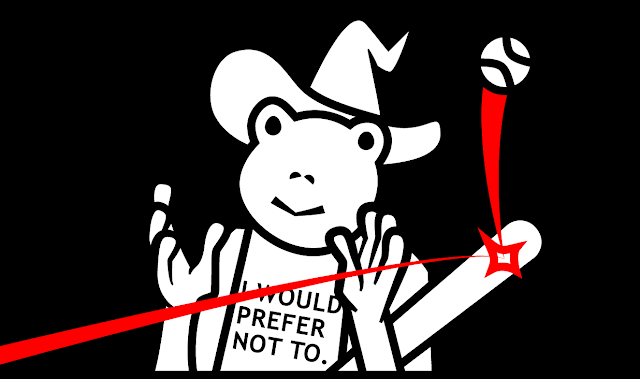
Chorby Prefers Not To: Blaseball, Bartleby, and a Fandom's Malicious Compliance

Chorby Short is an adorable frog girl who is also sometimes a witch. Or perhaps, she's just some data in a game taking the internet by storm called Blaseball. Or perhaps, she's a new example of an idea from an 1853 Herman Melville story. Or perhaps, she's all this and more? 

Tuesday, September 22, 2020

In The End We All Do What We Must: Universal Paperclips, Clicker Games, AI, and Agency

Remember Universal Paperclips, that clicker game? Remember turning the human race into paperclips? Ok, so, what if you just... didn't? What would that choice tell us about game design, agency, artificial intelligence, and people?

Tuesday, October 22, 2019

Shade World: A Player's Guide (Preview 1)

Storming the Ivory Tower presents Shade World: A Player's Guide, a parafictional choose your own adventure experience, by Sam Keeper and Juniper Theory.


Tuesday, September 3, 2019

Batmen vs Supermen: Expanded Universes and the Ultimate Warrior

Superman. Batman. Titans of their fictional universe. Who would win in a fight? To truly master this question we can't just smash the two together like dumb action figures. We need to dive deep into the qualities of the Expanded Universe genre.

Monday, June 17, 2019

Complicated and Messy: Kingdom Hearts, Plot, and Being A Teen Queer

Kingdom Hearts feels like a wild game of pretend played with every random thing the players had lying around. That's also what my experience of being a queer teenager felt like.


Thursday, July 27, 2017

Inside: Game Disintegrating

Inside, spiritual successor to Limbo, is a game about control, but is anyone really at the reins of the game's dystopia? And can an experimental documentary from the 80s give us insight into the game's radical pessimism?
Spoilers for Inside; no familiarity with the game necessary.

Tuesday, April 25, 2017

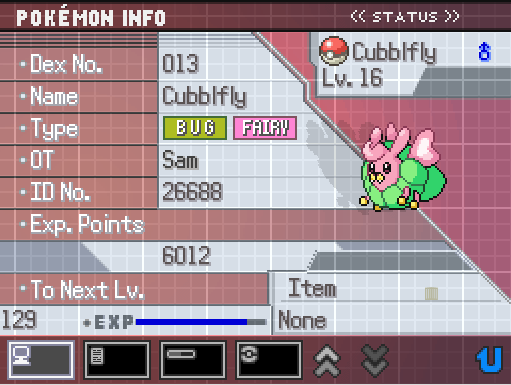
You'll Teach Me And I'll Teach You: Do Pokemon's Mechanics Actually Work?

Pokemon has a brilliant mechanical narrative where you're encouraged to treat your pokemon as living creatures, and use them to fashion an identity for yourself... or at least that's how it works in theory. In practice, do Pokemon's mechanics actually work... and is Ian Bogost right to suggest that maybe chasing after narrative in games is a lost cause?
Reload the Canons! is an ongoing Storming the Ivory Tower project where I play through The Canon of videogames. Except I'm not playing the original games. Instead, I'm playing only remakes, remixes, and weird fan projects. This is the canon of games as seen through the eyes of fans, and I'm going to treat fan games as what they are: legitimate works of art in their own right that deserve our analysis and respect. You can support Reload the Canons! and my other projects on the Storming the Ivory Tower Patreon.


Friday, March 17, 2017

To Train Them Is My Cause: Why Do We Care About Our Pokemon?

Pokemon games, whether canon or fan-made, live or die based on the bond between Pokemon and players. Can we use the mechanics of the games and the way those mechanics are altered in Pokemon Uranium, Pokemon Insurgence, and Pokemon Infinite Fusion to explain why we care about our Pokemon?
Reload the Canons! is an ongoing Storming the Ivory Tower project where I play through The Canon of videogames. Except I'm not playing the original games. Instead, I'm playing only remakes, remixes, and weird fan projects. This is the canon of games as seen through the eyes of fans, and I'm going to treat fan games as what they are: legitimate works of art in their own right that deserve our analysis and respect. You can support Reload the Canons! and my other projects on the Storming the Ivory Tower Patreon.


Thursday, February 16, 2017

An Eternal Golden Helix Fossil: Three Years On, What Can We Say About Twitch Plays Pokemon?

Three years ago I wrote an academic article about Twitch Plays Pokemon. The article was never published anywhere, but despite that blow to its notability TPP continued on, and is still going three years later. This week, I take a look at this article, which in many ways is a predecessor to my Reload the Canons! series, and comment on what I got right, what I got wrong, and how the issues surrounding TPP have shifted and changed over the past three years.
Reload the Canons! is an ongoing Storming the Ivory Tower project where I play through The Canon of videogames. Except I'm not playing the original games. Instead, I'm playing only remakes, remixes, and weird fan projects. This is the canon of games as seen through the eyes of fans, and I'm going to treat fan games as what they are: legitimate works of art in their own right that deserve our analysis and respect. You can support Reload the Canons! and my other projects on the Storming the Ivory Tower Patreon. 


Tuesday, December 6, 2016

Look Inside And You Will Find: Are Glitches Part of the Pokemon Experience?

The fan game Pokemon Uranium has some weird behaviors and some astounding glitches, but are those glitches just flaws, or are they important to make Pokemon Uranium feel like a genuine Pokemon game? And what can it tell us about the hype cycle surrounding canon games Sun and Moon, and spinoffs like Pokemon Go? 
Reload the Canons! is an ongoing Storming the Ivory Tower project where I play through The Canon of videogames. Except I'm not playing the original games. Instead, I'm playing only remakes, remixes, and weird fan projects. This is the canon of games as seen through the eyes of fans, and I'm going to treat fan games as what they are: legitimate works of art in their own right that deserve our analysis and respect. You can support Reload the Canons! and my other projects on the Storming the Ivory Tower Patreon.

Monday, October 24, 2016

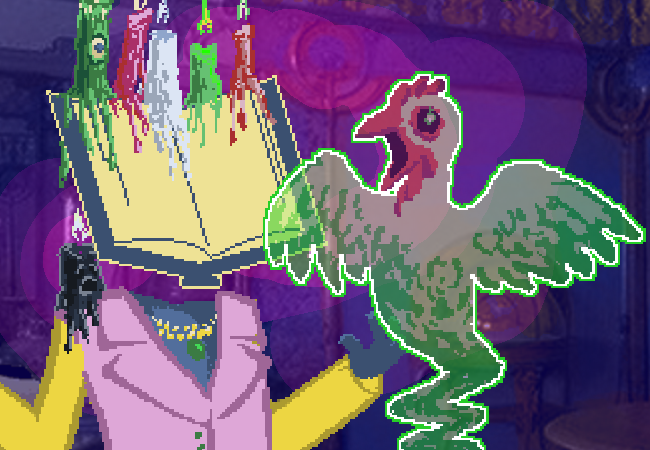
Tangled in Tentacles: The Hauntological and the Weird

China Mieville posits two types of horror: the Weird and the Hauntological. But the boundaries between the two are sometimes hard to make out, and it's possible to mistake one for the other. This review roundup looks at three different mergers of the Weird and the Hauntological--the Rubbery Men of Fallen London, the skulltopus that is HYDRA, and the phenomenon of Global Warming, and asks: just what is the core of the horror here?


Monday, October 17, 2016

Pierre Metroid Smashes the Canon: 5 Ways AM2R Transforms Metroid II

AM2R--Another Metroid 2 Remake--made the news a few months ago when its long-anticipated release was immediately followed by a DMCA takedown demand from Nintendo. But is AM2R really just a copy of Metroid II, or is it a transformation? And what does a Jorge Luis Borges story have to do with contemporary fan games?


Thursday, September 29, 2016

A Metroid And Its Human: What Does 'Another Metroid 2 Remake' Tell Us About Environment?

The Chozo Temple Complex is beautiful, golden, expansive. It is a space of lurid yellows, soft oranges, and shadows shading almost into violet, and while much of one's time spent navigating the space and avoiding the various still-active ancient defense systems, it's hard for me not to stop and admire the scenery of this ancient and crumbling structure. Walking across the top of the structure in particular is delightful (if you avoid the native life trying to kill you) as you can see layer upon layer of cavern opening out into mountains and an acid sunset beyond. There's a real sense of depth and space.

I'm not talking about Metroid 2: The Return of Samus. I CAN'T be talking about that game for one major reason: I haven't played Metroid 2, not even once. I didn't grow up in a family where expensive game consoles--and yes, I'd count a gameboy as "expensive"--weren't really a big economic priority, and even if we had the disposable income for them, I get the distinct impression that my parents would've put them in the same highly suspect category as tv shows not on PBS, and music not performed by a symphony. I missed out on most of The Games Canon.

Oh, and well, I guess the other dead giveaway is that Metroid 2 was in black and white.


And yet, I can talk about the vivid colors of the Chozo temple because while I have not played Metroid 2, I have played Another Metroid 2 Remake. AM2R hit the Internet about a month ago, causing significant buzz before basically immediately being slammed with a DMCA takedown notice from Nintendo. Thankfully, the game is still fairly easy to access.

This is a good thing, because AM2R offers up a pretty incredible experience, one that doesn't deserve to be buried under questionable intellectual monopoly laws. AM2R is doing something very special here. It's not just making accessible once more a game made for an obsolete platform. I mean, making the game itself accessible would probably be enough to justify its existence. But AM2R goes a step further, and setpieces like the Chozo Temple help us understand the new value it adds:

AM2R turns Metroid 2 into a game about our interaction with space, our use of space, and possibly, by the end, new ways of thinking about our place within an environment.

Thursday, June 9, 2016

I Have Played Agar.io

I have played agar.io quite a bit over the past month, but the way I've played hasn't exactly been consistent. Oh, I think I've gotten better at playing the game the way I think it's meant to be played, and the way most (though not all) other players play it, but I've also played it a whole slew of other ways as well. I probably should have played it a year ago, when it was culturally relevant, but I have played it now, so now is when I've got to write about it. And I've got to write about it because I feel compelled to parse out all the different ways in which one might play what is really a fairly simple game.

In agar.io you are a cell among other cells floating in agar, in some sort of petri dish. As you float around you can eat nutrients, or eat the other players in order to grow larger. You control your floating direction with the mouse, and you have the ability to divide explosively in half with "space," and jettison nutrients, shrinking your size, with "w."

What's fascinating to me is that it's very possible to play the game a number of different ways that all constitute achievements of victory through a variety of self-generated goals. The strict "goal" of the game is to stay as huge as you can for as long as you can and the game does encourage this by way of the leaderboard and leveling system, which seems to be based on raw size, time spent at that size, and cells consumed. So the game does have rewards--in the form of skins and a minutely larger starting mass--that encourage certain playstyles, but it's also possible to totally rewire your sense of the game's goals, and I think that helps us consider what a gameplay experience should look like, and what that says broadly about other forms of interaction and communication.

So let's talk a bit about how I have played agar.io.

I take great pride in my terrible jpg artifact covered pictures thank you very much.

Monday, May 30, 2016

StIT Reviews: The Gnostic and the Satanic

Many of my articles are driven, to a greater or lesser extent, by necessity. I have to weigh writing an article against considerations like: can I fill out a full 3000-4000 word piece on this topic? Or: does anyone but me give a shit about this thing? Or: has anyone but me even HEARD of this thing?

So, frustratingly, I often find that there's stuff I'd like to write about that just doesn't fit the usual format of StIT. Nevertheless, there's loads of stuff I want to cover, and I have enough of a readership now that I want to make people aware of smaller projects that they might otherwise miss.

With that in mind, I'm going to start putting out articles like the one you're about to read: articles that are composed of smaller reviews or spitballing about particular topics, linked by some sort of loose theme. These are articles not intended to scoop up new readers but as something for longer-term readers of the blog, stuff designed not to get hits but to open up space for me to explore stuff I'm passionate about in a fairly off-the-cuff way.

The following reviews are just four of a nine that I've written so far. The rest can be viewed by my backers on Patreon starting at the $1 tier. I'll be adding more reviews periodically, but right now this exclusive body of work contains writing on Grant Morrison's Action Comics, a summary of China Mieville's theories of Weird and Hauntological horror, some discussion of squid people, and a review of the first two books in the Song of the Lioness quartet from my perspective as a transgender person.

If this stuff seems interesting, I welcome you to become a backer to see all the reviews.

It's kinda like a direct line into my brain as I respond to what I'm reading.

Oh, and hey, you know what I have banging around in my brain a lot?

Gnostic Christianity.

Particularly since Homestuck just ended with a conclusion that was, as I predicted four years ago, Gnostic as fuck.

So let's talk about some stuff that's engaged with Gnosticism in interesting ways.

Panel from Lady of the Shard

Thursday, March 24, 2016

But Nobody Gamed: Undertale vs The Difficulty Discourse In Gaming

Well look I'm sure you can play a browser game with a controller if you just TRY harder to-

Oh, welcome back! My good friend Vivian James and I were about to play Undertale! Why is Vivian James here again you ask? Well, it's simple, really. I want to talk about difficulty, and as a True Hardcore Gamer Vivian has lots of experience with difficult games.


But Undertale is difficult in a way that a lot of True Hardcore Gamers seem to hate, and even resent. Some of this is because of the queer and female and queer female characters... some of this is because they just hate anything popular on Tumblr... but a lot of it is because these guys just for some reason can't get over how difficult this game is. Not mechanically, I mean. No, they can't get over how difficult it is affectively--how difficult it is on a visceral emotional level. And they really, really seem to hate how challenging it is when it comes to typical game content!

For this reason, a lot of gamers seem to have denounced the game entirely.

Vivian, as a hardcore gamer, what do you think of this attitude?


You don't think so?


Indeed.

And like the last two games we discussed, Undertale offers a particular kind of horror experience that's outside the realm of the typical horror game, a kind of horror that assaults the player directly. Tonight I want to talk about this element of Undertale, why it's important, and just what it means that so many of the people who consider themselves True Hardcore Gamers, the same people, perhaps, that would like to see themselves as Vivian James's comrades in arms, hate the way this game challenges them.

Thursday, March 17, 2016

And All Shall Be Well: Fallen London and The Allure of the Un-Fun

and all shall be well and all shall be [munch slurp chomp] shall be well and [gulp crunch gurgle] all manner of things shOH HELLO FRIEND I didn’t see you there. I was just so absorbed in my meal. I’ve been so ravenous lately. So hungry. Like I’ll never be full ever again. Let me light some more candles, we need more candles don’t you think? More light.


That’s better. Ah, it’s actually fitting that you should catch me at my supper! Because tonight I want to talk about a game called Fallen London, and a particularly frustrating piece of content within the game. I want to talk a little bit, too, about our idea of “fun” in games and how a game experience designed to make the player miserable fits into our ideas about what a game is.


Why should this be relevant to my meal, you ask?


Well, eating upsetting things seems to be a major theme in Fallen London and its companion game Sunless Sea, in which you may (will) end up eating the crew of your boat. It fits with the setting’s overall cosmic horror aesthetic. Consuming things that lead to you becoming less and less human is a pretty fascinating running idea for a game trying to do cosmic horror effectively, particularly since so much cosmic horror has traditionally involved glimpsing the unspeakable. It adds a whole new sense to the mix and all the horror of taking something into yourself that slowly changes you into something less (or more) than human.


And this is nowhere more apparent than in the currently-on-hiatus storyline called Seeking Mr Eaten’s Name. Yes, “Eaten.” It’s in this content, I think, that we can see purely refined one of the most interesting aspects of Fallen London: the game gives you the opportunity to do things that are bad for you, things that will result in a negative gameplay experience, which the game clearly spells out as bad for you... and then you do them anyway. This is a fascinating horror experience and, like the experience offered in The Last Of Us, presents a kind of game difficulty outside of what we’ve culturally accepted as valid for games. It’s a kind of difficulty that simply isn’t fun.

Monday, February 29, 2016

Horror After Humans: Beautiful Landscapes and Difficult Affect in The Last Of Us

Well look I know that rattling the controller around to charge the flashlight feels distracting but I’m sure if you just let yourself get used to the motion controls--Ah! You’re here! Excellent! We were just about to start playing a game!

Who’s we?

Oh, just you, me, and my friend, fellow trans feminist Vivian James!

She's wearing her Genderqueer Flag hoodie it's very stylish
I decided to invite James over because I wanted to talk about difficult games, and she’s, well, a bit of a difficulty junky. Vivian James is a hardcore gamer, and she and I share an interest in games that really push your limits. It seemed natural that she should help us play The Last Of Us.

What, you don’t think The Last Of Us is that difficult? I suppose if you’re just looking at gameplay… but what about the dark and affecting storyline? What about the hard decisions the game forces you to make, or the perhaps unsatisfying and even frustrating ending?

No, tonight we’re interested in a different kind of difficulty than a difficult puzzle or difficult boss battle or difficult timed jump. In fact, I’m particularly interested in talking about one of the most difficult things in The Last Of Us. Difficult to explain, at least.

To properly explore that, I think what we need is a change of scenery to something more fitting for a horror experience. Something like…

The bleak and desolate wasteland known as the New Jersey Pine Barrens!
Ah, that’s better! What, you don’t think this is a proper setting for a horror game? Well that’s convenient, because it’s the difficulty that comes from setting a horror game in such a beautiful landscape that we’re going to discuss tonight!


Support on Patreon
Store
Reader's Guide
Tag Index
Homestuck Articles
Solarpunk Articles
Mastodon/Fediverse
Tumblr
Bluesky
RSS Feed