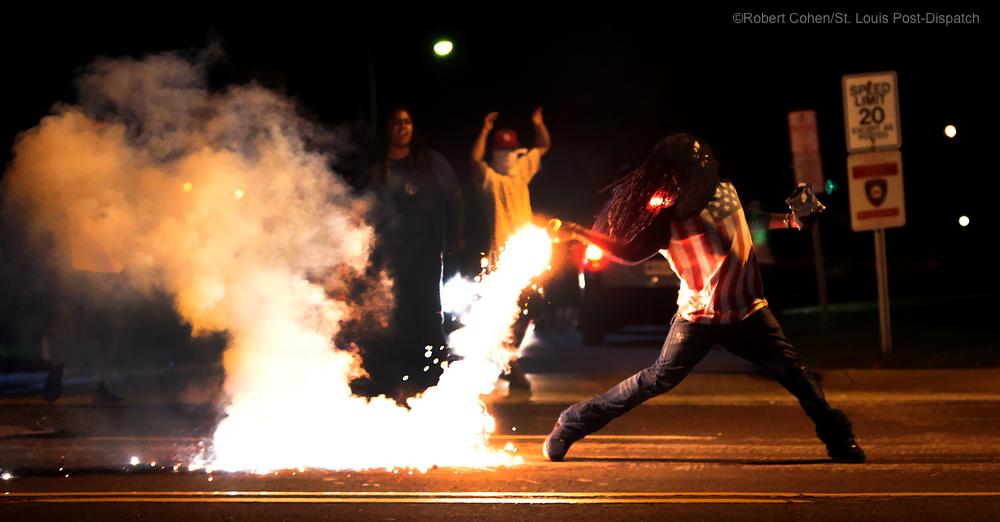
I am burning, burning, burning. O Lord, I burn with fury. Inside and outside I burn, and the hot winds kick up fragments, these charred leaves from the Tree of Knowledge. On hot winds of anger they rise and form a text suspended in air--an Elegy like a ransom note, like Dada collage, like a thousand voices chanting out of sync.
Let me tell you why I burn.
-----------------------------------------------------------------------------------------
Early in my academic career, I happened to experience a lecture that would, if you will please excuse the cliche, alter the course of my life. This lecture so stunned and engaged me that I knew, in a flash, that I was called to know and to teach and to pass on its lesson.
The lecture stalked up on the class without warning, like a flash brushfire. Our lecturer--an unfamiliar professor filling in that day--first presented us with a History Channel documentary on the Roman empire. When it was finished, he spent some time critiquing the documentary's errors. Out of the ordinary, certainly, but not exactly life altering.
However, at the conclusion of his prolonged criticism, our lecturer produced a piece of paper.
It was a list of names.
He began to read.
-----------------------------------------------------------------------------------------
The Poetics (second volume)
Babylonians
Proagon
Phoenician Women
Most of Bellerophon
Most of Andromeda
Zeno's writing on paradoxes
Androgynos
Homopatrioi
-----------------------------------------------------------------------------------------
(Something more than a week ago, the author Ray Bradbury passed away. He was a man who understood burning. He understood that it is not the burning itself that destroys, it is the willingness to let the burning happen. When we embrace dogmas that lead to the destruction of knowledge, or simply the abandonment of knowledge and beauty for disposable things, discardable trinkets, we no longer need the villainous Firemen to come and burn things down. We are already clean.)
-----------------------------------------------------------------------------------------
Koneiazomenai
All of Heraclitus
Medea (countless versions, countless authors)
Conics
Porisms
On Pneumatics
Sulla's Memoirs
Caesar's Oedipus
-----------------------------------------------------------------------------------------
(In total, roughly a century of Byzantine history is dominated by the battle over Iconoclasm--the destruction of images. The Iconoclasts, the image destroyers, considered the mosaics of the Byzantines, the glittering, shining monuments that were not simply pictures but true manifestations of the glory of God and the Saints, brought to life through the skilled artisan, abhorant symbols of idolatry.
They responded accordingly, and an uncountable number of icons were destroyed--paint washed from walls, mosaics smashed with hammers, walls plastered over. We have lost many, too many, early Byzantine works through the iconoclasts among the Christians and the iconoclasts among invading Muslims, who also considered the images sacrilegious.
It must be said, however, that when Byzantium was taken, the mosaics in the great church of the Hagia Sophia were deemed too beautiful to destroy. Sultan Mehmet's forces plastered over the mosaics, allowing their later recovery and preservation.
The Crusaders were less kind. They stripped mosaics off of the wall for their gold.
Less kind, too, are the modern iconoclasts within the Taliban. In the early part of this century, they carried out the dynamiting of the two monumental Buddhas of Bamiyan. It is unknown whether the enormous statues can be restored.)
-----------------------------------------------------------------------------------------
On Sphere-Making
Ab Urbe Condita
Cypria
Aethiopis
Iliou persis
-----------------------------------------------------------------------------------------
(On November 15th of last year, the New York police department stormed the Occupy Wall Street camp in Liberty Park. In the process, the People's Library, a collection of thousands of works donated to the cause, available for borrowing under an honor system, was destroyed.
Not disbanded.
Not dismantled.
Destroyed.
The books were tossed into crusher trucks and removed. Days later, the Librarians were told that their books--the books of the people, some rare or unique, many signed--were in storage.
This was a lie.
Only 23 boxes were recovered, a fraction of the total number of books. Of that number, a fraction again were salvageable, the rest bent, brutalized, broken, drenched in water, crushed, destroyed.
The NYPD and the authoritarian government of New York had made their position clear:
They were on the side of the book-burners.)
-----------------------------------------------------------------------------------------
Nostoi
Arzhang
Book of the Wars of the Lord
Book of Eve
Book of the Covenant
-----------------------------------------------------------------------------------------
(We have lost perhaps 90%--a horrifying majority--of the first films. They are simply gone, this vast part of our heritage, the legacy of the artists of our past. Most were not destroyed for political reasons, of course. They were simply destroyed because no one could be bothered to preserve them. They were burned because the studios were not interested in keeping the negatives, and their creators often had lost ownership.
Many, containing valuable chemicals, were melted down for conversion into plastics. Decades of dreaming, documentation, imagination, and labor, boiled down in minutes to create shoe heels.
Fritz Lang's Metropolis was, in each country, hacked apart and put back together to better fit what the studios imagined the audience desired. There was no original preserved, only these fragments, these pieces floating in the hot wind of time. Scenes were cut, discarded, and lost forever--until recently a nearly complete print of the film was rediscovered. With this print, we now have nearly all of Lang's masterpiece.
And yet... it is still only nearly all.
And most films were not so lucky.)
-----------------------------------------------------------------------------------------
Gospel of the Twelve
The Gospel of the Lord
Inventio Fortunata
Countless Byzantine mosaics
Most Anglo Saxon works
-----------------------------------------------------------------------------------------
(Shortly after news of Ray Bradbury's death swept the internet like an oncoming storm, this tweet was sent out by Occupy Wall Street:
One of the @OWSLibrary books destroyed by #Bloomberg & the #NYPD was a copy of #Fahrenheit451. #Irony RIP #RayBradbury http://ow.ly/i/G6Fs
Attached was this picture:
 |
| Slightly above the wrecked computer, actually--which is another whole realm of symbolism in and of itself |
You can see, in the image, the most iconic cover for Bradbury's book. It depicts a Don Quixote figure, dressed in armor of pages, standing atop a pile of books, despairing, burning, burning.
Occupy Wall Street had dared to tilt at windmills, and although they could not be destroyed, their books could.)
-----------------------------------------------------------------------------------------
Love's Labour's Won
Cardenio
The Battle of Anghiari
Medusa
Adam Unparadiz'd
Byron's Memoirs
Les Journées de Florbelle
-----------------------------------------------------------------------------------------
(Hypercomics are a modern wonder. They can exist only in digital space--they cannot be printed--either due to their size, their irregular shape and design, their use of moving graphics and interactivity, or their changeable and fluid nature.
Most of the early Hypercomic experiments have been lost or exist only in fragments within the Internet Archive. They simply were not interesting enough to preserve when the websites hosting them were sold or abandoned.
Each generation of gaming consoles pushes us further away from our early games. Some of the most important games for the SNES and the like have been preserved. But who has the time to port the less known games? The less loved games? If a game is awful but historically important, will it still exist within a few decades? The heritage of an entire generation is being lost.)
-----------------------------------------------------------------------------------------
The Stone Breakers
The University of Vienna paintings
Many of Melies's films
Much of Metropolis (until recently)
The Book of Lehi
Man at the Crossroads
-----------------------------------------------------------------------------------------
(In late May the People's Library filed a lawsuit against New York demanding reparations for the destruction of their books. The suit demands money, to be sure, but the librarians seek more than money. They seek acknowledgement that to destroy a book is to commit a beastly act. The American Library Association agrees, and fellow librarians and book lovers from across the nation have cried out in anger. We burn with fury, and smoulder with sorrow.
Because no money can cause us to forgive the destruction of the People's Library.
For each book is unique. And no reparation money can restore them once they are destroyed.
They are much like people, in that way.)
-----------------------------------------------------------------------------------------
The Irish Public Record Office
Double Exposure
The Centaurs
The Thief and the Cobbler
The Buddhas of Bamyan
The Pearl Roundabout...
The People's Library.
My list is not the same as the list recited to us in class. It is my own list, the record of my own sorrow, my own burning. It is a wishlist for an alternate world where these works--books, artwork, films, and so on--lost and destroyed throughout history.
But still, it is a list that has its roots in that lecture.
When our speaker finished his list he looked up at us and said:
"These books are all lost. We know they existed. We know their names and something of what they said, but they were destroyed. Many of them were destroyed by the Christians. Many were destroyed by the Muslims. Many were destroyed in the burning of the Library of Alexandria.
We know they existed, but we cannot get them back. They are lost to us forever.
Never burn a book.
Never destroy a book."
We have lost so much. I weep as I write, as overly dramatic as that sounds, for all the beauty gone out of the world simply because these works were deemed evil... or worse, were simply deemed unimportant and disposable.
Never, never burn a book.
Never melt a film.
Never bomb a statue, rip and tear a canvas, shatter a mosaic.
Do not fail to preserve the precious and ephemeral art of the digital age.
Never burn a book.
Never destroy a book.
Never allow others to destroy a book.
We have lost so much, and if we do not oppose them, the Firemen, the Book Burners, the Iconoclasts will tear more from us, tear it from our hands, tear it from our lives, tear it from our history. Books--and art in general--can be a fragmentary guide in times of trouble that leads us back to ourselves and helps us to understand our struggles. These fragments shore up our ruins and give us the key to a better future. To destroy them is to destroy that future.
This is why we Occupy.
This is why we burn, in our hearts, in our minds.
Because monsters burn books. And, though we tilt at windmills, though our task seems impossible, we must fight our monsters or our heritage, our art, the immortal part that carries on beyond us through time... well, that part of us will burn in our stead.
 |
| I intend to do an Illustrator version of this later. I'll post it when done. Obviously, available under Creative Commons and all that, like everything here. |
|
This was more overwrought than I intended, but ah well, sometimes the muse takes me, whether I say yes or not. This is the spiritual sequel to Some Unpublished Images, incidentally. You can follow me on Google+ at gplus.to/SamKeeper or on Twitter @SamFateKeeper. As always, you can e-mail me at KeeperofManyNames@gmail.com. If you liked this piece please share it on Facebook, Google+, Twitter, Reddit, Equestria Daily, Xanga, MySpace, or whathaveyou, and leave some thoughts in the comments below.